We played at The Grove on Monday 22nd of September 1980 along with The Spelling Missteaks. It was a good gig and there was a good-sized audience and of course we had a single to flog too which we did afterwards.
Brays Grove Flyer
Because the Youth Centre was quite close to my girlfriend Jackie’s house, I went there after the gig, had a cup of tea and then went home.
Spelling Missteaks – Can you misspell a spelling mistake?
Superstar DJ
When I got home, I parked up outside, walked in the front door and the house was going crazy. My Mum and Dad were laughing, Sarah was screaming “Your song’s just been on Radio 1!” she said. I couldn’t believe what I was hearing. I thought it was an elaborate wind up, but it transpired that Steve and Roy had tuned into the John Peel show on the way home from the gig and had heard him introducing some of the bands he was playing that night.
Superstar DJ John Peel. Seriously, what possessed him?
They phoned my home number but of course I wasn’t there and so I missed it.
However, here is the introduction to the show.
“Tonight we have a new session from The Beat, which I think you’ll probably quite like. Four tracks from the debut LP by Killing Joke. And then amongst other records, The Teardrop Explodes, The Passions, a new single from them. Black Uhuru, Madness, Gang Of Four, TV21, Pressure Stops, Obtainers, Angelic Upstarts, The Liggers, The Waitresses, Captain Beefheart, Misty and a great many others. And to start the programme, this…”
John Peel, Radio 1 – 22nd September 1980
You can listen to it here.
John Peel introduces his Radio 1 show
Here is a transcript of what he said later, when playing the record.
“These are The Pressure Stops bless ’em, and on Airplay Records, Crash Wanderer.”
(plays record)
“Ah, there’s a sort of curious charm too. The Pressure Stops on Airplay Records and Crash Wanderer.”
John Peel
Here is the recording if you want to listen…
John Peel introducing The Pressure Stops
Someone has compiled a lot of the shows and you can see the track listing for the 22nd September 1980 here.
“We did the gig in front of about four skinheads, got interviewed by the local press; I drove home on my own, Steve drove home with Bill and Julie.”
Roy
¼ inch tape of the single
“We were dropping off a PA that Bill shared with Kevin Jones. He lived near The Stow and had a lockup.”
Steve C
“I got home, stuck the radio on, we knew “Peely” had it (the single) and I thought, “He has to play it.” Then he did his introductions and was reeling off these names, then he said, “Plus the Pressure Stops.” Next thing I know, Steve and Bill are banging on the door. They’d gone straight across a junction when they heard it.”
Roy
“We were driving along, heard it on the radio and went straight across a crossroads. So, we sat round Roy’s listening to it.”
Steve C
“Someone taped it and I clearly remember having to wait until 11.15. And then he played it and oh man. Incredible.”
Roy
The next time it was heard on the radio was on 27th September 1980. This was on BFBS.
“Now Pressure Stops, this is called Crash Wanderer.”
(plays record)
“Very curious record indeed that. It’s a single on the Airplay label and it’s by Pressure Stops and it’s called Crash Wanderer. Very odd indeed. I like it though. I must admit I am always a sucker for twangy guitars though, even in very limited quantities as they were on that.”
On another occasion Peel played the record, he described it like this:-
“A curiously effective record that, actually. I’ve not found anyone else yet I must confess, who likes it, but I like it very well. It’s by Pressure Stops on Airplay Records and it’s called Crash Wanderer.”
John Peel
Missed
John Peel played it a few times over the next few weeks, and I missed it every time. We waited to see if it would take off and we received the occasional letter from someone who had heard it on the radio asking for a copy but as for gigs, further airplay, requests for more copies of the single to sell, it didn’t happen and our meteoric rise to obscurity was suddenly over, no sooner than it had begun. It didn’t deter us though. If anything, it strengthened our resolve.
Later, once we had recorded the Guitar, Bass and Drums and Steve had completed his vocals, Shane came into the studio and said to me, “Get yourself ready for the next section. We’ll be ready to do the overdubs soon so make sure you’ve got everything set up.”
“Overdubs?” I said. “What overdubs?”
“You know, solos, riffs, additional guitar parts other than what you did on the guide track,” he explained.
“I have a ten second solo which I play twice and that’s it. There aren’t any other overdubs.”
“Well you need some. There’s not enough on the track to fill out the sound,” he countered.
“But I don’t have anything! What am I supposed to do?” My stomach began to churn and I started to feel unwell.
“Make something up?” he suggested.
Crash Wanderer Flyer
That’ll Do
Which was easier said than done. Overdubs, for those not fully conversant with music related recording terminology, is when different (in this instance) guitar parts are recorded separately then layered on top of each other to complete the song.
I’m not a born natural on the guitar. I have to work at everything, so even if I heard a riff or solo in my head it could take me ages to work it out on the guitar. I couldn’t even just noodle around a pentatonic scale because I didn’t even know what a pentatonic scale was.
Shane disappeared into the control room and I turned to the others and said, “He wants me to do guitar overdubs and I haven’t got anything. What do I do?”
Just improv round the Am Pentatonic
Make Something Up
They looked at each other and shrugged. “Practice something before they’re set up,” said Clive. “Good idea,” I said. They disappeared into the control booth and left me to it. I felt very small and insecure suddenly, as I sat messing about with the chords and the solo and tried to come up with something else to add but I had built this up so much in my mind that nothing would materialise no matter how hard I tried.
“OK, we’re ready to go, are you?” came the voice from the tannoy.
“Hang on, just give me a minute,” I replied.
Strident arpeggio in B? I thought you’d never ask…
In the intervening years I’ve suffered with anxiety and panic attacks but even they pale into insignificance when measured against being in a studio, with other musicians watching you and listening to everything you do. Especially when you have no idea what you’re doing. I was shaking. Literally. My fingers were cold and numb just like my usually febrile musical mind.
Twiddling
I twiddled and fiddled and eventually did a short arpeggio of some of the chords (where individual notes are struck in turn, rather than strummed) and it sounded ok.
“Ok,” I said. “Ready.”
Shane came back to me and said, “We’ll play the track, all you need to do is just play over the top. Doesn’t matter if it works or not but anything that does sound ok we’ll add it in.”
Suddenly I felt cold and alone
The track started and I listened through the headphones and then just started adding bits in as they occurred to me. Some of it was tuneless nonsense but I didn’t really care about that, all I wanted was the song to sound as good as possible. I did my arpeggio thing here and there, added in a bit of Duane Eddy style twanging and did the solo a couple of times. Running through the track about three or four times, good ideas were repeated in places. By the end of it I was sweating bucket loads and was wiped out with stress.
“Stressed? Whatever gave you that impression?
2nd Solo
The last note of the 2nd solo was a harmonic at the twelfth fret. But I was shaking so much I didn’t fret the string properly and it rang as an open E. When asked if the solo was ok I said, “Yes it’s fine,” because I couldn’t do it again.
We moved on to recording “Shirts” and went through the same process. Shane didn’t ask for overdubs on this one and I didn’t remind him either.
“Shane Roe had me singing through a rolled up newspaper to make it sound like I was some 20’s singer, with a loud hailer.”
Steve C
We added in backing vocals and handclaps and then we all went to a local pub for an hour or so while he and the engineer mixed the two songs. The engineer gave us directions to the nearest pub and we all jumped in Cob’s Camper and off we went. What the engineer had failed to inform us of was the one-way system. We drove up a small side road and came to a small T- junction leading onto a dual carriageway.
Shirts – I was all out of overdubs by this time
At The Pub
“Which way from here?” asked Cob. Bill looked at the map and pointed. “Just there, the road is diagonally to the right.” Cob indicated right and pulled out onto the empty road and drove about ten feet when he suddenly noticed four lanes of cars in front of us, facing us at a red traffic light about fifty yards away.
We all looked at the cars sitting there as we drove towards them and wondered what was happening. It was like driving the wrong way up to the starting grid of a F1 race. Just then the lights turned to green and they all started to drive towards us.
The cars were waiting at the lights.
One Way
“It’s a one-way system!” screamed Cob. “And we’re going the wrong way!”
There was a second where time stood still and everything became very slow as we all took on board the enormity of what was happening. The Van slowed up as Cob tried to decide whether to reverse back across the road from where we’d come, look for a way to turn around and go in the correct direction, or make it to the road opposite.
“What do I do?” screamed Cob.
“Go for the road!” Shouted Bill. “Over there!”
We were a punk band from the arse-end of Essex. We didn’t stop for nuffin’
The VW was never the quickest vehicle on the road and as Cob attempted to direct it diagonally across the four-lane highway towards the side turning we had been making for, it seemed incongruously slow. The cars were getting nearer and we appeared to be getting slower.
“Hurry up for fucks sake!” we shouted from the back.
Can this thing go any faster?
Just In Time
“I’m going as fast as I can!” shouted Cob back to us. Just as the cars began to draw near and as they began to brake suddenly at the realisation this really was a VW Camper van driving towards them along a dual carriageway, we made it to the side road and turned in just as the cars coming the other way whizzed by.
Eggy & The Chips (mispelled) finally became famous – in the runout groove of Crash Wanderer
“Jesus Christ! That was close,” shouted Cob, throwing his head back as he snorted in fear and derision. We needed a drink after that. Falling out of the van, into the pub, we sat down and had a few well-earned drinks, laughed about my ‘overdubs’ and relaxed.
We came back, had a listen, liked what we heard and wrapped it all up. Shane did manage to add a wonderful reverb to the track “Shirts” at about 2.00 mins in, where the drumroll sounds like a train coming out of a tunnel.
Clive, Julie, Jackie, Me, Roy (seated), Steve, Shane Roe, the Engineer. Ear’ole Studios. August ’80
On Holiday
A few weeks later Roy, Steve and I went on holiday to Benidorm with a few other friends. Clive didn’t come with us. Even then, Clive tended to do his own thing outside of the band. When we returned, the first batch of singles had already been pressed.
Rock n Rollers, after a heavy recording session. Me and Roy, Spain ’80.
“Then we came back from Spain and met Mick (Chance), my brother-in-law, on the train at Liverpool Street, and he said “Your record’s out.” I don’t know how he knew.”
Roy
Roy was always on the lookout for the next groupie
Bill had contacted an artist in Paris about creating a fifties style label for Airplay Records which looked fabulous, and he had started to distribute it to record shops and DJ’s.
Pressure Picture Label
When we went back to The Hare after the holiday a few other band members came up and said they liked the single, asked us what it was about and how we’d recorded it etc.
Pressure Picture Sleeve
Leverage
That was the most magical thing about the music scene at the end of the seventies, because of independent labels it was relatively easy to release music, and people appreciated what you were attempting to achieve, especially other band members, because they understood how difficult the whole process of rehearsing, writing and performing was. So, when we turned up at The Hare, it was as if we’d joined a select group of people from Harlow that had released a single and for a while at least, we felt as if we’d finally ‘arrived’.
However, it still didn’t give us any leverage with the likes of The Sods or the Newtown Neurotics unsurprisingly. But it didn’t matter. Little did we know, we had a radio spot coming up.
In between chaotic live sets, we had added a few additional songs to our set list. Empty Words was a mid-tempo song about unrequited love once more, and was in a minor key to give it that extra special feeling of despondency, loss, resentment and hate. Cheery stuff.
It had a very specific bassline to one particular part, where there was a tempo change as the chorus led back into the verse. It was up at the top end of the neck and Roy was supposed to play it behind a couple of crunchy chords I had, whilst Clive rattled about on the toms for a few bars until it took off again.
Roy – I’ll play my own effing bassline!
However, when I explained this to Roy he became rather agitated and said, “I’m the fucking bass player, you put me on it. I’ll play my own bassline!” I wasn’t going to be deterred though. This was my song after all. “But Roy,” I began, “That’s how I’ve written it. That’s how it goes.” But he wasn’t for swaying.
On reflection, I think Roy was fearful that his ability on the bass was being brought into question. But it wasn’t that at all. If he’d come up with something better, it would’ve stayed in (as it did in Control, where his bassline was so good he couldn’t even play it!)
Roy – a gentle individual, but violent when provoked
A Bass Off
In the end we put it to the vote, his bassline against mine. Mine got the vote because I’d tailored it to fit that part. But his irascible nature around basslines would continue to be a thorn in my side for the whole time the band was together.
These days we laugh about it (sort of) but at the time, oh no. It was very serious and very important. And of course, because I couldn’t deal with confrontation of any kind, I had no idea how to overcome the differences between us, so I attempted to placate him which probably only made matters worse.
“I had this idea that the guitarist decided what guitar parts to play, the singer decided how to sing the song, the drummer decided on the drum parts and the bass player played the bass line. That was how I thought a band worked. Then you Lee, came along telling everybody what to do! There should’ve been a middle ground where we all put ideas in.”
Roy
Recording
A few Harlow bands had singles out and a band called The Gangsters had gone so far as recording an album. Their rhythm guitarist and singer Bill Meadows wanted to do his own thing and put on gigs, record bands and start his own label.
Harlow’s own – The Gangsters – Richard Holgarth of Futuristic Party gig fame (see Part 10) is far left, next to him is Bill Meadows.
The Gangsters though lived in the rarefied air of what we called ‘the proper bands’; ones that had recorded songs, had a following or supported the pro bands when they came to play at Harlow College.
When we played Crash Wanderer at gigs it got a good response from the audiences and then Bill Meadows asked us if we wanted to record it for Stortbeat Records.
Stortbeat Records Label – looking remarkably like a “Stiff” Label
Of course, we said yes and quickly decided that “Shirts” should be the B-side. Because we had rehearsed both songs a lot and had played them both a few times live, the arrangements were very much set in stone so when it came to recording them it would be a straightforward job of recreating what we did as a matter of course.
Stiff Records Label – there were similarities
But recording doesn’t work like that. And neither do record labels, because in between Bill asking us to record and going into the studio, Stortbeat had folded and Bill had started his own label, Airplay Records.
Crash Wanderer – amateur song with amateur video
In The Studio
We agreed we would foot the bill for the studio time which amounted to about £60 for the day and Bill would cover the cost of pressings, artwork and distribution which he thought would amount to about £200. So, on Saturday 2nd of August we all piled into Cob’s VW camper and drove up to the Elephant & Castle where Ear’ole, an eight-track studio was located in what looked like the bombed out remains of a building site. We discovered it wasn’t a bomb site but merely what the Elephant & Castle usually looked like.
I think the studio is just over there…
“We went up to the studio in Cob’s van and when we went out for lunch, I could only get Sausages and Beans. That’s as much as I remember. The whole day went downhill for me after they ran out of Chips.”
Steve C – his priorities were always clear
When we arrived at the studio Shane Roe, guitarist of Harlow band The Sods was already there. I wasn’t keen on having him in the studio because I didn’t really like him. Of course, I didn’t actually know him but he appeared a little pretentious for me, as were some of the other local bands who, rather than try to assist new bands in any way they could, appeared to prefer to look down on them. The Sods were one such band. The Newtown Neurotics were another.
The Sods – not the chattiest of bands. Shane Roe, (far right) was producer on our first single
Whether they were aware of the disparity that had been created between them and us I have no idea, but they never socialised with other bands, or offered them gigs which was effectively, how the scene worked.
Better? Surely Not
We got on well with the other bands in the town at the time: Easy Action, Spellin Misteaks, The Gangsters, The Rabbits, Pre-Set, No Warning, Howard Like, and The Firm.
The Rabbits & Pete The Meat, ably supported by The Charlie Manson Jazz Trio
Even Attila would give you the time of day. And so, we played gigs with them all, hung out together and enjoyed each other’s company but The Sods and the Newtown Neurotics clearly thought they were better than us (in fact they were) and kept their distance.
In a strange turn of irony, they had created a two-tier system of ‘haves’ and ‘have-nots’, exactly the environment punk bands were attempting to dismantle throughout the country. They were the established bands and had effectively become the establishment, holding on to what they had achieved through fear of losing it. They needn’t have worried on our account; we were way out of their league.
Attila The Stockbroker – liked cats and owned a good timepiece
So, when Shane Roe appeared at the studio as producer, and at Bill’s request, I wasn’t comfortable. We set up and played a live backing track that we used as a guide track for the proper recording. I was nervous as hell with Shane, Bill and the engineer staring out through the control room window at me and I couldn’t get my guitar in tune.
I had no way of tuning it other than by ear and it sounded fine to me. Roy would then tune his bass to my guitar and that’s how we tuned up. We discovered that the engineer, who was French, wasn’t happy with that.
Reports of their demise were greatly exaggerated
Tuning
“You’re guitar is not tune-ED correctly,” he said over the intercom.
“Ok,” I replied. “Hang on.” I ran through the tuning again, tuning one string to the previous as I had been taught in my Lazy Susan Guitar Method book. Roy checked his Bass against mine and we said we were ready. We began the guide track again but about two bars in the voice came over the intercom once more.
“Stop! Stop! Zees guitar ees not right! Tune it up,” he said.
I’m just tuning the upper-middle-lower-top-bottom E string
I strummed an E major chord. Sounded fine to me. “It’s fine,” I said again. There was a short discussion in the control booth which was not broadcast over the intercom, then the engineer came into the studio and walked up to me.
“Your guitar is tune-ED to each string but not concert pitch,” he explained.
Good Grief
What’s he on about? I thought to myself, but said, “So how do I do that?” He looked at me and tapped his ear. Although I was tuning my guitar to what was called Standard Tuning i.e. E-A-D-G-B-E the pitch of the bottom E string wasn’t at concert pitch and so I was tuning the guitar about a semitone sharp (#) which meant my E major chord wasn’t a ‘concert pitch’ E major it was a ‘concert pitch’ F major.
The rest of The Stops excitedly waited for me to tune my guitar
This isn’t a problem if everyone is tuned to the same pitch but if later, I had retuned my guitar and it wasn’t tuned exactly as it was now, then the later recording would sound out of tune if they were added to the current recording.
The way to combat this problem is to always have your guitar tuned to concert pitch. In 1980, tiny little tuners which clamped to the headstock of your guitar didn’t exist. You either needed a keyboard or a tuning fork and I didn’t have either. The engineer tuned my guitar by ear and we continued.
No tuner? Use this!
Problematic Peavey
Next was the sound of my Peavey amp. Again it was all wrong. And again I thought I knew what I was doing but didn’t. To produce an overdriven sound on a guitar, which was a feature of the song, I cranked up the gain on the amp and went from there but the engineer was complaining my guitar was too loud so I automatically turned the volume down on the guitar. I didn’t realise that the overdriven guitar feature was created by ‘driving’ the pickups on the guitar as much as possible from the guitar volume control.
Dialling the guitar volume down to four or five cleaned up the signal and the overdrive would go missing. The engineer came back in the studio, started fiddling about with the amp but we couldn’t reproduce the sound so we played the track ‘clean’ and they decided to add effects at the desk. Once we had a good guide track we started recording the instruments individually.
It’s one louder than 10
But that was just the beginning of the nightmare. Next I had to provide overdubbed guitar parts. Which was fine except for one, tiny detail. I didn’t have any.
People On The Side: The Pressure Stops. 11 - Germ Free Adolescents
lee.r.adams
29 May, 2022
The next shambolic gig on the circuit was the Katherines Festival. The shortest gig we ever played and quite possibly the shortest music gig of all time.
We were offered two gigs on Saturday 26th July. One was an evening gig at a friend from school’s (Paul Weeks) 21st birthday party in his garden in Nazeing, beside the swimming pool. That gig is best remembered for my guitar permanently going out of tune (not that I noticed) and the Police (not Sting) being called because we were making too much noise.
Paul “Whereas” Weeks had a pool in his garden. This pool though was in Spain, where he is surrounded by chicks…and Roy (Spain ’80).
But before that we had a gig in the afternoon at The Katherines Festival. Katherines was a newer estate in Harlow and was situated on the edge of the town, on the road to Nazeing. It features here as the shortest gig we ever played and also because it was the longest to set up. It is also memorable for one other reason.
Katherines Festival
The Katherines Festival wasn’t a music festival let’s clear that up before I start. It was a glorified summer fête that, because it wasn’t associated with a primary school became known as the Katherines Festival. Quite what it was a festival to, I’m not entirely sure. There were a couple of beer tents, some kiddies rides, some stalls selling bric-a-brac but it was viewed by Harlow Council as a big event on the annual calendar.
Some played Woodstock, some played Glastonbury, and some played Katherines
Lady Gaga
So much so that the festival would be declared open by the Mayor’s wife, or some such local dignitary, like Lady Da-Da (not Gaga). We were late getting to the festival by a good hour or so and were in dire trouble of not getting to play if we didn’t set up in time. Roy and Steve lived in Katherines so they were already there, but Cob had agreed to give the rest of us a lift in his VW Camper, so we bundled in the back with our gear and took off for the venue. James was up front, directing operations and had noticed the beer tent was open when we made it to Katherines field.
Despite information to the contrary, Lady Gaga never opened the Katherines Festival, the main reason being she hadn’t been born at the time.
A big crowd had already assembled and they were all standing watching something. As the band though, we ignored this and Cob drove directly across the field, round the crowd and James directed him to a space right next to the nearest beer tent. “Over there,” he said pointing. There’s a space, just by them pensioners in suits,” he declared. Cob roared the engine as we bounced across the grass and towards the gap in the throng, revved a few times, pulled up, smoke billowing from the exhaust, cut the engine and we all clambered out. I looked around as the others fell out of the van behind me.
Dawn Of The Dead
I tapped Clive’s arm and said, “Clive. What’s going on?” He looked around.
“There,” I said, pointing in front of us. There was a huge crowd standing about fifty feet away and everyone was silently peering at us. It was like a scene from Dawn of the Dead.
This advice wasn’t taken up by The Pressure Stops on this occasion
James said, “Looks like they’re watching something. Perhaps they’ve not seen a punk band before!”
Get Back
Just then, we heard Cob calling from the other side of the van and then an older man’s voice was saying, “Excuse me!” over and over again.
“Put the stuff back in the van,” Cob said. “We can’t park here,” he explained.
“Why,” what’s going on?” I asked, still none the wiser.
Cob’s VW Van wasn’t as well appointed as this model
“Well that’s the public over there,” he said pointing to the extras from Dawn of the Dead. “And over here, behind the van is the Mayor’s wife and she’s about halfway through her speech to open the festival. So, they’ve asked us to move the van so she can continue.”
Pressure Petrol
We began laughing. He got in, revved it up, choked everyone with petrol fumes and pulled away leaving us standing in the middle of the field looking at the dignitaries on one side, and Dawn of the Dead on the other. We shuffled away.
“Now, where was I?” the Mayoress said over the PA. “The Katherines Festival has always…” she warbled.
“And so, I now declare the Katherines Festival open.”
“Steve and me watched it all unfold from the other side. It was hilarious. Because we lived nearby we were already there getting set up beside the beer tent. So, she was on the microphone addressing the crowd who had kept a respectful distance. She was saying stuff like “It’s a lovely occasion blah blah…” when suddenly Cob’s van appeared and screeched to a halt between her and the crowd. We were going, “Move! Move!”
Roy
We collapsed with laughter once we were away from the crowd. “Well that was a good start,” said Steve.
“Look on the bright side lads,” said Roy. “It can’t get any worse than that can it.” It did.
Lady La-De-Da opens The Katherines Festival – The Pressure Stops are just out of shot
Don’t Get Electrocuted
We began to set up on the grass near the beer tent. There was no stage to speak of, so the organisers put some old carpet down for us to set up on. When it got to the point where we were going to plug in and do a soundcheck another organiser wheeled in an ancient looking generator and told us to plug our stuff into the lead running off it.
“We’re not using that,” said Clive. “It’s not earthed. There’s no way, it’s too dangerous, not out here. Not without an earth.”
Gang Of Four Extension
The discussions about playing and safety continued but Clive was non-plussed and refused to back down even though he was on drums so wasn’t going to get electrocuted. The organisers decided the easiest thing to do was get some extension leads and plug into someone’s house on the other side of the bushes. After about forty-five minutes a ton of extension leads appeared, trailing across the grass all the way up to where we stood.
“How about we plug these into someone’s kitchen about a mile away?”
Plug In, Tune Up And Switch On
We tuned up, plugged in, switched on and did a quick soundcheck.
“Ladies and Gentlemen, give a great big warm Katherines Festival welcome to a local band who have kindly agreed to entertain you this afternoon, give it up for the Pressure Stops!” said someone over the microphone.
There was a small ripple of applause and then the crowd fell silent. The kids ran to the front to see ‘the band’ and we nervously fiddled with the volume controls on our guitars, checked tuning, while Clive made last minute adjustments to his seat and snare.
We weren’t aware that The Katherines Festival was a comedy festival.
“Afternoon!” said Steve over the mic.
Silence.
“I said AFTERNOON!” he repeated, a little angrily.
A couple of small children quietly said “hello,” and that was all.
“Oh, please yourselves,” he said solemnly. “This is Katherines and we’re the Pressure Stops, you might have seen us when the old biddy was warbling on earlier. Anyway, we’ve got some songs for you. The first one is called People on the Side. One-Two-Three-Four!”
Bang – Straight In
I went into the intro, Clive came in on the toms and then Roy’s thundering bass kicked in just as Clive switched to snare to give it some snap.
“People on the side looking at ME, going round the track to victoREE. I must push on, it’s in the stars, we wear business suits instead of racing cars,” sang Steve, or growled really.
Roy and I came in on backing vocals. “I’m a motor racing, a power chasing, and one of these days I’m gonna get you. I’m a motor racing, a power chasing, and when I do you’re gonna be through!”
At the end of the chorus was a short riff across a couple of chords and then we were back into the verse. We sounded great. Tight, solid and fast.
Keep On Pushing
“I keep on pushing,” sang Steve and then I felt it. The drive? The anger? The energy? No. On my nose. A large drop of rain. Then within seconds there were a few more and suddenly the heavens opened and it began to pour down. We screeched to a halt. “Switch everything off!” someone was shouting and there was panic as we tried to get the guitars off and unplug the amps at the same time, before one of us went up in smoke.
Pizza On The Side – from 2004. We got to the end of the song on this occasion.
Clive was panicking because his kit was getting soaked, my guitar was out in the rain and so was the amp and I was trying to pick them both up and shift them as quickly as possible into the beer tent, except the guitar was still connected to the amp and the amp was still plugged into the mains. I grappled with the equipment, ripping the leads out as quickly as possible. We just chucked stuff inside and went back for more.
Afternoon. We were The Pressure Stops
Get Back Out There
The guy who’d organised the Katherines festival was standing there getting irater as he watched us.
“What are you doing?” he asked indignantly.
“What does it look like?” I said.
“You’re here to play so that’s what you’re going to do!” he cried.
“You’re fucking kidding me! In this?” said Roy.
“It’ll stop in a minute, you can start again,” he said with little reassurance.
“No way,” said Steve. “That’s it. It’s soaking out there. We’ve got nothing dry to stand on, there’s no power and no cover and….” he looked outside. “…it’s getting worse.”
1:14 Seconds
Then Mick Chance, Roy’s brother-in-law stepped in and explained, in a fairly direct manner, that we wouldn’t be playing anymore, due to the inclement weather conditions. I don’t think he mentioned “inclement weather” specifically, but that’s what he meant.
Katherines Festival was our shortest gig ever, weighing in at a massive one minute and fourteen seconds in length, including the introduction. Strangely, when Katherines organised another festival the following year, we weren’t invited back.
By the time the band had been offered our first gig we had a handful of songs we could call upon to play. We’d been through a few band names by now. Eggy and the Chips, Neat Lard, Short Talk, 2112.
“I can remember we were all sitting in Lee’s bedroom one evening trying to think of a band name, but I was more worried about missing the last bus home. He had one of those 24-hour digital clocks on the shelf, and it was displaying 21:12 as the time, so I said, “Let’s call ourselves 2112 so I can go home.””
Steve C
2112? That’ll do.
There was even talk of R.G. Bargy & The Jostlers but I think we concluded we were far too serious for such a frivolous name (sadly) and then we decided on The Pressure Stops.
I came up with it and the others liked it. I could waffle on about how the name was an ironic reflection of a dystopian future of urban decay in a New Town in the present, but I’d be lying. It was just some words I liked the sound of. We were talking about band names in The Hare one evening and I said to Steve, “How about “pressure” something?” He agreed, so we just went through different words until we found something we liked the sound of.
Pressure Performances
Our debut gig was at the Lower Meadow Playbarn in Harlow and was called the “Commonside Festival”. We played alongside local luminaries The Rabbits, Howard Like and The Receivers (later The Firm). It was the 18th August 1979 and someone had set up a small PA at one end of the tarmac playground. I was so frightened that when we came to play, I stood with my back to the audience for the whole gig, which lasted about twenty minutes.
My stage attire of choice was black trousers or jeans, a white shirt, skinny black tie and a black waistcoat with a black Only Ones badge on it. We were rubbish but we got a good response from some of the crowd who clearly enjoyed ‘experimental punk’ played at full volume. Experimental in this instance means to experiment with playing at the same tempo, in the same key and the same song as everyone else.
The 1st Gig Set List was referred to as the ‘Running Order’
“I think we got the gig through The Rabbits because I knew Roger Milton (The Rabbits singer) through Tony Doherty, James’ brother. They were his friends.1“
Roy
“Lower Meadow was Howard Like’s last ever gig. Because Alan Main had already been chucked out. They’d already done some sessions with Peter Powell (Radio 1 DJ), who was going to get them a record deal and get them on the radio but then it all fell apart. I think Mick Cowley and Dave Austin were going off to University.”
Steve C
The band continued to rehearse and play the odd gig. I refer to the notes I made at the time:-
Gig 2: – Saturday 3rd November 1979
Futuristic Party
Magdalen Laver Village Hall
We played for about fifteen minutes before one of the organisers pulled the plug. Richard Holgarth of The Gangsters played lead guitar even though he wasn’t in the band and hadn’t rehearsed any of the songs. I was told, one of the girl organisers had a thing for a soul-boy who was in attendance, and he didn’t like our music so threatened to leave.
Richard Holgarth – one time random Pressure Stop, more recently of Eddie & The Hot Rods
I also remember overhearing someone complaining about the girls because they ‘had to arrange a party better than anyone else’. “Not only is it a ‘futuristic’ party,” she said, “but they have to have a band. Not only that but they have to have two DJ’s.” Which was true. They did have two DJ’s. There was so much gear on the stage we had nowhere to stand, and Richard had to stand on the floor where we’d shout over to him what key the next song was in. Then, when the DJ introduced us, he introduced us as The Precious Tops. It was the final insult. Except it wasn’t. Having the plugged pulled was even more embarrassing.
Futuristic cardboard ticket – no mention of a band though
“We played three songs and then we were told to get off. We said, “We’ve only got one more!””
Roy
“Jackie and Diane asked us if we wanted to play the gig, even though the other organisers made up most of the bands Howard Like and Pre-Set.”
Steve C
In its bucolic setting, Magdalen Laver Village Hall was an unconventional punk venue.
Gig 3: – Wednesday 19th December 1979
Party for children of one parent families
Harlow Technical College
With “No Warning” (paid £3.30 each)
I have no memory of this gig whatsoever, all I know is it was a children’s party and they all burst into tears when we slammed into the first number, so I’ll let Roy explain.
“We played in the main hall, on the main stage and it was organised by Sue Milton, sister of Roger Milton from The Rabbits. It was a Christmas party for Gingerbread, which was a one parent family charity. I was living in her flat in Abbotsweld and she asked me if we would do a gig at the college for some kids. That was it. I was like “yeah, definitely!” We asked Martin Brown of No Warning if he wanted to do it as well and he said yes, as long as he was headlining.“
Roy
“It was an afternoon thing, so we got set up and started playing and there were just these little kids. Little five, six, seven and eight year-old kids. And we started playing and my abiding memory was all the kids holding their ears and crying and the helpers taking them outside to another room. So, we were playing to an empty room. We did our customary four songs and got off.“
Roy
No Warning. Clive took over from Robbie Tucker on drums. (L-R) Martin Brown, Clive, Mark Baxendale
“Then Martin Brown’s lot came on and they asked him to do…and this is the ideal punk ethic thing…they asked him to play musical statues. So, they’re up there, playing a song and then stopping and all the kids would stop, then they’d carry on and do it again a little while later. That was quite surreal. I have that down as our worst ever gig.”
Roy
A write-up in the Harlow Citizen
Gig 4: Wednesday 20th February 1980
Square One
With“No Warning” (paid £4.00 each)
Steve and I spent the gig ad-libbing and ridiculing Roy and Clive in equal measure. At one point I said, “Well what do you expect from Clive. Who would honestly wear glasses like that? Apart from Sean of course,” and I pointed to Sean Folen, in the audience. Sean was a friend from The Hare who was putting together his own band. The reason he wore glasses was because he was blind in one eye. He didn’t find it as amusing as everyone else and never let me forget it.
“We put up posters all over the town centre for that one. Including all over a Henry Moore statue. We got a call the next day telling us not to put up any more posters. I think we were one of the first ever bands to play at Square One, because they’d just renamed it from the Galaxy Club.”
Steve C
Flyer that apparently didn’t look so good on a Henry Moore Statue
You can read all about the history of Harlow Bands and The Square at the following link.
The Maltings building to the left became The Triad during the 70’s.
We played to three punks and the other band. The punks sat with their backs to us and talked through the whole set. Until we played Breakdown by The Buzzcocks. They cheered at the end of that song. Because we didn’t know all the lyrics, Steve sang his own.
“I’m looking at the amps and they’re looking at me.
This flyer may have been rushed out at the last minute
Gig 6: – Wednesday 30th April 1980
Square One
With “Pre-Set” (paid £2.00 each)
Pre-Set was Sean Folen’s band. He’d just about forgiven me for the quip at the earlier gig. That’s the trouble with ad-libs. They come out before you’ve had time to think about them.
Pre-Set made it onto Airplay too
Gig 7: – Wednesday 7th May 1980
Local Pop Group Talent Competition
Tye Green Community Centre
With “Tequila” & “Dutch Courage”
Dutch Courage – Live at The Park!
The other bands played covers. We couldn’t because I could never work out the chords. Unless it was a Buzzcocks song.
Harlow Council Talent Competition
I broke a string at this gig, but I felt this was a talent competition for pub bands really.
“You broke a string at every fucking gig as far as I remember.”
Roy
So, there are some things Roy can remember. String breaking aside, what these gigs clarify is, as a band we:-
had to find our own gigs, very rarely did anyone offer us one.
played live very infrequently
usually played in Harlow
didn’t get paid much, if at all
played a lot on a Wednesday
And if you think those gigs were chaotic, the next one was even better, or worse, depending on how you view it, as we never even got to the end of the first song.
And it was settled. Roy bought a bass and we started again a few weeks later, as a four piece. I saw Steve Byrne some months later and he asked if I was playing in a band and I felt compelled to lie but I couldn’t bring myself to do it. “Yeah, I am as it happens,” I said tentatively. “We started the band up again and Roy wanted to play bass so that’s what we did.”
No, honest, we split up!
To his credit Steve Byrne didn’t complain about it. Perhaps he knew all along, or perhaps he knew he wasn’t cut out for being in a band and had only agreed to do it because I’d badgered him into it. Either way, we left on (reasonably) good terms, but it was a long time before I saw him again. I always felt it was a terrible thing to do, but even though he’s nearly forgiven me, I still feel uncomfortable about it.
But I couldn’t deal with confrontation and that’s what I feared more than anything. Having said all that, none of the other band members stepped forward to deliver the news, so we were all culpable to some degree.
And then we were a 4-piece once again…
Crash Wanderer
We continued rehearsing at the Pepperpot and continued writing songs. Roy and Steve had come up with “People on the Side” plus “Control” and I had written a few other songs, one was called “SecurityClothes” and another called “CrashWanderer”. On the Buzzcocks album “Love Bites” was a song I liked called “Sixteen Again” and I liked it so much I wrote a song called “Eighteen” as my own version. I was 18, so that’s where the title came from (it really didn’t get any more complicated than that).
X-Ray Spex – I’d been perfecting the Rock’n’Rolla vibe for a number of years. (Harlow Fair ’63)
Security Clothes was a song about people blindly following fashion and being judged or ostracised for not conforming. A bit like I did with punk but of course the irony was lost on me then. Also, Security Clothes featured the remarkably familiar “D-A-G-A” chord progression. I’d clearly come to the conclusion that if a melody didn’t fit those chords, then it wasn’t worth writing.
Me, Jackie Jones, Diane Butler, Steve & Joy. I couldn’t afford zip-up bondage trousers, so went with the zip-up cardigan.2 (North Wales ’79)
“I was 17 probably (when I started song writing), the process then was definitely lyrics first and then trying to find some chords I could play that fitted the melody. My songs then were dark because I was inspired by a god-awful childhood.”
Roy
Hats Off To Roy
Roy’s god-awful childhood consisted of not only living in Harlow (if that wasn’t bad enough), but his mum died when he was two weeks old; his 15 year-old sister left school to look after him, then he was farmed out to relatives in Wales until the age of 10, before returning to Harlow (which is when I met him in the playground of Broadfields school). To top things off for Roy, his dad married a woman who, at best would be described as the personification of the evil stepmother.
Harlow Library – home from home for some band members
“The Dashes play scheme saved me. I wasn’t allowed to be indoors except to eat, sleep and do my homework, even if it was pissing down with rain. So, Sundays were a bit of a problem because the play scheme was closed. So I used to go and sit in the library all day.”
Roy
I think it’s fair to say Roy didn’t have the most stable of upbringings, which given the fact he has done so well for himself, makes him and his life all the more remarkable.
Write More Material
Back on planet Pressure Stops however, I’d had a chorus for a song called CrashWanderer for some time, since before we had started rehearsing but hadn’t put the rest of it together just yet. But then an odd thing happened. I wrote the song in the key of B! There wasn’t a “D-A-G-A” in sight. It was based around the chords “B-E-A” which is ironic given that BEA was an airline and the song was about flying.
The other odd thing about “Crash Wanderer” was the clunky metaphor between corporate business and aviation. And we already had a song called “People On The Side” which featured a clunky metaphor between Corporate Business and motor sport. And nobody noticed until years later. Which tells its own story about how much notice we took of each other’s lyrics.
Then between Roy, Steve and myself we wrote “CommunicationBreakdown” which I was never happy with because Led Zeppelin had a song of the same name. “Why can’t we come up with something original?” I asked Steve. “Because I like it,” he replied. “But what about Zeppelin?” I countered. “I couldn’t care less about Zeppelin,” he replied, “so, Zeppelin can fuck off.” I felt sure I wasn’t going to get any further traction with Steve on this one.3
Led Zeppelin – unashamedly stole our song titles before we’d had an opportunity to think of them
“I think the thing that really inspired me to write songs actually was, all of a sudden you were given licence to do it, because there were these people standing up on stage looking faintly ridiculous, crashing about, on guitars they couldn’t play and suddenly you didn’t have to be a music graduate.”
Roy
Vancouver
Back at work I was still spending hours a day writing stuff in my head on the train to and from work and sometimes whilst I was at work too. If a riff comes to you while you’re at your desk you can’t ignore it. You have to memorise it by playing it over and over in your mind or singing the tune quietly to yourself until it sticks.
Taking my guitar into work would’ve made things a lot easier for me.
The music section of my brain was like a basic computer. I could store one new riff in memory and could only shift it into long term memory by playing it over and over on the guitar or in my head. If I heard another piece of music, then it would automatically overwrite my own riff and it would be lost forever. I wrote the song CrashWanderer like this. Singing it over and over in my head until it stuck.
CEO
It was a story of someone who is fȇted when they are successful but forgotten when they’re not. As I said, I used a clunky metaphor of a pilot losing control of a plane and crashing in a barren wasteland where there’s no radio contact, interspersed with a CEO of a large business losing control of the company he owned, as a way of expressing my opinion on fickle relationships.
“He’s a Crash Wanderer – in Vancouver ooh-be-do-be…blah blah.”
I was attempting to move on from my Lover Next Door nonsense, even though I didn’t view it as nonsense at the time.
Take this verse for instance:-
“We’re North-West of Vancouver,
Where the ice and snow,
Stretch into the shadows beyond the unknown.
The mangled wreck of my solo flight,
Leaves me here to survive the rest of the night.”
I quite liked it. I was thinking of a snowy, barren wasteland and came up with Alaska but Alaska didn’t fit with the rhythm of the song, so I looked at a map of the globe and discovered Alaska was North-West of Vancouver and that appeared to fit perfectly and once I had that line, the other lines just came out in an effortless stream of conscious drivel.
How to navigate lyrics using map references
Pressure Park
We tried it out at rehearsals and everyone in the band liked it, so we started practicing it. I worked on refining the lyrics as I strode home through the Town Park of an evening and developed the arrangement over time as ideas appeared in my mind and I’d try them out on the guitar.
Harlow wasn’t all concrete and tarmac. The park was quite a pleasant place to write songs in your head.
Solo
I even came up with a small solo for it which I’d never done before. At this time, I had no knowledge of scales other than the chromatic scale, which isn’t very melodic when it comes to music, so I would hear a solo in my head and I’d try to work it out on the fretboard. It was this trial-and-error approach which led to the little 12 second lead burst that eventually appeared on the song. A lead burst I might add, played exclusively on the top E string. That’s proper guitar work, right there.
Divisible by 6, the single-string approach definitely simplified the process of learning the guitar
As I said, I had no knowledge of scales. I’d occasionally ask other guitarists about scales and how to play a solo, but it was like some secret code that you had to crack yourself. It’s how you were judged then, on how proficient you were. But punk took a lot of that away. Suddenly the ‘in’ thing was not being able to play, a sort of anti-ability, and of course that suited me perfectly.
“My nickname “Eggy” was from my middle name, Edgar. My sisters used to call me “Roy Eggy Beep Beep”. I used to play with cars a lot when I was young – going, Beep Beep.”
Roy
Now we had some songs and a settled line-up, what we needed was a band name and some gigs. Sadly Eggy & The Chips and R.G. Bargy & The Jostlers weren’t acceptable for a proper band, which is what we thought we were.
We needed something that reflected the difficulties of life in a modern day new town. Or just any old name we quite liked would also have sufficed.
People On The Side: The Pressure Stops. 8 - Incendiary Device
lee.r.adams
22 May, 2022
Early rehearsals as a 5-piece created an environment where it was clear not everyone was fully committed to the overarching vision of world domination.
Admittedly, we didn’t have the ability to play whatever we liked, so much as whatever we could play. But still, it was a magical time for me. And soon I discovered the magic didn’t end there, because every time I came to rehearsals with a new song, the joy started all over again, as we would breathe life into what was, until then, nothing more than an embryonic collection of unstructured, jangling ideas in my mind.
I’ve got this idea for a song…
Then Roy, Steve B, Steve C, and Clive would add there own embellishments, things I hadn’t considered, to a riff say, and the song, like a speeded-up time lapse film of a flower in a David Attenborough documentary, would grow and come to life before our very eyes. It was like watching your child walk or talk, for the very first time.
How Our First Steps In Song-Writing Generally Ended
In my head I could hear string arrangements, orchestras, brass sections but that was never going to happen in this band. What I couldn’t imagine was the sheer power, the drive, the energy that was created by five of us, in a room, with rudimentary music gear. It really was the stuff of dreams, something I was completely unprepared for. It didn’t matter that the songs were naff, or the lyrics were naïve and foolish. What mattered is, we played them, at full volume and when it all came together, which it did occasionally, the songs took on a whole new life of there own.
The Pepperpot was demolished when Netteswell was turned into a college.
Equipment
As time went on, we suggested to Steve B he buy his own amp because we thought Roy’s amp was going to get damaged. He agreed but the amp never materialised. Roy became less and less enamoured towards Steve using his amp and disagreements at rehearsals started very soon afterwards. Steve didn’t seem overly keen on spending cash at that time, so it was always going to end one way. But some other issues had manifested themselves in the meantime too.
Where The Pressure Stops began. Broadfields County Junior School 3rd year, 68-69. Back Row middle – Steve Byrne (Bass). Back Row far right – Me (Guitar). 2nd row from front far left – Robbie Tucker (Guitar)
Pressure Problems
Although Roy and I were not the most prolific fretboard warriors, we had noticed Bernie appeared to be doing little or no practicing at home, between rehearsals. Perhaps he was busy, or tired or whatever, but it was the usual thing in bands, where individuals are working at a different pace to each other, and its then that cracks begin to materialise.
More Baby Pressure Stops. Top row – middle, Roy (Guitar/Bass). 2nd row from back – far right, Steve Byrne (Bass). Front row – middle, Me (Guitar). Broadfields School 1970-71
We were, or believed we were, totally immersed in music and the band, and it appeared as if Bernie wasn’t. Or at least, not in the same way us. So, mistakes, which were plentiful at the outset by all of us, had, over time, been slowly eradicated by all but one member of the band. And, in a band, it becomes very clear, very quickly, when someone isn’t putting in the same amount of effort as everyone else. Then it creates divisions, discord and disharmony and soon that disharmony spills out into disagreements during rehearsals.
“We were having to play the songs through really slowly. I don’t know whether that was just us or because Steve didn’t know the songs very well, but some of them just dragged.”
Steve C
Kawasaki Bass Cabinet
Furthermore, Bernie, who had explained he was skint and therefore couldn’t buy an amp at the time, arrived at rehearsals one night on a Kawasaki “Green Meanie” which he’d bought second hand the week before. This then was the real reason he was skint and couldn’t purchase a bass amp. Also, in reality the amp was of little consequence now, since buying the bike precluded the need for an amp as now it was impossible for him to transport it.
The Z650 boasted many fine attributes but it didn’t have a jack plug socket for a Bass guitar, which on reflection was clearly an oversight
Identify The Weak Links
After rehearsals had finished, Bernie packed up his bass and left, and the issues began to get another airing.
“You can tell him,” said Roy.
“I’m not telling him,” I replied.
“You have to. He’s your friend and it was your idea that he join the band in the first place,” countered Roy.
“What’s that got to do with anything? You’re the one complaining about him using your amp.” I pointed out.
“And I’ve told him to buy his own stuff, but he won’t,” he said.
“Someone has to tell him,” said Steve.
“Well, I’m not telling him he’s out. I asked him to join because we needed a bass player and you lot were happy for me to get him in, so how is it suddenly my job to get rid of him?” I asked.
Confrontation
I couldn’t tell him. I didn’t know how. It was a confrontation, and I couldn’t deal with confrontation. I had to be nice to people otherwise they would reject me, that was my inner mantra, so telling Bernie he was out of the band went against all my principles. But I was fed up too. His recalcitrance around buying equipment suggested he had commitment issues and coupled with the lack of practice meant he was holding the rest of us back from reaching the big time!
The ‘Big’ time for us turned out to be playing at The Square (or Square One as it was called) in Harlow. However, this is Coldplay playing there. Other, successful bands to grace the stage (as well as the Pressure Stops) are: – U2, The Libertines, Oasis, Blur & Supergrass.
The rehearsals descended into farce; Bernie continued to refuse to spend any money on equipment; Roy got more agitated; I got fed up with the constant mistakes. The differences between us became huge; we were all serious about the band, whereas Bernie appeared to treat it as a knock about. I was cornered and the others were waiting for me to tell him. I’d known Bernie since we were in the infants together, from the age of 5 and I couldn’t do it. I couldn’t even tell him the truth.
Then, one day I hit upon a brilliant idea. It was a simple plan, but the best plans were often simple and elegant by design. I pitched it to the others. They agreed with it. It was a way for Bernie to leave the band without telling him.
Happier times. (L-R) Gibbo, Me, Jonathan Clarke, Bernie (Brixham ’77)
At the end of the next rehearsal, at which the arguing had been upped a little further, we were packing up our stuff and I piped up out of the blue, “You know what lads? I’m getting a bit fed up with this. All this arguing, all the mistakes, all the moaning. I started this band to have some fun but these rehearsals are not anymore, not for me at least. So, I don’t know about you lot, but I don’t really want to do it. Not like this.”
Pressure Play
Everyone stopped packing away and looked at each other. It had begun, the first direct attempt at voicing unhappiness and disillusionment. What I was saying was true, I was frustrated, I just couldn’t bare the thought of voicing my frustration directly at Bernie. There was silence for a moment, then Roy chipped in, “So, you’re just going to leave then eh? Knock it on the head?”
Me: “No, not exactly. I don’t know how you lot feel but it’s not much fun is it?”
Roy: “No, you’re right. I’m not really enjoying it either to be honest. Coulson?”
Steve C: “Well I used to enjoy it, but it wouldn’t bother me if we packed it in. At least I wouldn’t have to lug all this stuff on the bus anymore,” he said indicating the pile of gear in front of him.
Clive: “Same here. My Dad’s always moaning about putting my drums in his car.”
For reasons unknown, Clive’s dad couldn’t fit his kit into his Austin Maxi
Getting The Message
This went on for a while as we all pitched in the reasons why we were going to pack it all in or not, as the case may be. Nobody mentioned Bernie specifically as an issue, although mistakes at rehearsals, and lack of equipment and practicing did get an airing, in a way that was fairly clear i.e. we all needed to practice between rehearsals, not at rehearsals. I half-hoped Bernie would get the message, but sadly he didn’t.
I wanted him to own up to not practicing enough, to using rehearsals for practice time, to not buying his own gear and to having greater priorities outside of the band. If he had, we would have continued. But he didn’t, he just shrugged and said, “So that’s it then. We’re just going to give up?”
Steve “Bernie” Byrne picked up his guitar and left. The Pressure Stops Mk I was no more. We all continued to pack up and didn’t say anything until we went outside. By then Bernie was gone and we looked at each other.
Steve Coulson said, “So what happens now?”
“Let’s leave it a few weeks, then we can reform and start rehearsals again. But now we need to find a bass player,” I said.
“That was the thing in those days, basically the worst guitarist went on Bass.”
Roy
Mk1 soon became Mk 2 which soon became Mk 1 again
“Why don’t one of you two do it?” asked Steve. Roy and I both turned our lips up at the thought of having to downgrade from six strings to four, but it made perfect sense. “You do it,” Roy said to me. “You do it!” I said back. Steve interjected. “If I’m honest Roy, Lee is a better guitarist than you, so you should go on Bass.” It was a low bar but I took heart that I was better at guitar than somebody.
“Why I ‘left’ the band
(a):- Musical differences i.e. I am tone deaf & not a very good musician.
(b):- Not taking it seriously enough i.e. “You need an amp & new guitar, and you bought a Kawasaki Z650!”
(c) We had a support slot @ the Triad in Stortford “, Me “I can only (in)competently play 2 tunes.”
(d) I’ve grown a beard , bought a white suit & shacked up with some oriental piece…or had that been done before?
(e) We will carry on, but don’t tell him!
It’s ok, I’ve had 40+ years (to come to terms with the rejection) I’m nearly over it…..”
Steve B
Suddenly we were a four-piece again, as we had been when writing Shirts at Roy’s house a few months previously. The difference now was we all had a specific role in the band and we all knew what we had to do. It didn’t mean we did it, or could do it but at least we knew what we were supposed to do, and that’s half the battle. Isn’t it?
I had been listening to the album “Love Bites” by The Buzzcocks but I’d also heard the Joe Jackson single “Is she really going out with him?” which later featured on his first album “Look Sharp”. Although Joe wasn’t a punk, he had some wonderful songs and had borrowed from the sound of the time to produce an excellent debut album. It was full of jangly, choppy guitar and off-beat reggae rhythms. I liked the melodies and that’s what I tried to capture when I wrote ‘Lover Next Door’. I say capture, I mean copy.
His album was a big influence on me as it was all about unrequited love. And it felt as if he was able to tap into my mind, read my thoughts and spew them out as tight, punchy pop songs, as I wanted to.
I really wanted these shoes at the time
Happy Loving Couples Next Door Get Back
But he had “Is She Really Going Out With Him?” and I had “Lover Next Door”. They didn’t compare whatsoever, but I had no idea how to write a song, let alone craft one. Listening back to the album Look Sharp! I can hear a number of things. If I listen to “Happy Loving Couples” I hear the talking section, at around 1:58, an idea I had shamelessly dropped straight into “Lover Next Door”.
Joe Jackson would never get his head around the Love Island generation
It now seems clear to me though; this idea originally came from “Get Back” by The Beatles. At 2:39, Paul McCartney starts to talk about “Sweet Loretta Martin”, getting back home to her mum and her high-heeled shoes and her low-necked sweater.” Compare that to Joe Jackson and his take, “Happy loving couples, in matching white polo-neck sweaters.” Might as well gone the whole way and finished off with “Get back home Loretta!”
Oooh Oooh – She’s a lover next door!
“When I wrote “People On The Side” I just thought, we were starting our first jobs and you had to wear a suit. And I thought about the politics and hypocrisy of it all.”
Roy
“I was always heavily influenced by the next big thing. The Rich Kids “Ghosts of Princes in Towers” became “Ghosts of Princes and Pirates” and then just “Princes and Pirates”. It wasn’t so much the song, it was just a great title.”
Steve C
Write About What You Know
We used Roy’s sister’s house for rehearsals, to practice songs and for writing too. One such number became known as “Shirts” and was written by all of us sitting in Roy’s sister’s front room. Again, I had a little chord progression and a melody which seemed to fit together well. We all then chipped in with lyrics and wrote a song about Roy’s shirt.
Shirts ended up on the “Other Side” of Crash Wanderer – all recorded in glorious “Pressure Stereo” although you wouldn’t know it
Roy remembers how the idea for the song came about.
“Our mate Gary Hull was going out with this girl called Kate who was absolutely beautiful, and she had an ugly friend who I called Joe Bugner. I can’t remember her real name, but she became known as Boxer. You have to remember I was much the same to Gary as she was to Kate at the time. You know, the ugly friend. Well, we all went to a party at Vicky’s house, she was the wife of Richard Holgarth, the guitarist from The Gangsters.“
Roy
“I had this light-grey crew-neck jumper on and a plain white shirt underneath. And the memory of this is very clear, because she walked up to me, took hold of the collar of the shirt, rubbed it between her thumb and forefinger and said, “That’s a nice shirt Roy!” So, a bit later I took her upstairs because I thought “Well, I might as well get my money’s worth.” But there was already somebody in the bedroom.”
Roy
That’s a nice shirt, Roy! (Takeley – ’00)
Shirts
The song was known as “Nice Shirts” to begin with. The chorus was:
“Do you wear nice shirts?“
“Course we wear nice shirts!”
We recorded it as the B side to our first single a year later. It featured the now legendary (to me) D, A, G, A chord progression. I was convinced it had worked so well on the previous song there was little reason to change a winning formula, other than sounding somewhat repetitive. But it didn’t automatically work and although I did end up reusing chord changes I liked, for Shirts I ended up dropping a B minor into the middle because the melody I had come up with necessitated it.
Thunderbirds Are Go!
Shoehorn
When I put the lyrics together with the melody I was hearing in my mind, and fused that with the chord progression, I suddenly discovered it didn’t fit together properly. Somewhat alarmed, I started trying to sing the melody with the chords but struggled because I couldn’t easily re-pitch my voice. So, I changed the key instead and dropped it down a semi-tone from D to D flat (Db). That didn’t work either. So I dropped it down another semi-tone to C major and bang, it all sounded lovely. It was a rudimentary ‘around-the-houses’ approach to song writing and I never asked Steve if he could sing it in this key, it just sounded right so that’s what we did.
Steve: “What key are we in?” Me: “Huh?”
Garage Land
In the meantime, we began using my garage again for rehearsals . It went well until the neighbours started to complain about the racket on a Saturday afternoon. It was decided we’d have to find a proper rehearsals space. What we found was the Pepperpot. It was a small, round building with lots of tiny round windows in the roof which sat opposite the sixth form block in the grounds of Netteswell School.
Rock ‘N’ Roll High School
Because it was on school grounds and a long way from any houses, we could make as much noise as we liked, and we did. Initially rehearsals were once a week, on Monday’s. The first rehearsal there was on 26th March 1979 and we practiced the songs, Success Story, Lover Next Door, Crash Wanderer and Eighteen. At the time we were still called Short Talk although I’d offered up the name R.G. Bargy & The Jostlers. But we were too serious for knockabout names.
The roof of the Pepperpot, resembling an alien spacecraft rather than a classroom. The building to the rear is the 6th Form block, where I played The Pistols God Save The Queen at full volume in May ’77.
My Dad would give me a lift with my amp and guitar and would pick me up afterwards. Very rock ‘n’ roll. Clive’s Dad used to bring him and his drums to rehearsals. Roy and Steve, who had the furthest to travel, used to come on the bus with their amps, microphone and guitar.
“We used to take Roy’s Flame amp and Bass, my Amp, Mic and Stand and sort of carry them all between us on the bus to rehearsals. I’d meet Roy at the bus stop at Katherines, get on the bus up to the town centre. We’d walk across the road, climb over the fence, across the field to the Pepperpot in Netteswell School. Then one night we got stopped by the Police. They said, “You’ve nicked that lot,” and we said, “Don’t you think we’d have a van if we’d nicked it, rather than carry it through the streets?” and they said, “Yeah, fair point. Go on then.”
Steve C
Every week, Roy and Steve would lug their gear across the dual carriageway, hoping they wouldn’t get run over or arrested
Bernie
I asked Steve “Bernie” Byrne to play bass and he agreed. He spent twenty-five quid on an old, battered bass guitar, and then plugged it into Roy’s Flame guitar amp. That worked for a while, but the speakers weren’t going to last long with both the bass and guitar going through them at full volume.
The Man in Black – Steve “Bernie” Byrne and me (Austria ’76)
“I remember we all met up one night and walked over to Steve Lazarus’s house and Steve Byrne bought a bass guitar off him or Ron.”
Steve C
But for me everything about those early rehearsals was wonderful. To begin with. Imagine that. In a room with all your mates, you’re eighteen, you’ve got all this music equipment between you. And you can play whatever you like, at whatever volume you like. And to begin with, we did.
When I asked Roy more recently why he wanted to join a band his response was unequivocal.
“Well because I suppose Coulson (Steve) told me we were going to start a band. It was almost as simple as that. It was like ‘you can play a bit of guitar, you can sing’, so let’s go round my house and work on some songs. I met Steve at work, at Blakedales (sic).”
Roy
Audition Them While They Audition You
A week or two later, we agreed to meet at Roy’s sister’s house since they would be out for the day. Clive agreed to come along too. He brought his drumsticks to do paradiddles4 on the furniture and I brought my EKO acoustic.
Sometimes good inspiration was hard to come by (Torquay ’81)
We knocked about the two songs Roy had serenaded me with and I asked him about all the other songs he had.
“There’s no others. That’s all I have,” he replied.
“But you were going on about your songs like you had loads of them,” I said incredulously.
“I don’t think so,” he laughed. “You decided that.”
I shook my head. He was probably right. “So,” he said, turning to me. “What have you got?”
“Well, I’ve got this one I’ve been messing about with recently. It’s called “Lover Next Door.””
Lover Next Door?
Quite why nobody told me Lover Next Door was the shittiest song title anyone has ever dreamt up, I have no idea.5
Harlow Town Station – It was here where the drummer from Howard Like explained why Lover Next Door wasn’t quite up to scratch (see Note 2, above).
Play It
All they said was, “Well come on then. Play it.”
I was less enthusiastic now I was in the spotlight, so I shrugged shyly and said (just as any true artiste would) “But it’s not finished. The song’s not ready yet.” I’d come up with it while Clive and me had been practicing in my dad’s garage but didn’t finish it until January ’79, so this was very early take on it. Lyrics always took me a long time to write, so it was probably that which delayed its completion.
The Pressure Stops – “It’s your fault!” Roy, Me, Steve, Clive (Bradford ’79)
Agg
“Well play us what you have got then,” said Roy. “Come on Aggis,” said Clive. Aggis, or Agg, I should point out was a nickname I’d picked up in primary school and it had stuck. A friend, Vincent Croft, used to pronounce my surname “Aggums”, which eventually became “Aggis”.
Early rehearsals – music gear was at a premium (Wales ’79)
Pressure Pivot
Anyway, I was here now and all the years of trying to start a band, play guitar and sing my own songs had all come to rest on this point. On this very moment. This was pivotal, my whole performing career hinged on what happened next. But now the moment I had so fervently been waiting for, for so long, had finally arrived I didn’t relish it one bit.
Clive – special foot adapters meant he could only walk in circles (Bradford ’79)
No one had heard my songs before, except my younger sister Sarah, and she didn’t count. I was about to bare my soul to complete strangers (well strange at least) and I discovered I wasn’t so enamoured or confident about my a.) guitar b.) singing or c.) my song-writing ability. I took a moment to calm myself and started to play a choppy chord progression in D. It was 4/4 time with two beats on each chord:- D, A, G, A then it repeated for the verse, and the chorus was a turnaround on the chords with four beats on each:- G, A, D, D. I started singing the chorus, “Ooh, ooh she a lover next door, ooh, ooh you know what that’s for.” Good grief.
Hardcore 70’s Rap
I stopped and said, “Then it stops dead at the end of the chorus and Clive comes in on drums with the bass and snare to kick it into the verse. There’s a talking bit too, like a bridge (MCing or rapping didn’t exist in Essex, or perhaps anywhere, then), where I play a G and A like this with a palm muting thing, Steve would talk over it and the drums start low and build up until we go back into the chorus.”
The Sugarhill Gang’s “Rapper’s Delight” wouldn’t be released for another 12 months, so we were way ahead of the curve6
I started to play and sing the next verse, stopped, explained the next section and, because the nerves had kicked in, I began to talk for England. “So, the drum pattern is like this, the bass goes like that, the vocals shift up on the second chorus and the guitar drops down to a chunky rhythm and it builds to the ending, like this…”
I stopped talking and playing, and looked up. Everyone was sitting and staring at me.
“What?” I asked, grinning at them nervously.
When it came to playing my songs, I wasn’t so relaxed (Spain ’80)
Silence
Silence ensued, and they continued staring.
“That’s a fucking excellent pop song,” Roy said punctuating the atmosphere. The others agreed. I’d passed the audition to my own band! “Play it again,” they said.
So I did, and they joined in on the ‘ooh oohs’ in the chorus. “That’s an inspired chord progression Agg,” said Roy. “What’s it called again?” he asked. “Lover Next Door,” I replied. He nodded silently and the moment was gone. What was inspiring was the positive response I got to my first attempt at writing a song.
Well, it wasn’t my very first, because that was the equally dreadfully titled, “Smoking Can Damage Your Health.” It was a story of a girl who goes to a nightclub and meets a man who later kills her, because he didn’t like her smoking. A bit of an extreme response to lighting up a Benson & Hedges I’d say. Thankfully, the song was never completed.
Seemed like the ideal inspiration for a song
Sarah
My younger sister Sarah liked it though, she used to sing it to her friends when they came to the house and they’d all bop along like they’d heard it on Top of the Pops.
“Your lyrics and songs were so much better than mine. You clearly put a lot more into it than I ever did. All of it, the song writing and everything else.”
Roy
It seems quite possible that right from the start, I was on the outside looking in, instead of the other way round (Harlow Park ’79)
This is where I disagree with Roy. My lyrics were simplistic nonsense with little or no originality. One of my favourite lyrics of ours was this, which I’d forgotten about until I recently:-
“My wife has left me, he was a yob,
But I’m still happy ’cause I got my job.”
People On The side
And that was one of Roy’s.
Fully Formed Rubbish
“So, you’ve arranged the song then?” asked Steve. “Yeah, sort of,” I replied. “Well, I’ve got the drum beat and the bass line and I’ve put it together with the chords and the melody for the verses, chorus, Middle 8 and an Intro and that. So pretty much.”
Steve worked hard to overcome his natural shyness (Wales ’79)
I did all of that naturally with songs because I could hear it all in my head. It was just there, waiting to be used. I sort of assumed everyone did that but later discovered that wasn’t the case. I mean the song was rubbish, let’s not pretend otherwise, but it came as fully formed rubbish.
Later though, Roy would tire of me explaining how the bassline should be played and suddenly he wasn’t so much of a kindred spirit anymore, but more of a pain in the backside (but I still love him to bits). But that’s one of the untold joys of being in a band and one of the many things that stops you from getting a bit too full of yourself.
Roy (with no head), Me, Steve, Cob, Clive (Bradford ’79)
Late For The Train
Not that any of this would’ve stopped me. Because I was on a one way ticket to stardom. I didn’t actually possess the ticket, or know how long it would take to get there. But I didn’t let that deter me. I’d worry about the detail as and when it was necessary.
But, to get to your destination, it’s imperative everyone on the journey is pulling in the same direction, and as I soon discovered, that didn’t automatically happen by right. And Roy was correct, it was about finding the right people, but I didn’t know that. And 45 years later, I’m still looking.
In the meantime, and despite being slung out a month before, I had again started to spend my evenings at The Hare. I met Roy “Eggy” Phillips there one night. We had known each other since primary school and my first memory of him was seeing him spit in the playground when he was ten and getting a telling off from one of the teachers for it. I was horrified by this ruffian at the time, but this was exactly the type of attitude needed to be in a successful punk band.
Me & Clive – much like Woodstock in ’69, food was scarce (Knebworth ’78)
Another schoolfriend Clive “Olive” Richardson had bought a drum kit recently (mainly because I think I had coerced him into doing so) and the two of us had started rehearsing in my dad’s garage at the end of the garden.
Lo-Fi Garage Band Popsters rehearsal in the dark (Harlow ’78)
We were early exponents of what would later become bands like The White Stripes and Royal Blood, the only exception being they knew how to play.
The White Stripes – just a cheap ripoff of early Pressure Stops rehearsals
Roy & Song Writing
Roy, I discovered one evening, had started to write some songs of his own and every so often he’d suddenly drop into a riff or some lyrics. Even if he did wear a faux leather, tan jacket that made him look like an extra from The Sweeney, the ability to effortlessly switch into an original song, I found very impressive. Admittedly I was easily impressed.
All Roy needed was a Ford Consul GT and he was set
“My first attempt at song-writing was called “Abandon All Hope”. It was Dm, Am, Em. It went, “Abandon all hope I got psychiatric fever, Abandon all hope let me pull that lever. Abandon all hope let me cry, Abandon all hope I wanna die.” It was very cheerful stuff.”
Roy
The Magnificent 7. L-R (back) Me, Roy (with Tan Jacket ensemble), Jackie, Joy, Steve, (front) Evelyn, Diane – plus guitars. (North Wales ’79)
“Control” was my first proper go at song writing. Whether I’d written bits and pieces before? Probably. I used to read a lot about what Bowie did so I’d cut it up. I’d think of a story and write the end at the beginning, things like that.”
Steve C
Head Gear
You have to understand that I was desperate to be in a band, to write songs, to play live. It took up all my waking hours and most of the sleeping ones too. They called me the human jukebox at work because I was constantly referring to songs, lyrics, bands and the like.
A physical representation of my teenage mind
Band Discussions
So, when Roy nonchalantly dropped into some lyrics that I’d previously never heard, it was both literally and metaphorically, music to my ears. I’d found a kindred spirit, someone who reflected the same treasured aspects of life I held so dear.
We would be sitting in the beer garden at The Hare, on one of the benches that were set out to the side of the pub, talking about music, football or girls and the conversation would subside for a moment.
Roy would take a slug of his McMullens Country and suddenly he’d blurt out, “People on the side looking at me, going round the track to victory,” sneering to nobody in particular. Me, taking the bait would say, “What’s that you’re singing Roy, is it by a new band?” and he’d say dismissively, “Nah, it’s just a song I’m knocking around at the moment. And working on the chorus with Steve.”
Steve – on a good day he could be very charming – Spain ’80
“It sounds great,” I said enthusiastically. “Is it a punk song?” I enquired. He loved this. It gave him the air of an intellectually superior punk poet, preaching to the masses about the fifth-columnist enemy within.
“Yeah, it’s punk with, y’know, a bit of reggae in there.” He took another slug of his booze.
“I like reggae,” I said keenly.
It gave him the air of an intellectually superior punk poet, preaching to the masses about the fifth-columnist enemy within.
Control
“Well, that’s cool because one of the other songs I’m working on is much more reggae influenced. It’s called “Control”. Steve wrote most of the lyrics on that one. It’s got a real catchy off-beat rhythm to it.” Then he went “Boom-Chakka-Boom-Chakka” totally out of time and as if he had no rhythm whatsoever. He was the archetypal punk guitarist.
“Control” ended up here – but not Roy’s version…a misprint saw to that.
I was mesmerised. This guy had a catalogue of songs just waiting to be played and he knew about stuff like ‘off-beats’ which I’d never heard of, but they sounded impressive.
“So,” I ventured. “Are you…er, you in a band then?”
“Nah, not yet,” he replied casually. “Thinking about it though. Steve, the singer, he wants to but it’s finding the right people, y’know?”
Roy – “It’s about finding the right people”
Anyone?
I didn’t know at all. I thought it was about finding anyone. But here was an opportunity I couldn’t pass up. I’d been banging on to anyone who’d listen about starting a band or joining one ever since I’d bought God Save The Queen in ’77, so I decided to press onward.
Control started life as a “slow-tempo-two-chord-skank” and morphed a “slow-tempo-three-chord-skank”
“Well, the way I see it is, it’s like this. You write songs so, do you play guitar, drums or something?”
He nodded slowly, sagely, as if taking in the more pertinent aspects of my questioning, before ruminating on the most suitable response. He then closed his eyes, took a long drag of his cigarette, tilted his head back, exhaled a long plume of blue tobacco smoke into the cool night air and then said “Guitar,” in a kind of monotone voice, as if he was already bored with the constant attention he received from adoring fans.
Under different circumstances I would have taken this as a hint not to proceed but I wasn’t about to give up so easily on this occasion though. This chance meeting was potentially the next step to reaching my goal; my destination.
The Deal Breaker
“Your friend Steve, he sings?”
Steve serenades Diane and Jonsey…or perhaps not, based upon that look.
He nodded again. “Yep.”
“So, how about this then. I play the guitar; I have some songs too. And Clive. You remember Clive from school? He plays drums. So why don’t we pool our resources and see what happens? We just need to find a bass player and we’re set. Whaddya think?”
He gave it some thought, weighing up the pros and cons whilst considering the complex paradigm I had presented to him. “Could work,” he said finally. “I’ll see what Steve thinks. He should be here soon.”
“Great,” I said. “So, where are you living these days?”
Proper Rock ‘n’ Roll
“Over at Katherines. With my sister,” he replied. “Moved out from home as soon as I could.” This guy was proper rock ‘n’ roll, I thought. Smoked, drank, wrote songs, played guitar, probably on uppers and had already left home. He had it all going on.
Roy – the ginger gun-slinger guitarist had it all going on
Steve arrived soon after, all long, tall and gangly with floppy hair and acting like he was on speed.
“I did have a lot of nervous energy at the time.”
Steve C
We did the introductions and got on really well. Steve was very serious when it came to music and was very knowledgeable about the subject too, which was perfect for me since it was my favourite subject also. We discussed punk battle scars i.e. what gigs we’d been to, what albums we had, and what songs we liked, and discovered we liked the same things.
One of Steve’s early Pressure Stops flyers
This was all going perfectly, I thought. And as I soon discovered, my spidey-senses were right on the money.
Because it was fairly central to everyone I socialised with, we had started to frequent a pub on the far side of town called The Hare. A few friends from school used to hang out there and it quickly became the place for youngsers to come and chill out after a hard week of avoiding doing anything at college or school.
Being a 17th Century inn, The Hare was the obvious place in Harlow to start a punk band.
“We were working at Blakedales and Roy suggested we go to The Hare one Friday night or whatever, which is where I met Lee and then James Doherty who I’d met before, although I didn’t make a very good first impression with him to start with.”
Steve C
“Not many people did!”
Roy
James Doherty – Is that my Guinness?
Blakdale (pronounced Blakedales) – where Roy met Steve C in ’76. The rest is history, much like Blakdales.
“Initially there was Steve Christy, Allan Walker, Gary Hull, then Cob appeared on the scene not long afterwards. And then other people used to drift in and out, like Mark McCallum, the guy with the van…Roland, Paul Weeks, Dave Sessford. Then there was Jackie Jones, Diane and Evelyn. Then Bill Meadows (of The Gangsters) drifted in. And Bill Pearmain.”
Steve C
Gary Hull, Roy, Me, Allan Walker & Clive enjoy a nutritious breakfast – Bradford ’79
“Bill was the playleader at The Dashes play scheme and when me and James used to go there and he’d sell us dope.”
Roy
Diane Butler and Jackie Jones – backcombing was a speciality
Lakes
Dave “Dartz” Bridge, Alistair “Gibbo” Gibson and I had spent a fortnight away in the Lake District, mainly because we enjoyed Geography and Geology and went to look at Palæozoic land masses, Arêtes and Basket of Eggs (Drumlin) scenery. Our geological ramblings suitably fulfilled, we returned to The Hare and were unceremoniously chucked out by the landlord for being underage.
Gibbo, Dartz & Me atop a breezy Skiddaw, Cumbria, ’787
It was the 24th of August 1978, the day before my 18th birthday, so I couldn’t really argue. I was one of the youngest in my peer group, so the others did argue but it was to no avail. Not only was I 24 hours underage for drinking in a pub, but I also only looked about 12.
Steve “Frisk” Christy, chucked out of The Hare, so went to the offy instead
Pressure Purchases
For my 18th birthday I had asked my dad to buy me an electric guitar. I had owned an electric guitar once before. An old right-handed copy of a Stratocaster which I’d traded with a friend of Steve Byrne’s, for a full-face Cromwell crash helmet I didn’t use anymore.
Monster Japanese 50cc Bike, soon to become a monster Japanese guitar & amplifier
I had spoken to a guy I worked with who played guitar in a band. He’d suggested something like an Ibanez/Peavey combo for the money I was looking to spend, and I’d been scanning the adverts in the music papers for months and had seen an Ibanez Les Paul Custom copy ‘left-handed’ for sale in a shop in Ealing and decided I had to have it.
Aladdin’s Cave
One Saturday (when I wasn’t in The Hare) I travelled up with my dad on the train and with the assistance of an AtoZ of London we found the shop tucked away in a side street. On entering, we discovered the wall behind the counter was covered from floor to ceiling with guitars of all makes, colours and sizes. It occurred to me I’d never been in a real guitar shop before and the plethora of equipment on sale, was breath-taking. It was like an Aladdin’s cave of bejewelled guitars: bright reds, metallic blues, deep blacks, sonic purples, sunlit yellows; everything.
London A to Z. Early offline Beta version of Google Maps
Ibanez & God
And then, there in the middle, shining out like a beacon from heaven was a pure white, left-handed Ibanez Les Paul custom guitar with gold hardware, black binding and a black scratch plate and volume/tone controls. As if it had been struck by a ray of sunlight, the guitar appeared to glow and shimmer, and I felt the sturdy touch of God’s hand upon my shoulder as he propelled me forward, and suddenly the shop was full of the majestic voices of angels singing “Hallelujah! Hallelujah!” over and over. I looked again. This time it stood out because it was both white and left-handed and I knew then it would be mine.
Was the guitar shop called Wayne’s World of Guitars? It wasn’t, but should’ve been
Ralph and the Streets
I didn’t care what the guitar sounded like: the action, neck, frets, machine heads, bridge, saddles, pickups, wiring, weight, feel, playability. None of that stuff mattered because I either didn’t know what it was, or that it was important.
How the Ibanez Les Paul “White Wanderer” may have looked in the guitar shop in Ealing
What I did know was months of searching had led me here and if I didn’t go away with this guitar, I’d be starting again from scratch. One of the assistants in the shop got it down, plugged it in, ran off a few riffs upside down and handed it over. “Take your time,” he said, “I’ll be over here if you have any questions.” How daunting, I thought. I had to play it now. In front of everyone!
When in a guitar shop, some go for Stairway To Heaven, others prefer Ralph McTell
I sat on the amp and my dad sat next to me. I honestly had no fucking idea what I was supposed to do. So, I did what any other self-respecting novice would do. I apprehensively strummed an open E chord. It jangled brightly and harmoniously in my ears. “Wow!” I said. “That sounds good.” I tried a few chords and played “The Streets of London” by Ralph McTell, not because I thought it would sound good on an overdriven Les Paul, but it was one of the songs I’d learnt at my guitar lessons and so I could play it quite well.
Johnny & Johnny
“Well, what do you think?” my dad asked. “Are you going to be Johnny Hendrix then or that Johnny Horrible bloke?” He often did this. And he also sung the wrong lyrics. Partly for the entertainment factor, partly to wind me up and partly I guessed, to distance himself from the younger generation, as if misremembering lyrics effectuated a dismissive attitude to something of little consequence or importance.
One of his favourite songs was “You Sexy Thing” by Hot Chocolate, but he would sing “I believe in milkmen,” instead of “miracles.” What was a miracle was he wasn’t put away.
“I believe in milkmen!”
Misremembering lyrics effectuated a dismissive attitude to something of little consequence or importance
My dad’s attitude to popular, contemporary beat music
Jam Trifle
The lyrics, “Hello Hooray, what a nice day for the Eton Rifles,” became “Hello, hooray, what a nice day, he’s a right one,” which then became, “…what a nice day, eat your trifle.”
The Eton Trifles
Who or What?
He didn’t save this for me alone though. I remember he asked my brother Robert questions about an album Rob had borrowed from a friend, which my dad referred to as “The What – Dead at Wrexham.” Robert would roll his eyes, sigh in a world-weary way that only a teenager can and reply, “It’s “The Who Live at Leeds!””
“That’s them!” he’d reply enthusiastically. “The Who…Live…..at Wrexham.”
The Who may have played as ‘The What’ when they toured North Wales
Pressure Peavey
I bought the guitar. I couldn’t afford a case for it, so they put it in a guitar box, and I took it home. Later I bought a Peavey Classic 50-watt combo amp from another shop in London. This time it was in Tooting and my dad came with me again. He drove this time as getting a 50-watt, two tonne amp home on the tube was going to be a bit of a tall order.
My mate Steve “Bernie” Byrne came with me and tried to talk me into buying some guitar strings, but I wouldn’t part with any more money than I had decided was necessary. It was a habit I think I’d picked up from my parents. If I hadn’t broken a string on my guitar I reasoned, why would I need spares?
Peavey 50w Classic
“The first bass I used with The Pressure Stops I borrowed from Alan Wellbelove. The first guitar I had was a black Les Paul copy. I don’t remember what happened to it.”
Roy
“Roy and I went to Romford on the Green Line bus and there was a little music shop there, and I bought the loudest amp I could afford, with a mic and stand. Then the bus broke down on the way home and we were stuck at Theydon Bois for hours waiting for a replacement bus. As was the way for the next few years though, we lugged all the gear between us round to the bus station at Katherines, to go to rehearsals at Netteswell.“
Steve C
Roy & Steve board the wrong bus to Rock ‘n’ Roll stardom
Find People Who Want The Same Thing
“Roy and I went to Harlow College to do an ONC day release and one morning we went down to the Refectory and there was Steve Lazarus, who I knew vaguely, and Mick Cowley sitting at one of the tables, and someone said, ‘We’re starting a band, can you play anything?’ I said ‘no I can’t’ but that was Howard Like they were putting together.”
Steve C
“A few months later we saw them playing a gig. And the likes of Kevin Jones (The Sods) was saying stuff like, “You lot should start a band”. And all of a sudden it occurred to you that you could start a band up. It wasn’t until people you hung around with or you saw on the streets or at parties said it, that you thought you could be in a band.”
Steve C
Steve & Roy found likeminded musical people here
“The first actual band we had was ‘Eggy & The Chips’, which was Me, Steve, Cob and James. It reached legendary status due to never actually existing as a functioning band.”
Roy
A few weeks later I was back at The Hare, meeting other “musicians” and suddenly I was discussing forming a band.
In May ’77 I bought my first punk record. I went out from school at lunchtime to Startime Records with my mate Dave “Dartz” Bridge and bought the single, “God Save The Queen” by a new pop band called The Sex Pistols.
Startime Records was at the far end of Post Office Walk – No. 21.
Epic
An epic record and not a bad way to start your punk record collection. Anyway, we went back to school and played it at full volume on the 6th Form record player, much to the chagrin of the teachers and the 6th form girls who preferred to have a quiet chinwag at lunch time.
Is there a more iconic picture sleeve in existence?
“The first punk record I bought was Anarchy, the day it came out. I’d been reading about punk in the record papers since the middle of ’76 and so it had already caught my eye.”
Steve C
Anarchist
An even better place to start
“My first punk record was The Dickies, Nights In White Satin and then the Aussie band, The Saints, This Perfect Day. The Dickies single was on white vinyl too.”
Steve Byrne
The Dickies – If you couldn’t play it at 100mph then what was the point?
“My first punk record? I don’t remember.”
Roy
Welcome To The Hotel California
“My one stand out memory was buying Never Mind The Bollocks. My mother was not impressed at all! I decided to tuck it under my arm and visit a friend. Ray Pask and a couple of others were standing on a corner and they looked at me curiously and said, “Have you got that album?” “Yep,” I replied. They were still listening to Hotel California. What a Rebel!”
Robbie Tucker
It’s No Secret Now
“To my eternal shame my first ever record purchase was “No Secrets” by Carly Simon. I was probably 13, and shame, because a mate who lived around the block in Long Ley used to host Monopoly and Cluedo parties, and his mum had it – I literally fell in love with the girl on the cover but the songs were brilliant. They still are of course, and now I appreciate them for their quality rather than the pic of Simon casually flaunting herself on a London street with a T-shirt and no bra. The breast fixation has remained with me throughout my life.”
Clive
According to Clive, (and many others no doubt) Carly Simon was “none too shabby in the tit department”
Go To Gigs
In November ’77 (the 5th to be precise) me and my punk mate Dave Puddiford went to our first punk gig. It was fitting that it was The Stranglers. It took place at The Roundhouse in Chalk Farm, London and I couldn’t even begin to describe the thrill and the emotions of actually being there, in the middle of the whole punk wave that had swept the country, despite the Establishment desperately trying to crush it.
“The gig was like being repeatedly smashed in the face with a sledgehammer wrapped in cotton wool and dipped in adrenaline, punctuated by the grind of a chainsaw”
At a Stranglers Gig ’77
The Stranglers play the best gig ever
The Greatest Gig Of All Time
And it remains to this day, one of the best gigs I’ve ever attended. Possibly the best, purely due to the shock, the sonic attack, the energy, the exhilaration of being there, in a massive crowd, hemmed in on all sides by likeminded people, all there to have a good time. Because it was like joining a club where everyone and everything reflected all the things you adored. And you didn’t have to explain it to anyone, they all just ‘knew’, by osmosis or something.
Also, it wasn’t just me who thought it was good, most of it ended up on a ‘live’ album.
The Stranglers were so impressed with me attending one of their gigs, they recorded it for posterity
Afterwards when everyone left, bathed in sweat and smiling from ear to ringing ear, Dave and I decided we had to repeat this outing…and soon.
From Harlow to Hammersmith
The Boomtown Rats. Bob Geldof occasionally gave his mild views an ‘airing’.
We did. In December we were back in London to see The Boomtown Rats at The Rainbow on Saturday 17th (tickets were £2.50) and on Sunday 18th we saw The Jam play their final gig of ’77, at the Hammersmith Odeon.9
Dave Puddiford and Me consider which punk record to buy next even though we’d never heard of it (Austria, ’76)
Up The Spurs
Anyway, we stayed at my Nan’s in Tottenham for the weekend because it was cheaper and there were no guarantees the trains would run late enough to get us back to Harlow after the gigs had finished.
The Jam play a bouncy little number
1st Punk Gig
“My first punk gig would have been The Vibrators at Tiffany’s in Harlow. That would’ve been about May 1977. I’m not sure whether Roy was there or not.”
Steve C
“I don’t remember.”
Roy
Steve’s 1st gig. Might have been Roy’s too.
“A few weeks later we went to the Harlow version of Punk Rock. Again at Tiffany’s. I can remember Lorcan Divine (of The Rabbits) selling us tickets. We were sitting outside The Willow Beauty. He said everyone’s playing tonight. It was an early version of The Rabbits, Pete the Meat and the Boys dressed in ponchos, The Gangsters I think and The Sods/Rage was headlining.”
Steve C
Pete The Meat & The Boys without Mexican attire
Chelmsford Punk Festival
“Steve and I went to the Chelmsford Punk Festival. There were about 1500 people there. The Damned were supposed to headline but didn’t so Eddie & The Hot Rods did it instead. I remember Lew Lewis was playing and the scaffolding around the stage was being taken down (because nobody was going to get paid). Chelsea, Fruit Eating Bears played, and Aswad too.”
Roy
“The Punk explosion meant regular trips to The Triad to see such formidable outfits as Crass, Poison Girls and A Flux of Pink Indians – a lesson in “I don’t give a shit” rock ‘n’ roll to last forever.”
Robbie
Poison Girls – effortlessly giving zero shits
Pressure Plagiarism
I continued to practice the guitar and teach myself how to write songs and then on the 22nd of September 1978 the The Buzzcocks released their second album, called Love Bites, which I thought meant love is painful rather than a reference to the marks you might end up with on your neck if you were an over amorous teenager.
Q. How do you write songs?
A. Listen to this and ruthlessly plagiarise
As usual, I bought my latest punk record from Startime Records and discovered not only an incredible collection of bright, catchy, poppy punk songs but the core of the songs was fairly rudimentary (a feature of punk music) and this was a turning point for me.
Pressure De Plata
Suddenly I didn’t have to possess the ability of Manitas De Plata or Dave Gilmour to be able to write pop songs and I discovered I could write punk songs with the few major, minor and seventh chords I already knew.
“At that time all of those prog rock bands were fantastic, classically trained musicians but it wasn’t accessible to people like us coming out of a crappy, comprehensive school and living on a Council Estate. And that above all is the amazing thing that punk provided and no other movement before or since has ever done.”
Roy
OGWT
The Buzzcocks album was like opening up the whole world of music to me which until now had been closed to all but the most gifted musicians i.e. those who appeared on the Old Grey Whistle Test.
However, I used to love the overblown, bombastic pomposity of some of those bands. Introduced by “whispering” Bob Harris, OGWT often featured bands who were as dull as ditch water, with guitarists whose solos used all of the fretboard all of the time. Not because it sounded good but because they could, so consequently, were (thankfully) way out of my league.
And sometimes they’d have Bowie on, or Alex Harvey, or even The New York Dolls. Something with bite. With energy.
“Mock Rock”. Whispering Bob struggled to comprehend why a nation’s disaffected youth treated him with disdain and suspicion
Curtains for Bob
Then punk arrived and like an unruly, petulant child, ripped the curtain aside and we saw OGWT for what it truly was. A bunch of ageing Hippies desperately clinging to the gravy train they’d been riding since the 60’s. Which effectively meant keeping me and people like me, out. OGWT and Punk mixed about as well as oil and water.
I may have been a little hasty with my disparaging remarks regarding OGWT
Sniffin’ Glue deconstructs the art of song-writing
But to paraphrase “Sniffin’ Glue” the punk fanzine of the time, all I had to do was learn three chords and form a band. And sometime later, I did. Unfortunately for an unsuspecting world, it was The Pressure Stops.
People On The Side: The Pressure Stops. 2 - Peaches
lee.r.adams
8 May, 2022
Punk music began to develop quickly in the UK, much to the frustration of a disaffected establishment, hell-bent on shutting down the problem at source.
During 1976 an explosion occurred in central London which, albeit small at the time, caused ripples and reverberations that eventually made their way to Harlow in Essex, into the house I lived in at The Downs, up the stairs and into the bedroom I shared with my elder brother Robert.
Robert, Carolyn and Me. It’s possible Carolyn didn’t share my enthusiasm for driving. (Harlow Fair – ’63)
On this occasion, the explosion wasn’t the IRA, who had been targeting mainland Britain for a number of years, this time the explosion was of the musical variety and became widely known as Punk Rock. Or just Punk. It was a form of music that paved the way for bands like The Pressure Stops to come into existence. Clearly there was a downside then.
The house in The Downs where an idea to form a punk band began to germinate
Punk wasn’t just about music, it was an attitude, it was fashion, anger, aggression; it was about making dreams seem accessible. It reflected the attitudes of a disaffected youth and its ethos of “Do It Yourself” was the catalyst for another musical form “Indie” to come into existence from the ashes of Punk and New Wave.
Disclaimer
And this is why I like to inform my children at every possible opportunity, that The Pressure Stops invented Indie. I should point out that The Pressure Stops didn’t officially ‘invent’ anything, least of all a whole musical sub-genre. But we were there, at the vanguard of the movement that did. Ok, so not at the vanguard exactly, but off to the side a bit, or near the back, choking in the dust thrown up by others more competent than us.
Four Horsemen
The Four Horsemen of the Apocalypse. The Sex Pistols came to overthrow a 1000 year-old entitled, elitist establishment with nothing more than a handful of 3 minute pop songs and a couple of ripped T-shirts
People On The Side
And herein lies the truth about my dubious claim to fame. We weren’t the bastions of youth culture: we weren’t the leaders of a revolution: we weren’t breaking down the barricades. We were the People On The Side; the outliers, the watchers from the window, bystanders, looking on as others garnered fame, took the plaudits, accepted the accolades and then proceeded to sell their souls to corporate record companies, to High Street clothes shops and to anyone that was willing to stump up a few quid.
Woof
So, although The Sex Pistols, The Clash et al were making a little ‘filthy lucre’ from record deals, they were also being moulded into complicit playthings, being trained, with the offer of the occasional cheque and promissory note from the record company.
I wanna be your dog!
But would I have done the same, given the opportunity? Abso-fucking-lutely I would. Now? No way.
DNA
Many young children have a natural, irrational fear of abandonment. And that fear is a critical function of a child’s DNA survival programming i.e. if you fear abandonment you will develop ways to avoid it, ergo you will survive.
But abandonment issues can also lead to an overblown and unhealthy desire for adulation. So, where does a 4-year-old discover examples of adulation in the early 1960’s? One place would be on TV programmes like “Ready Steady, Go!” or what was at the time, the fledgling “Top of the Pops”.
Generation X liked Ready, Steady, Go so much they wrote a song about it
So, in the simplistic terms of a child searching for a form of security, the conclusion he might come to is this:-
Q. How do I survive?
A. By being liked.
Q. How do I become likeable?
A. By being mindful of others feelings.
Q. Anything else?
A. Yes, join a rock band and become famous. 1-2-3-Blam!
The weekend starts here! Peter Noone & Cathy McGowan create an overblown and unhealthy desire for adulation, on Ready, Steady, Go!
Listen To Music
In March ’77, a seismic shift occurred that would change my life forever. It was awatershed moment. There was a period of perceived, uncompromising knowledge, clarity and wisdom, followed by a chaotic maelstrom of confusion, anger and distrust. And it related to punk music and the press.
The most disturbing aspect of Punk was the establishment (here disguised as “the peoples’ paper“) viewed it as a ‘cult’
Pressure Press
We were told by the media to subscribe to the point of view perfectly summarised by Conservative GLC Member Mr Bernard Brook-Partridge when he stated in ’77 that Punk Rock was “nauseating, disgusting and sleazy.” And they were the positive traits. Expanding on this, he stated that most of these bands “would be improved by sudden death.”
The Partridge Family
And The Sex Pistols he concluded, were “the antithesis of humankind.” A bold statement given he’d never met them and had little idea of who they were.
Brook-Partridge discusses Punk Rock and the over-use of adjectives in modern language
Pressure Pravda
But you have to place this information into the context of the historical time period in which it occurred. At that time, I was a very naïve and impressionable young man and as far as music was concerned, it existed in the microcosm of a few controlled shows on TV, a handful of controlled Radio Stations, or on your record or cassette player at home.
The BBC & ITV – possibly modelled on other media outlets
Teenage Lobotomy
So, if the press stated punk rock was a nauseating cult, who was I to argue? My ability to be a rational, free-thinking individual had slowly been eroded, day by day. And people like Brook-Partridge were able, using subterfuge and deceit, to control how the nation thought, spoke and acted. It had been happening to all of us, for the whole of our lives and we never suspected a thing.
They’re Our Heroes
But if, as a nation, we were still bewildered as to where we stood regarding this “disturbing new cult”, up stepped Bill Grundy to clarify a few aspects of the new music scene and it didn’t take much longer to polarise the masses.
6pm – 1st December 1976. The Today Show with Bill Grundy, The Sex Pistols, Siouxsie Sue and Steve ‘Spunker’ Severin of Siouxsie & The Banshees (warning – video contains colourful language)
“I saw the Bill Grundy/Sex Pistols interview live, when it was broadcast, and I was like, ‘Wow, this is somethingelse.'”10
ROY
Oh Alright, Siegfried
So, if you want to find a good example of how Punk Music was received by the mainstream media in the mid 70’s then this interview provides a perfect insight into the dismissive attitude of both towards the other.
The Today Programme issues an unreserved apology (and then sacks Bill Grundy)
A Disturbing Discovery
However, few months later I was listening to the radio one evening when the DJ played a song by a band called The Stranglers, whom I’d heard of but rather assumed, like all punk bands, were just another discordant group of screaming banshee noisemakers who’s very existence would be greatly improved by sudden death. ‘Peaches’, was the song he played, and when I heard the opening riff, played on a Bass guitar, I was shocked. Disturbed even.
The BBC couldn’t decide whether the song Peaches was morally bankrupt or not. So they banned it from TOTP anyway just to be sure.
Three Notes & The Truth
Just three notes and the thud of a Bass Drum, was all it took to dispel all the scaremongering of the press and media who followed their upper-class traditions of eliminating anything that might attempt to wrestle away the control they held over society. In the song, a reggae-type riff appeared, with its sparse, choppy nature and large gaps in the sound, which were highlighted by the snare and the hi-hat opening and closing, making a ‘pea soup’ type of sound.
Jet Black – was he vegan?
Suddenly everything I had read, everything I had seen, everything I thought I understood about the Punk movement evaporated, dismissed as lies and deceit, as soon I heard the intro to Peaches. Its creativity was stunning; it was like music from another planet. Simple, yet complex; it was new, yet had 60’s style keyboards; it had a bright, scratchy guitar cutting through the heavy rhythm set down by the bass and drums, and it had vocals that were melodic and told a story, albeit one of questionable moral virtues.
The Stranglers – invited me into their (nice ‘n’) sleazy world, and I gleefully accepted
Lyrical Morality
But as a 16-year-old I wasn’t aware of the existence of questionable moral virtues and even if I had been, it wouldn’t have mattered. They were lyrics in a song and nothing more. Furthermore, the vocals were not the screaming, vitriolic rubbish I’d been led to believe was the cornerstone of punk. This was a structured song that got into your head and wouldn’t let go. I was converted. The next day I told my elder sister Carolyn. I said, “I heard that song by The Stranglers yesterday. It’s amazing.” She agreed.
I didn’t know it then, but it was exactly what I had been looking for. The first step towards the creation of The Pressure Stops had been taken.
People On The Side: The Pressure Stops. 1 - Blank Generation
lee.r.adams
8 May, 2022
Depending who you asked, The Pressure Stops were a 70’s “Punk/Post Punk/New Wave/Indie” band, from Harlow, Essex.
That’s what they were. But do we know who they were? Over the next few blogs we should start to find out.
Forming in 1978, the Pressure Stops recorded two singles on Airplay Records, which were played on BBC’s Radio 1 by John Peel11. There is also apocryphal “evidence” to suggest they may have once scraped into the Rough Trade chart for one week at No. 49. They disbanded in 1981.
Who Were The Pressure Stops?
The Pressure Stops members were as follows:-
PRESSURE PERSONNEL
Lee “Agg” Adams – Guitar (78-Present)
Steve “Rubber Legs” Coulson – Vocals (78-81, 04-Present)
Roy “Eggy” Phillips – Guitar (78-79) Bass (79-81, 04-Present)
Clive “Olive” Richardson – Drums (78-81)
Steve “Bernie” Byrne – Bass (78-79)
Robert “Robbie” Tucker – Guitar (81-14)
Mick “Keefy” Richards – Bass (81)
Niall “Kelloggs” Kennedy – Drums (04)
John “Macca” McGinn – Drums – (14-19)
This then, is a history of The Pressure Stops as I remember it. This summary includes additional notes from other Stops members (where stated).
The Pressure Stops – Brays Grove, Harlow. (L-R) Me (gtr), Steve (vox), Clive (drms), Roy (bass). A few hours later we were on Radio 1. Sept ’80.
I think it’s fair to say, the Pressure Stops 1st single wasn’t to everyone’s taste. But Radio 1’s John Peel liked it. My wife Vikki didn’t think much of it though. Below is a “Crimewatch Reconstruction” of what happened the first time she heard it (video needs sound for full effect).
Are you playing that fricking song again?
Choose Your Weapon
For my 11th birthday, the guitar I received was both the best and worst present ever. And anyone who’s struggled to play it, will understand the disparate dilemma it can cause. It was a ¾ size six-string acoustic which came with a Lazy Susan Guitar Method book for beginners and the first thing I had to do was learn how to restring the guitar for a left-handed player; a move I have regretted to this day.
Lazy Susan – not quite as inspiring as Bert Weedon
Left Hookers
Since the age of 5 I’d been ‘playing’ the tennis racket guitar and had come to be fairly adroit at strumming with my left hand and working the “neck” with my right. So, it appeared difficult to swap over, even if I had understood the complications being a lefty would later cause.
If you wanted to be in a 70’s punk band, you had to dress the part. Skinny tie, dodgy shirt, white braces…
Still, Paul McCartney and Jimi Hendrix had both done ok so why should I have worried?12
Hey, what key are you in?
“I bought a guitar from my mate James Doherty’s brother Tony, and that was the first guitar I ever had. I paid about £30 for it and I still have it. Anyway, I took it home but didn’t have a clue what to do with it, so my stepbrother taught me how to do a blues riff thing. And that was the first time I had a guitar, picked up a guitar, learnt something. I was fifteen and the guitar always seemed an accessible instrument.”
Roy Phillips
The Fendson “Eggocaster” – Roy’s first guitar, now including marquetry by Nick Howlett
Pressure Play
My Dad always maintained that the look of horror, confusion and disbelief on my face, when I first strummed the guitar and this horrifically discordant and bizarre noise emanated from the sound hole, was the funniest thing he’d seen in years. But it didn’t deter me. Because, those blokes on the telly, effortlessly rattling through a twelve-bar improvised solo with ease and dexterity, were my inspiration. And it looked so simple. I had no idea I’d still be wrestling with it over forty-five years later.
“I tried learning guitar. A guy my dad used to work with, Pete Sherwin, who was quite a good guitarist, he played in bands in the East End, and his band supported the likes of Freddie and the Dreamers and Billy J Kramer and the Dakotas, not sure if it was them specifically, but those types of bands. So he tried to teach me but I could never get the guitar to tune up! When it came to singing, I just wanted to show off a bit.”
Steve Coulson
Roy – I’m not sure which is more scary, the hair or the wallpaper
“Then I bought, or was given, Bert Weedon’s “Play In A Day” guitar book and taught myself some chords. Loads of famous guitarists used that book to learn how to play.”
Roy
As used by proper guitarists…and Roy
Bertie
In deference to Bert Weedon, who’s book I didn’t have, Roy was correct. John Lennon, Paul McCartney, Eric Clapton, Mark Knopfler, Brian May, Pete Townshend, Sting and Mike Oldfield are just some of the musicians who started on guitar with Bert Weedon’s book. So, Roy trod the same early footsteps of many other, more famous contemporaries.
“In my late teens, I got caught up in some stuff called Punk, and no one seemed to have a drum kit. And, despite music being a very important part of my life by now, my own seeming lack of any musically proficient bent seemed no obstacle to buying a kit and being able to make a reasonably coherent racket. Plus, I would be in demand.”
Clive Richardson
EKO
One day in 1975, I visited Muzart, a musical instrument shop in Bishop’s Stortford. There I bought a second-hand EKO Ranger 6 Dreadnought acoustic which cost £45. The guy knocked a fiver off because I’d come all the way from Harlow on the train (all of three stops).
Muzart – Bishop’s Stortford
I had the EKO for about 40 years before it met an untimely and messy end. I maintain it was due to diminished responsibility, after some psychological issues came to visit (and on that occasion they stayed for about a year). One day they decided I should recreate a 60’s Who gig, and I smashed the guitar into a brick chimney breast. But before I’d magically transformed the guitar back into its component parts, it provided me with a stepping-stone into the world of music, bands, song-writing, and gigs.
This Telecaster failed the build quality test, as did my EKO Ranger 6
Early Music
“From a very young age (5-8 maybe) we had an old Bush transistor radio in the kitchen at home. I remember hearing a lot of Fire Brigade by The Move on that radio. For a 7-year-old boy it was pretty cool hearing fire bells on the radio, and grown-ups going wee-ooh, wee-ooh (Roy Wood). ”
Clive
The Move – had issues with emergency services funding
“My earliest memory of music is “Yeah Yeah” by Georgie Fame. I loved that song.”
Roy
Roy’s early jazz influences were later reflected in his edgy bass solos
There were plenty of songs a lot worse than that one. Oh look, here’s one now…
“The first song I really remember getting into was Chirpy Chirpy Cheep Cheep by Middle of the Road.”
Steve C
Where’s your Mama gone? Proto-Punks, Middle Of The Road
“I also remember ‘Ruby – don’t take your love to town’ by Kenny Rogers, and even at that tender age it seemed obvious to me that he’d had his dick blown off in ‘Nam and he could no longer satisfy his wife.“
Clive
Freddie
My earliest favourite was Freddie and the Dreamers, You Were Made For Me. But it was Freddie’s dance moves that had me hooked. Did grown men do this type of thing? Apparently yes, and they made a career out of it.
Freddie Garrity – was made for me
I Belong To The ____ Generation
However, listening to, buying and attempting to play music was one thing, what we needed was a reason to start a band, a vehicle which would propel us forward into the limelight of superstardom, or whatever the hell it was we were looking for.
Although we didn’t know it, the vehicle in question was parked up in a lay-by just around the corner, waiting to pick us up and take us on a joyride to nowhere. The vehicle was called Punk and like many others, we didn’t look it over to ensure it was safe or roadworthy, we just jumped right on in.
The Stranglers are an English rock band who came to prominence during the late 1970’s British Punk scene. Currently touring the UK and Europe on their final “Full UK Tour”13, they recently released the album Dark Matters which reached No. 4 in the UK Charts.
The Stranglers formed in Guildford in 1974 which means they’ve been in existence for 48 years and not 45. However, it’s 45 years since I first saw them in London in 1977, hence the title.
I went to see The Stranglers at the Cliffs Pavilion in Westcliff-on-sea (Southend) recently (15th Feb 2022) but previously I’d seen them at The Roundhouse, Chalk Farm, London on 5th November 1977.
A one-way ticket to heaven
Something Better Change
Has much changed in the intervening years? Well yes…and no. For a start, I wasn’t crushed against the stage in the mosh pit this time (thankfully) but being in the seats in the balcony has its drawbacks too. More than you may imagine.
Awaiting the arrival of The Ruts DC (aka The Ruts)
Walk On By
I first discovered The Stranglers in 1977, when I heard the single Peaches on the radio one evening and from the opening few bars I was hooked. I bought the album Rattus Norvegicus IV, No More Heroes, Black & White, then The Raven. And then I stopped. I didn’t buy The Gospel According To The Meninblack because, well, I was 21 by then. Far too old for punk music.
This album featured the instrumental Waltzinblack, famously used in the opening credits of Keith Floyd’s “Floyd On…” cooking programmes
The next Stranglers studio album I bought was Dark Matters, which was released in 2021 and it is an incredibly good album.14
Definitely worth a spin
The Stranglers were never your average punk band. They didn’t follow the pattern as determined by the likes of The Pistols and The Clash and, whilst alienating themselves from the British music press, they conversely brought themselves many admirers. Like me for example. I didn’t care whether they were truly ‘punk’ or not. I liked the music. But they weren’t your average musicians either.
Always The Sun
Hugh Cornwell the singer/guitarist was a Biochemist
Jean-Jacques Burnel the bass player/singer was French/English, a black-belt in martial arts, and a classically trained guitarist
Dave Greenfield the keyboardist was a very-high functioning autistic ‘genius’
Jet Black the drummer owned an off-licence and a fleet of ice-cream vans
Dave Greenfield, Hugh Cornwell, Jet Black, JJ Burnel
In the interim though, since I saw them in ’77 the keyboard player Dave Greenfield, had died. During the pandemic he was admitted into hospital for a heart operation, and then contracted Covid.
Before that Jet Black, the drummer retired from the band in 2018 because he was pushing 80.
And in 1990, Hugh Cornwell, the guitarist, left the band due to the usual musical differences.
No aspiring punk drummer would be seen in anything else
No Mercy
So what has changed in the 45 years since the Roundhouse? Well the Roundhouse was a dirty, unpleasant place that held live music and if you want to know what that gig was like, listen to the live album X-Cert. Most of it is comprised of the gig I attended. As I recall an American band were first on. They were called The Destroyers, or something like that. Or did they have a song called Search & Destroy?15
Featuring me as an audience member
Death & Night & Blood (Yukio)
However, the English punk audience didn’t take to them very well and a lot of spitting ensued. Spitting, I should state, isn’t big or clever especially in a post-pandemic world, but in the UK in 1977, it was either a compliment for a band to be spat at, or as in this case it clearly meant the audience were not impressed.
Down In The Sewer
The singer, Handsome Dick Manitoba (he really was asking for it) then performed the cardinal sin, which is to start lecturing an audience that doesn’t respect you. He said, for the right reasons albeit foolishly, that if the audience didn’t stop spitting, the band wouldn’t continue. Cue a volley of phlegm arcing through the stage lights like arrows from an army of medieval bowmen.
“Handsome Dick” and his hair. On my command, unleash hell!
Black & White
After they cleared off, the lights went down again but The Stranglers didn’t appear. First we were treated to a short, silent black and white Mickey Mouse cartoon accompanied by some jaunty music. Then The Stranglers did appear. On the X-Cert album, Hugh Cornwell makes a reference to the film. “You get a free film here,” he says to a delighted audience. “You don’t even get that at the Hammersmith Odeon!”
Part of the early Stranglers live set
Hugh, who stood directly in front of me, spent time between songs, wiping himself and his Telecaster down with a towel, Dave Greenfield’s keyboards stopped working (a feature of pretty much every gig), JJ Burnel snarled and Jet Black kept perfect time.
The Gospel According To The Meninblack
In 2022 the audience is a little older. There are (as my friend Steve Christy noted) a lot of old, bald men wearing black. And this is very much the case. What he may not have appreciated is these same old, bald men have not only a limitless thirst for cheap beer but also incredibly poor bladder control.
And so the new “Gospel According To The (Old & Bald) Meninblack” is triangular in its formation, with each of the three points representing one absolute necessity of their being, namely: Stranglers, Bar, Toilet. Stranglers, Bar, Toilet, Stranglers, Bar, Toilet. And this continues ad infinitum until the venue closes.
The Stranglers? Nah mate. I’m here for the beer
So, when you sit in the balcony at the Cliffs Pavilion as Vikki and I did the other night, you get to spend half the gig standing up and sitting down as the same group of people go back and forth to the bar, then back and forth to the toilets about 15 minutes later. This continued right up until the very last song of the night. It was actually worse than being at Spurs.
2022 Stranglers play an acoustic encore
Princess Of The Streets
Then as if to add insult to injury, the two seats in front of us were taken by two women, about my age, who not only arrived late but had clearly decided not to spend the evening going to and from the bar, so they had got tanked up before they came in. What we were treated to was choruses of “woo-woo” every 30 seconds, followed by hands in the air like 60’s go-go girls, then the pointing at the band in time to the beat.
Bring On The Nubiles
Then the one in front of me, who we’ll call Brandy (for obvious reasons) started trying to sing the songs, at full volume and out of tune before she suddenly stood up, swayed a little whilst she spoke to her friend (the gig was going on behind her although I now couldn’t see anything), then she stepped out onto the stairs beside us, leaned against the wall, and just when we all thought she was going to throw up, she started dancing. At least she had the decency to move out of the way to boogie so I was thankful for that.
“Whatever happened to the heroes…” Brandy cuts some shapes
Strange Little Girl
Then a couple of songs later she sat down again. Then she started “woo-wooing”, then she started singing Strange Little Girl (the band were playing Skin Deep), then the pointing started again, then she stood up and slowly walked/stumbled down the stairs towards the exit.
5 Minutes (x6)
She didn’t come back for half an hour. Her friend didn’t bother going to find her. I assume she’d seen it all before and was well versed in the whole routine. When she did return, she had another drink in her hand and she flopped into her seat before bouncing back up again, like a jack-in-the-box, to start gyrating on the stairwell once more.
Indian Love Call
A bit later, singer/guitarist Baz Warne started chatting to the audience and Brandy took this as her cue to profess her undying love for him. Again at full volume she started shouting, “I LOVE YOU!” only the “you” part was pronounced “You-Woo-Woo-Woo”. She had her lips pursed with her bottom lip jutting out to really get that final “woo” out.
Brandy at The Stranglers gig
In between her dancing, shouting, pointing, and people going to and from the bar/toilet, a gig was going on in the background. What I saw of it was quite good.
The Stranglers – Peaches. Watch out for Go-Go Hands and people standing up to let the drinkers out
And If You Should See Dave
Towards the end of the gig, The Stranglers played a couple of acoustic numbers, one of which is called And If You Should See Dave – a lament to the recently departed Dave Greenfield. One of the lyrics is “And if you should see Dave say hello, this is where your solo would go,” at which point the lights dim and a spotlight shines on the empty keyboard. That was more emotional than I thought it would be.
And If You Should See Dave…
So, on reflection, both gigs were wonderful for completely different reasons. They had their positive traits and their negative ones too.
Would I see The Stranglers again? Absolutely. I’d just want front row tickets next time.
Some tickets for the tour are still available should you be interested. See link below.
Monday the 17th January was Blue Monday. Not named after the 80’s hit by New Order however, but because it’s the most depressing day of the year. Well, it was for me.
When I got up on Monday the 17th January 2022, I wasn’t thinking, “Well here goes, most depressing day of the year.” But it was anyway. Vikki, in her infinite wisdom as Mother Earth, Goddess of Light, Possessor of all things Virtuous, Breaker of Chains, and also Wife of Mine, had decided that what I really needed at 8.15 on a cold January morning, was a visit to the dentist (ok, so only the hygienist but hey, you’ve still got to leave the house for that).
Mr Adams, having you been flossing with sticks again?
“Working” From Home
I wasn’t best pleased but I went anyway. You’ll be pleased to know that all was well with the facial tombstones other than the fact I don’t know how to use dental floss properly – perhaps using it might be a good place to start. Anyway, I got back from the hygienist and Vikki said to me (as she was “working” from home), “I’ve received an email through work explaining that today is the most depressing day of the year.” I countered with the standard retort that “every day is the worst day of the year if you’re going to work,” but she appeared non-plussed by this revelation.
The 3rd Monday
It transpires that Blue Monday falls on the third Monday in January, which this year was the 17th (just gone). So you’re safe. It is defined by an ‘equation’ which takes into account Weather, Travel, Delays, Finances, Christmas, Failed New Year’s resolutions, Lack of recreational drugs, Tottenham Hotspur’s home record, Tottenham Hotspur’s away record etc. but most people who know about these things call it a load of old ‘hokum’ or pseudoscience.
Blue Monday – A Legitimate Mathematical Equation or Pseudoscience?
Anyway, we were just talking about pseudoscience and Blue Monday by New Order when I said, “How does it feel?” Vikki said, “How does what feel?” To which I replied. “To treat me like you do.” She looked perplexed. “What are you warbling on about now?” Then I tried to impersonate the synth opening riff to New Order’s Blue Monday and sing like Bernard Sumner. “I thought I was mistaken!” I cried at full volume. “I thought I heard your words. Tell me, how do you feel, tell me how how do you feel?” She sighed. “Are you going to do this all day?” she said, with levels of disdain I thought were somewhat unnecessary.
How Does It Feel?
Router
Then, because I presume it was Blue Monday, the Wi-Fi router ‘went down’. Just went offline right in the middle of Googling the lyrics to Blue Monday by New Order. The irony of this is when the router is connected to the internet, it shows a steady blue light but when it cannot connect to said web, it goes orange. So now it was Orange Monday (or Wednesday, if that’s still a thing). I tried a number of highly technical network reconfigurations to re-avail us of online communication to the outside world, which consisted of switching the router off and on again. But nothing worked. All hope was lost. The router stayed orange and refused to go any further.
Orange is the new blue
Using my mobile I contacted BT’s fault checking system, plugged in my phone number and post code. A fault has been detected on your line, it said. First reported at 9.27. anticipated resolution time 17.35. I explained this to Vikki and suddenly a cold, icy chill enveloped us in its frostbitten, wintery tentacles. “Is the back door open?” I asked. “No,” she said. “I think the heating has gone off.”
And then that’s when the enormity of our situation hit me. We have Hive!
Hot Stuff
Hive
Now, for those who don’t have Hive, you really should, except when you don’t have an internet connection. Hive is all about flexible management of your heating and water system. Basically you get a thermostat which you can move around the house (good) i.e. it’s not fixed to a wall, and you get an app (really good) so you can control your heating even when you’re at the pub (very good). The problem occurs when you don’t have an internet connection. That’s when your whole world and what was once a ‘smart’ home, comes grinding to a halt. Because when you go to the app it just says (in a friendly but ultimately useless manner) “Your hub doesn’t appear to be connected to the network. Let’s do some simple diagnostics and get you up and running” (or words to that effect). Yes. Let’s.
Of course, I’m no techie (not anymore anyway) but I reckon the diagnostics, simple or complex as they may be, will only ever determine that the router is offline (but of course we already know that). So I didn’t bother with ‘simple diagnostics’. But then, just after my teeth started chattering and I thought I was slipping away due to extreme hypothermia brought about by the heating being off for about 5 minutes, my life took a turn for the worse.
Melitta
I began to panic when I realised the coffee machine is on the internet too. I bought this Melitta a couple of years ago. It has an app and it makes coffee and it’s flash and everything because you just dial in your hot beverage of choice on your phone and it appears from the machine as if by magic. But now it wasn’t so flash after all.
I can’t make coffee without an internet connection.
Vikki said, “Ok, so you can’t use the app, so why don’t you just use the buttons on the front?”
I was horrified. “What, like normal people?” I asked.
“Yes, like normal people.”
I shook my head. “You don’t seem to understand. My life is falling apart, it’s all BT’s fault and all you can say is “Make your coffee manually”?”
“Well, can’t you?” she asked.
I thought about it. “I suppose – but that’s not the point!”
Flaky
“No, it never is,” she said. “Anyway, are you sure you can’t use the heating system at all if you don’t have an internet connection? It seems a bit flaky.”
And then I remembered. “I love you,” I said enthusiastically. “You are a wonder of modern thinking.”
“I’m sure I am. So, have you just remembered how to fix the heating?” she asked.
“No. It’s more important than that. The coffee machine. It’s not on Wi-Fi. It connects via Bluetooth.”
“Which means?” she asked.
“Which means I can use the app,” I said.
“Well, thank God for that,” she said with just a tinge of sarcasm in her voice. “I won’t need to utter ancient supplications to the Coffee Gods then.”
And then, enthused by the coffee revelation, I Googled “Hive” and discovered that I could use the thermostat instead of the app to control the heating if the hub was ‘offline’. So we could heat the house after all. And so, all my 1st World problems were averted and I could breathe again and take off the four jumpers and eight pairs of trousers I’d put on earlier.
Has it warmed up in here yet?
Then, about ten minutes later the router came back online and everything went back to normal. I could’ve cried but I was too busy making a Latte Macchiato with sprinkles to concern myself with emotional outpourings. Well, there’s no point overreacting to minor issues in the home, is there.
And that was my Blue Monday, which was quite blue for a while. I hope yours was better.
Morality
And the moral of the story? Always have a “Plan B” even if it is only a kettle and a jar of mouldy Nescafe. You never know when it might be your redemption.
Of course it would be remiss of me not to mention mental health when discussing the most depressing day of the year. It doesn’t follow that Blue Monday is the only day when it’s acceptable to suffer with depression but it’s worth remembering that if you do struggle, then there really is always someone you can talk to. Like me.
In London during 1965, two unknown American folk singers met and recorded an album of rare beauty. One of the musicians, Paul Simon, went on to become a global superstar as one half of Simon & Garfunkel. The other, Jackson C Frank died penniless and in obscurity, haunted by a lifetime of disasters, poor decisions and just pure, bad luck. This is his story.
I didn’t know who Jackson C Frank was until a couple of years ago, when Vikki was asked to sing in a ‘Tribute to Sandy Denny’ concert. So, you’ve not heard of Sandy Denny either then? Well, I’m not overly surprised. Both Frank and Denny (no, not the restaurant chain) were famous on the folk music circuit from the mid 60’s to early 70’s but never achieved mainstream commercial success.
Sandy, can’t you see?
So, Vikki was asked to sing in a tribute show and suddenly I began delving into a surprisingly murky world of 60’s folk music. I knew of Sandy Denny, not because she was the lead singer of Fairport Convention but because she’d famously out-sung Robert Plant on the Led Zeppelin track, The Battle of Evermore, from the 1971 album Led Zeppelin IV (aka Four Symbols).
The Battle of Evermore – Led Zeppelin ft. Sandy Denny
I discovered Denny had a brief and tumultuous relationship with someone called Jackson C Frank in the 60’s. And so, I began to uncover the sad tale of Jackson C Frank.
Sandy Denny and Led Zeppelin were good friends before they were famous
Cleveland Hill School
Jackson C Frank was born in March 1943 in Buffalo, New York. He had a fairly ordinary upbringing until he was eleven years old when in a single moment his life changed forever. Sound dramatic? It is. He and his classmates were at school one day sitting in a music lesson, when a furnace located in the basement directly below the classroom, exploded, killing fifteen of his friends, including his then girlfriend Marlene Du Pont.
Marlene Du Pont was the subject of Frank’s song “Marlene”.
And though the fire had burned her life out
It left me little more
I am a crippled singer
And it evens up the score, Marlene
Frank suffered burns to over 50% of his body. The trauma from the episode damaged his thyroid which in turn caused weight gain and a build-up of calcium in his body, causing extensive joint problems throughout his life. And that’s only the beginning.
Elvis
He spent months in hospital recovering and when a school teacher gave him a guitar to occupy him during his convalescence, he found something he could put his mind and energy to. His hero was Elvis and in 1957 his mother took him to Graceland where he got to meet his idol and have his picture taken with “The King”.
A 14 year-old Jackson C Frank with “The King”, three years after the school fire and clearly still recovering.
Take a boat to England baby
He spent time crafting his guitar style and writing folk songs until he was 21, when he received an insurance pay-out for the accident which had scarred him both physically and mentally, ten years previously. The amount he received was $110,000 which was more than enough for him to travel to the UK where he met with many UK folk scene luminaries, including Sandy Denny with whom he had a relationship. It was he who convinced her to give up her job as a nurse and concentrate on her singing career.
Sandy Denny – one of Britain’s great singers but like Frank lived a troubled life16
Pentangle guitarist John Renbourn met him when Frank’s girlfriend, Sandy Denny, brought him along to Les Cousins folk club on Greek Street in London: “He told me he came from Buffalo and that it was a good place to come from. And then started to tell me that he’d been in a fire.”
John Renbourn – The Guardian
Paul Simon
Also in the UK was fellow ex-pat Paul Simon, still relatively unknown (although he had recorded one album as the duo Simon and Garfunkel which hadn’t sold well). When he heard Frank play and sing he was sure he was onto something and convinced Jackson to record his songs. This they did, in six hours at the CBS recording studios in New Bond Street, London. The result is a number of evocative pieces, with additional guitar from Paul Simon and Al Stewart.
Paul Simon wangled some studio time for Frank, which he duly accepted.
The album, Jackson C Frank sold relatively well and songs such as Blues Run The Game, the haunting Milk & Honey, My Name Is Carnival and Dialogue (I Want To Be Alone) really should have set him up for a long career in music, but his psychological issues began to manifest themselves and sometime later he entered hospital for evaluation. Around the same time he started to struggle with writer’s block and also his insurance money began to run out. Under increasing pressure, Frank decided to return to the US.
Jackson C Frank album cover.
Woodstock
Now living in Woodstock, New York (yes, that one) he continued singing but he became troubled by his past and he spiralled in and out of depression. He was wrongly diagnosed with Paranoid Schizophrenia when indeed he really suffered with Post Traumatic Stress Disorder (PTSD) and so his ongoing treatment caused him further psychological damage.
Jackson C Frank never escaped the guilt and shame of surviving the school fire
London Again
He returned to London in 1968 but a number of changes had occurred in the interim. One was the folk scene had moved on and changed dramatically in the UK. Bob Dylan had invented electric folk and suddenly Jackson C Frank felt like an outsider. The second change was in Frank himself. His psychological issues had affected him more than he had appreciated. Gone was the quiet, shy singer with the beautiful voice and extraordinary guitar style and its place was an angry, frustrated man of rage and bitterness. Al Stewart (of The Year of The Cat fame) met up with him:-
He proceeded to fall apart before our very eyes. His style that everyone loved was melancholy, very tuneful things. He started doing things that were completely impenetrable. They were basically about psychological angst, played at full volume with lots of thrashing. I don’t remember a single word of them – it just did not work. There was one review that said he belonged on a psychologist’s couch. Then shortly after that, he hightailed it back to Woodstock again, because he wasn’t getting any work.
Al Stewart – Wikipedia
Woodstock
Back in Woodstock his life briefly took a turn for the better when he married Elaine Sedgwick, an English model and actress who had met through the UK folk scene. They had a child, a boy and for a while Frank’s life seemed to be coming together, until the child died of Cystic Fybrosis. Frank’s turmoil returned, the marriage ended in divorce and Frank was alone again once more.
Elaine and Jack in happier times
In the 70s, Pentangle guitarist John Renbourn was in Woodstock shortly after receiving a letter from Frank, and tried to trace him by describing him to friends.
“I was told there was a guy who was odd, even by Woodstock standards, who went around looking at traffic lights.”
John Renbourn – The Guardian
It was Frank, but aside from a brief phone conversation the two friends didn’t meet.
Buffalo
He returned to Buffalo to live with his parents and stayed for a few years, until his mother went into hospital for heart surgery. When she returned home Frank was gone. No note, no forwarding address, he had just disappeared. And nobody saw him again. For ten years. It transpired he’d had a brain wave. That he would hitch hike to New York City, meet up with his old pals Simon & Garfunkel (who were now global superstars) and ask them to help get his career back on track.
Could Simon & Garfunkel have helped propel Frank into the big time?
The meeting never took place and Frank was forced to sleep rough for a few nights while he waited for Paul Simon to appear. A few days became a few weeks, which became a few months and then ten years had passed. Illness had ravaged his body, his psychological issues meant he couldn’t work, he was obese because of his thyroid issue and struggling to survive.
Jim Abbott
Until fan Jim Abbott tracked him down and offered to help him by re-releasing his album.
When I went down I hadn’t seen a picture of him, except for his album cover. Then, he was thin and young. When I went to see him, there was this heavy guy hobbling down the street, and I thought, ‘That can’t possibly be him’…I just stopped and said ‘Jackson?’ and it was him. My impression was, ‘Oh my God’, it was almost like the elephant man or something. He was so unkempt, dishevelled.”
Jim Abbott
Air Rifle
Whilst waiting at a bus stop in Queens a street gang started firing an air rifle indiscriminately at people in the street. A pellet hit Frank in the face and he was permanently blinded in one eye.
Frank, ravaged by time, blinded by fools.
Abbott helped him move back to Woodstock where he began writing and recording once more but in 1999 his underlying health conditions caught up with Jackson C Frank and tragedy struck for the final time. He contracted pneumonia, the complications of which resulted in a cardiac arrest. Frank died a day after his 56th birthday.
The Joker
A few weeks after reading Jackson C Frank’s story, I found myself sitting in a comfy sofa at The Everyman Cinema in Chelmsford, watching a film I wasn’t overly keen to be watching. It was called The Joker and starred Joaquin Phoenix as The Joker.17
The Joker – surprisingly good
And a short way into the film The Joker is having a therapy session when he mentions a song he heard on the radio, “where the guy singing was called ‘Carnival’.” He explains it was his stage name as a clown. And then the song “My Name Is Carnival” begins and it’s that unmistakeable tone of Jackson C Frank singing and I was sitting in the cinema welling up because of the story I’d just discovered and here he was, 20 years after his death, and 40 years after finding himself, penniless, destitute and homeless on the streets of New York, his song playing out in a Hollywood blockbuster. Fate played him a cruel hand but as the man said, Blues Run The Game.
Is The Joker a metaphor for the life of Jackson C Frank?
Consideration
This has been a difficult piece for me to write, purely because of the emotional strain it put me under researching the details of the story. I spent some time considering whether or not to post it but I decided I would for a number of reasons. 1.) To tell the story and to make people aware of the musical genius of Jackson C Frank. 2.) To remind people that your life and the specifics within it, can be taken away without notice, at any time. Nothing is certain. 3.) Not everyone on the street is a scrounger, malingerer, mumper or a slacker.
So, the next time you’re stepping over the prostrate body of a homeless person at Liverpool Street Station (as I have done) remind yourself that you may have been listening to their album recently and perhaps they really do have nowhere else to go.
You’d think you just use a One4All Gift Card like any other Gift Card wouldn’t you? Except it really isn’t that simple. It’s so difficult in fact, it’s almost as if they don’t want you to use it.
I ‘ve not seen One4All Gift Cards before and I hope never to see one ever again. The pain of using it is just too much to bear for someone of my fragile mindset. But use it I did and I jumped through hoops and clambered over obstacles to get there. It’s like the SAS Selection equivalent of e-vouchers. If such a thing exists.
Carrying a 50 kilo Bergen across the Brecon Beacons is easier than trying to spend a One4All Gift Card
Amazon
Vikki and I received a One4All Gift Card each for Christmas and a very nice present it was too. The great thing about it is you can use it in any number of shops and online retailers (theoretically anyway). Currys, Argos, M&S, Wagamama, you name it, it’s on the list. So, I thought I’d better use….
“Can you use it on Amazon?”
“What?”
“Can you use it on Amazon?”
“No, I don’t think so why?”
“You said, you name it, it’s on there. So I named Amazon.”
“Well, it’s a figure of speech, it’s not supposed to be taken literally.”
“So you literally can’t name it and it’s on there then….literally speaking.”
“No, you can’t.”
“Well, thanks for clearing that up. Carry on.”
Anyway, I thought I better use these ‘bad boys’ before they get shoved in a drawer and lost or forgotten about altogether. After all, there was £40 burning a hole in my online pocket.
Maldon
Also for Christmas Vikki got a DVD of a really old film called Riding High starring the famous stunt rider Eddie Kidd. Remember him? No? Ok then. The reason Vikki got the DVD was a.) I bought it for her and b.) because the big climax of the film was shot in Maldon, where we live. And no, it’s not a load of cheap rubbish, it’s got Irene Handl in it.
Is this not the perfect present for any woman?
Idiot Boy Beeching
Many years ago Maldon had two railway stations: Maldon East and Maldon West and across the River Blackwater was a railway viaduct. After idiot boy Beeching closed all the railways in the 60’s to save himself £20 a year on servicing costs, the bridge fell into disrepair and collapsed, leaving an 80 foot gap which is what Eddie Kidd jumped on his Yamaha back in 1979.
Eddie Kidd jumps the Maldon Viaduct (1979)
So, I bought this DVD online for Vikki but we had a slight problem. My DVD player is so old it only has a Scart connecion, not HDMI. And my telly is so new it only has HDMI, not Scart. So, it’s a bit like me speaking in English to someone who only understands Korean. That was an analogy by the way and not a very good one.
Speaking in tongues
21st Century Technology
So, I thought I’ll buy a Scart/HDMI converter. Well, that’s more difficult than it sounds but you can get them. In the end I decided to bite the bullet and upgrade the DVD player to one that was built in the current century. And this is where everything started to unravel.
How my ‘Heath Robinson’ Scart DVD Player works
After scouring the web for HDMI DVD players, with Blu-Ray, 4K, HD upscaling, region free, blah blah blah, I found an LG which was only about £60. Result I thought. Yes, it is. If you can buy it.
Eventually I discovered one at Currys which I could pick up in Chelmsford, so I decided to buy it. I should’ve known better. Every time I use Currys anything I want is ‘currently out of stock‘, and every time I try to buy something from Argos it is also ‘currently out of stock but available for pick up in our Weymouth branch‘.
Weymouth. Despite the pleasing vista, a 350 mile round trip to pick up a DVD Player is a little too far for me
Now, the One4All card states it is a “Gift Card” but can you use it online? No. What you have to do (after you’ve spent half an hour trying to use it as a gift card and getting nothing but errors on the payment page) is you have to go onto the One4All website and convert it to a Gift Card or an eGift.
It looks like a gift card, it says it’s a gift card but is it a gift card? I have no idea.
Cookies & Cash
Then you can convert it to, in this instance, a Currys Gift Card and then you’re supposed to just type in the gift card details on your payment page and off you go. But it’s not that simple. And the reason it’s not that simple? Because of something called Cookies and Cache. What they do is hold information locally (on your phone, laptop etc.) of the page you just visited. To speed things up (allegedly). So, if there’s an error on the page you just visited, it reloads the error for you. Hmm, so not so good then.
Cookies. Get these on your hard drive and you’ll know about it.
Because if you go back to your payment page and it is stating your last payment failed (because you were using a Gift Card that wasn’t a Gift Card) then you won’t get any further. It just says ‘payment declined’ or even better ‘we’re unable to process gift cards right now. Please try later’. So, I closed the page down, reloaded it and went back. Nope. The same error messages appeared. So I logged out of my Currys account, logged back in and guess what? It still didn’t work.
Variant
By now of course the laptop had been aimed out of the window and the man next door had reported a ‘domestic incident’ to the local constabulary. So, when I went to retrieve the laptop from the front garden (after an hour of Buddhist Meditation), he was able to pacify the ‘boys in blue’ and explain the mistake. “I’m not surprised,” the Detective Inspector said, removing the handcuffs. “The data we have is that the “One4All Variant” is causing greater disharmony across the UK than “Omicron” at present.”18
Boris Johnson details UK lockdown measures due to the “One4All” Variant
Computer says ‘No’
After the police had left I discovered what I had to do was close down Google Chrome (or MS Edge) which flushed the Cache (deleted it), then I went back to Currys, bought the flaming DVD player again, and then and only then, did the payment system deem me worthy of purchasing a product on its holiest of holy site.
It’s almost as if…well, you know.
Me, on the Currys website (yes, I do need a haircut)
So, my advice to anyone who has an One4All Gift Card is this:- Either a.) throw it in the bin and pretend you never received it, b.) ask to have it replaced with an Amazon Card, or c.) bring it round here and I’ll spend it for you, because I know about Cookies and Cache.
And, it transpires (brace yourself for the word play) if you’ve got the wrong cache then the right cash is worthless.
With the “Get Back” Documentary released on Disney+ a few weeks back, I took a look over the 13 official Beatles studio albums to rank them in order of preference (for me). The albums listed below are UK, studio albums only, in release date order.
Please Please Me – 22/3/63
Beatles For Sale – 22/11/63
A Hard Days Night – 10/7/64
With The Beatles – 4/12/64
Help! – 6/8/65
Rubber Soul – 3/12/65
Revolver – 5/8/66
Sgt. Pepper’s Lonely Hearts Club Band – 26/5/67
Magical Mystery Tour – 27/11/67
The Beatles (White Album) – 22/11/68
Yellow Submarine – 13/1/69
Abbey Road – 26/9/69
Let It Be – 8/5/70
And this is the order I put them in, in order of preference:-
1. Abbey Road
McCartney has no shoes on. Hmm, must be dead then…
Is this not one of the greatest albums of all time? I find it difficult to fault it on any level. From the iconic cover, to the conspiracy theories19, to the 17 tracks.
The Ballad of John & Yoko didn’t make it on to Abbey Road
There are 11 tracks on Side 2, most of which form a medley, the last being called The End which in a turn of poetic irony, was the last track The Beatles recorded together. On top of that it includes two of George Harrison’s best compositions in Here Comes The Sun and Something. Lennon had left the group by the time the album was released although much like McCartney’s apparent death, nobody but the band knew.
2. Sgt. Pepper’s Lonely Hearts Club Band
The band Salt ‘n’ Pepa would not form for another 18 years, so we listened to this instead.
Is this not one of the greatest albums of all time (what, another one?) Again, an iconic cover and an album flooded with songs from every genre and every spectrum; even dare I say it, Harrison’s Within You, Without You, which for me shouldn’t be on a pop record. It belongs somewhere else, Sitar or no Sitar.
Penny Lane didn’t make the cut for Sgt. Pepper
The title, said McCartney, came from a misheard conversation on a plane when he thought their roadie Mal Evans, had asked for Sergeant Pepper and not ‘salt and pepper’, and as a result, the concept album was born. From then, the seed of an idea surrounding a fictional band started to take shape.
3. Revolver
The Beatles were first to use realistic moving eyes, long before Action Man ‘invented’ Eagle Eyes
Is this not one…ok yes, I’ve done that already. Anyway, it really is another top album. To be honest, it could take the top spot in this list purely because it includes the greatest Beatles track of all time, Tomorrow Never Knows. This is where The Beatles decided to invent Psychedelia and Sampling all at the same time.
Paperback Writer didn’t make it…well you know the drill by now
Loads of tape looped sounds open the track20 and then Lennon’s voice, ‘like a thousand chanting monks on top of a mountain’, utters the immortal phrase:-
"Turn off your mind, relax and float downstream"
If this is not The Beatles at the height of their mystical powers, I don’t know what is (apart from the other two albums I’ve already mentioned).
It also includes Yellow Submarine, Taxman, and Eleanor Rigby, the latter including no musical input from The Beatles.
4. The Beatles (aka The White Album)
Shiny white cover and not much else…until you play the album
This sprawling mass of music came out of a trip to India to meet the Maharishi Yogi, who it transpired wasn’t as holy and godlike as he had first appeared21. However, it gave The Beatles the chance to write vividly albeit independently of each other. The ‘concept’ here was to release an album with absolutely no information on the sleeve. The only clue is the embossed The Beatles on the front cover.
Lady Madonna
A double album, it’s highlights include, Back In The U.S.S.R, Dear Prudence, Glass Onion and Ob-La-Di, Ob-La-Da, and that’s just the first four tracks. Elsewhere it features Sexy Sadie, Lennon’s take on the Maharishi, Harrison’s While My Guitar Gently Weeps, and the nonsense that is Revolution 9.
5. Rubber Soul
The Beatles were clearly long-haired layabouts.
Another wonder of an album where it’s difficult finding a duff track. Here you’ll find all sorts once more, from Drive My Car, the album opener, to Norwegian Wood (where Lennon discusses an amorous affair).22
We Can Work It Out
Other wonders on here are Nowhere Man, The Word, Girl and Michelle.
6. A Hard Days Night
As a 4-year-old, I was fascinated by this album cover
The only Beatles album to contain Lennon/McCartney songs only, the album was written as the soundtrack to the bands first feature film. My Dad had the album, so I played it a lot when I was young (I still have it). The film had been shot and most of the soundtrack had been written but they had no title or corresponding song until Ringo, on discussing the long hours they were working and not being sure what time it was said, “It’s been a hard day… er…night!” and suddenly the film had a title.
Film intro – George & Ringo take a fall
Lennon went home later, wrote the song in the evening, came into the studio the next day and within three hours the song was finished. George Martin decided to add “the most famous chord in popular music history” onto the beginning of the song as the striking sound would open the film and the album. It’s not a particularly easy chord to reproduce as it requires three guitars, a bass, a piano and drums…to do it properly. Other excellent songs include Tell Me Why, Can’t Buy Me Love, Any Time At All and You Can’t Do That.
7. Magical Mystery Tour
They are the Egg Men
McCartney came up with the idea to make a film without a story or script (never a good idea) then add music to it. The resulting film suggested The Beatles should have stuck to song-writing but Paul would revisit this open-ended, flexible approach for the Let It Be album (and we all know how that turned out).
Hello, Goodye
However, if the film was a messy confusion of ideas, the accompanying musical release was even worse. A six-track double EP was released in the UK with an 11 track album in the USA. The album consisted of singles releases from 1967. The LP wasn’t released in its entirety in the UK until 1976 and includes the following standout tracks:- Magical Mystery Tour, The Fool On The Hill, I Am The Walrus, Hello Goodbye, Penny Lane, and All You Need Is Love.
8. Help!
Sadly The Beatles are not spelling out the word “Help” in semaphore
Another soundtrack album but The Beatles weren’t in control of the film on this one thankfully. Until now they had always added a few songs in from their Hamburg Club days and this album is no exception But the song Help! does include the first reference to depression, fear and anxiety in popular music culture.
Ticket To Ride
Lennon thought the fame, fortune, money, and honours that came with being a pop star were out of proportion with how he viewed himself as a person. The album also includes Yesterday, a big departure from full on pop music for The Beatles at the time. Yesterday has become the most covered song in history with around 500 recorded covers. The album also includes Ticket To Ride and You’ve Got To Hide Your Love Away.
9. Let It Be
Apart from George temporarily leaving the band, they appeared to enjoy making this album
Not a favourite with Beatles aficionados, mainly it seems because Lennon gave the recordings to Phil “wall of sound” Spector to Produce. Having said all that, Spector wasn’t given much direction in what the band wanted, since the band couldn’t decide.
On the 7th January 1969, this song didn’t exist. Here it is on the 30th.
The acrimony between them meant none of them would agree with the other, on principle. However, it does include McCartney’s Let It Be, which is ironic as he spent most of the recording sessions not ‘letting it be’ at all.23 In the ‘Get Back’ documentary, he can be seen stressing over every tiny detail of songs, arrangements and practice, and stressing out the rest of the band in the process.
The album also includes highlights such as Across The Universe, The Long & Winding Road and Get Back.
10. Please Please Me
The debut album, replete with image taken at EMI House
The debut Beatles album opens with McCartney counting the band in, “1,2,3,4…” and they fly into “I Saw Her Standing There”. The album also includes the first two singles Love Me Do and Please Please Me. Both include the signature early Beatles harmonica sound by John Lennon. The second track, Misery was written by Lennon and McCartney for Helen Shapiro, with whom they were touring. She turned it down. They went on to global stardom and Helen, well…
She Loves You
Not often mentioned regarding this album is the Lennon track “There’s A Place” which includes the lyrics “There’s a place I can go, when I feel low, and it’s my mind.” These days it’s a reference to psychological issues but in 1963 it was considered to be a song that meant nothing more than ‘thinking about stuff’. How times have changed. The album closes with Twist and Shout which was recorded as the final song of the session in one take, as Lennon lost his voice after recording it.
11. Beatles For Sale
Mean, Moody, Magnificent!
The fourth release in the Beatles catalogue comes in at No. 11. It included the standard ‘standards’ but little gems such as I’ll Follow The Sun‘ which McCartney had written as a 16 year old, after a bout of the flu. The album also boasts Eight Days A Week and Every Little Thing; pointers to the more sophisticated direction they were taking.
I Feel Fine
12. With The Beatles
Black & White but visually stunning
The follow up album to the Please Please Me debut, With The Beatles included 6 covers and the first recorded George Harrison composition (Don’t Bother Me). Two covers, Please, Mr Postman and Money became big hits when recorded much later by The Carpenters and The Flying Lizards respectively.
I Want To Hold Your Hand
The album also included All My Loving, which was not a single but was released on an EP instead.
13. Yellow Submarine
Much like the film, the album can be hard work
Yellow submarine is an oddity all on its own. Not an album as such, nor a film soundtrack, it’s sort of a bit of both but not really very much of either. It’s not even a Beatles album either, since half of it is a film score written by George Martin. It featured the title track (albeit the song had already been released on the Revolver album), All You Need Is Love, Hey Bulldog (complete with barking Beatles) and the wonderful psychedelic It’s All Too Much, written by George Harrison (under the influence of LSD). It’s a song which returns to the musical theme of Tomorrow Never Knows; wide, expansive with droning chords and mystical chanting.
Hey Jude
So, there you go. The 13, ranked. I did look at another site which had also ranked the albums. They had Revolver at No.1 and Yellow Submarine at No. 13. So not totally different. It’s not the easiest thing to do because I like them all in some way or another. And if you haven’t heard all the albums that much, then what are you waiting for?
In Part 1, (which you can find here Pushing Away…Part 1) I detailed 5 things you may want to consider putting into practice, should the unthinkable happen and depression comes knocking at your door. Here are 5 more, like exercise and my personal favourite, being judgemental.
6. Exercise
If, as in Item 4 in Part 1 (Get Out) you do decide to take some air, then while you’re there you may want try to do a bit of exercise. If you’re anything like me then that would be something like taking the dogs for a walk for about a minute, trudging really slowly all the time, whilst eating chocolate. This is not a good form of exercise unless you want to exercise those aspects of your alimentary canal that turns food to fat. If that is your goal, then this is the perfect kind of exercise for that.
Don’t take any notice of all that rubbish Doctors spout about doing at least twenty minutes exercise, three times per week. Doing that is already putting pressure on yourself that you really don’t need right now. Start small, by doing something, even if it is a one-minute trudge with a Crunchie in your gob. It’s a start. Maybe tomorrow it’ll be two minutes with a large slice of Battenburg between your fingers. Maybe one day you’ll dispense with the sugary treats for a day too. It’s all possible.
Should Crunchies be part of your 5-a-day?
7. See People
During your regular forays outdoors (by regular I mean once a quarter) you could consider seeing friends and family. It is really amazing what a difference a brief chat with some friends can have on your overall demeanour. It won’t make a permanent difference but all these things are what the Sky Pro Cycling Team might have referred to as marginal gains. You may not see an improvement from any of them in isolation but put them together and you’ll have no need for EPO or WADA banned asthma inhalers or even jiffy bags brought to you by couriers with no knowledge of their contents.
The Sky Train – never knowingly uses couriers of questionable moral integrity
The thing I discovered was my outlook would improve while I was out but as soon as I returned home it was as if the evil spectre of depression was waiting at the door for me and I would swiftly return to my previous sombre self. The point wasn’t to expect to beat the depression in one fell swoop. Rather, it was to reduce its negative impact one step at a time. Chip away at it. Seeing people who had an idea of my condition and were compassionate in their feelings towards it, was of great benefit. Be selective about who you see. A misplaced word or negative attitude put me back weeks.
8. Diet
This is not so much about taking up the keto diet, or becoming a vegan, vegetarian or even a flexitarian. This is about taking note of the type of things you are eating every day. I piled on the pounds when I was in the deep throes of depression. I was eating all the rubbish I could get my hands on because I could, I didn’t care and because I was punishing myself. Many people find depression causes a loss of weight due to a distinct lack of appetite. Unfortunately for me that didn’t occur, but the message is the same.
You still need to be vigilant to the vitamins and minerals you are getting from the food you eat, and the usual story regarding vegetables is always a good place to start. I’d give fruit a miss because its full of sugar (and no, natural sugar isn’t ok).
A medium sized apple contains 25 grams of sugar. A can of Coke contains 35 grams.24Coke evil. Apple good. Coke evil. Apple good. Coke evil…
But be aware that you are literally feeding your depression by shoving that Crunchie down your throat, because vitamin and mineral depleted foods can lead to weight gain/loss, whichever is your enemy, and that gives you further licence to hate yourself, and while your doing that your depression is sitting back, metaphorically rubbing its hands with glee and saying joyfully, “You’re making this too easy for me!”
9. Communication
This is where you stop imagining everyone else is a mind reader and you start talking to people rather than hoping they know how you feel and what you need, naturally by osmosis. I found most people to be very supportive towards me, but I did also recognise that banging on about it 24/7 can be a little tiresome for others. You want people to want to help you, or at least understand your condition, not think, “Oh shit, here he comes again, it’s enough to make me depressed the way he goes on about it.” By the same token it helps no one, least of all yourself, if you suffer in silence. It’s about finding a balance between silent martyrdom and constant prattling.
Oh dear
10. Judgement
Being judgemental is effectively feeding your already overweight, negative mental attitude with a big, fat, unhealthy lunch, followed by a large gut-busting dessert, then nipping down the road for dinner at an all-you-can-eat burger joint. Which is the last thing you need when you’re depressed. It’s like entering a hopping race when you’ve just broken both legs. Judgemental people (like me) tend to have an overblown opinion on something or someone which in itself is okay, except that it tends to a.) carry with it negative connotations and b.) is usually based upon incomplete knowledge, which is not okay.
First Dates
Item 5, in Part 1, about Lena Martell, is me being judgemental, although I do have a fairly good knowledge of music so I would probably argue that it’s nothing more than a very robust opinion based upon information I have accrued over a number of years. The facts are, most of us are judgemental most of the time. Every time I watch something like First Dates on Channel Four and I see someone to whom I don’t naturally or immediately warm to, I start to think, ‘Well he’s and idiot,’ or ‘She’s a bit full of herself,’ and stuff like that.
Get your judgemental hat on – it’s First Dates
Then they get to tell you their back story and if they open up about their vulnerabilities or the issues they’ve suffered due to say, a difficult upbringing, then I start to think, ‘Well considering what he’s been through he’s actually turned out okay,’ or, ‘I’m not surprised she’s putting the barriers up, if that’s the kind of life she’s had.’
Jumping
There I was being all judgemental, jumping to conclusions without knowing all the facts and I catch myself doing this constantly, so I do what I can to stop it happening too regularly. Vikki, my wife, might say to me, “Well that’s a very judgemental thing to say,” and initially I’ll go on the defensive and look for ways to back up my statement but then I’ll stop and think for a moment or two and come to the conclusion that I had made an uninformed statement based on limited knowledge or information.
So, it’s quite possible you’ll see someone in the street, or in a bar somewhere and you’ll immediately think ‘What a freaking weirdo,’ and you might be right, based upon the generic westernised society definition of what a ‘freaking weirdo’ is. But do you know why the person is the way they are? It’s highly unlikely you have any idea, if you just saw them for the first time. If you’ve already decided you don’t like them based upon the way they appear to you, then you’re being judgemental.
The Cycle Of Negativity
But what has being judgemental got to do with depression, you might ask? Well, being judgemental feeds a negative attitude and depression feeds on negativity. It has a voracious appetite for all things negative. In fact, it loves negativity so much that if there’s none to be had, it invents some for it to feed upon. And when it invents some, it’s called being judgemental.
Negative thoughts create negative feelings, which create negative behaviour, which creates negative thoughts, which create negative feelings, which…
I can remember being on a training course many years ago at a converted Stately Home, west of London. Everyone on the course was staying at a hotel near Heathrow and there was one chap on the course who I decided I didn’t like. He had bad skin and a funny shaped head. These were the main reasons I didn’t like him. He looked like the generic westernised society’s definition of a ‘freaking weirdo’, as far as I could tell. So, I decided he was. For this reason, I didn’t speak to him for the duration of the course.
ICL Beaumont, Old Windsor. I’d been to worse places for IT training
The Thing From The Planet Zog
On the last night, we all decided to meet in the hotel bar, have a few drinks, kick back and relax. This was all going very well to begin with. The people I had bonded with over the course of the week were all on good form and we were having a very good time. Then the unthinkable happened. We went to another bar and all the seating positions changed and I was stuck next to Mr Weirdy Pants and so “Bang!”, I put the barriers right up. I wasn’t having any of this nonsense, where I would have to talk to old banana head. So, I sat, or stood, I’m not sure, next to The Thing from the Planet Zog, resolutely ignored him and sipped my beer very quickly. But then it got worse.
Then “The Thing” spoke to me
He spoke to me. Can you imagine that? I was fuming. And I was outraged at what he said. He said something like, “So Lee, we haven’t spoken much this week, what do you do?” and his head was all wobbly and I could feel my skin crawling. Inwardly I sighed. I was angry, as now I was in this invidious position, where he’d asked me a perfectly reasonable question. So, I decided against my better judgement, to answer. I told him where I worked, what I did, the usual stuff. Then, the unthinkable happened again. We found ourselves agreeing with each other and then he mentioned he was very interested in film which, at the time, was one of my favourite subjects.
The Funny Shaped Head
What happened then was we got into this long discussion about Hollywood blockbusters, Film Noir, British film, Foreign Films, Classics, Black and White, Silent Comedy – the whole shebang. We were there hours and then suddenly it was 2am, the bar was closing and it was time to go and get some sleep. Never have I been so disappointed at not talking to someone sooner than I did. I was inwardly mortified that I hadn’t allowed myself to talk to this guy for longer. He’d been there all week and I hadn’t bothered and all because he had a funny shaped head.
So Lee, you seem like a perfectly reasonable chap….
Judgemental. It’s not all about you, you know.
Conclusion
So, in conclusion. the idea behind my shopping list wasn’t to do all of those things, every day without fail. That would have been impossible. It was primarily an aide memoire to remind me of the types of things that might assist in creating a positive mental attitude. I didn’t have a positive mental attitude most of the time. In fact, I had the opposite but I recognised, in my calmer moments, that a PMA was something which could help me get back to the promised land, and so I would occasionally scan the list and see if there was anything on there which caught my eye, then I’d try to implement it at some point during the day.
Pushing Away The Demons
Other days I’d look at the list and say with a scowl, “Well that’s not happening,” and that was the end of any positivity for that day. This then, is not for the days when it feels like depression has you in a headlock on the floor and is manoeuvring you into a half-nelson, it’s for those days when it leaves you alone for a few hours. You know the time, when you start feeling guilty that there’s nothing really wrong with you. Look at it then. It’s almost impossible to be positive when you’re depressed but having little reminders of positivity when your negativity levels are a little lower than usual, is one way to push away the demons. Even if at first, it’s only for a few minutes at a time, it all helps and it all adds up. The fact I’ve written this and you’re reading it, is proof it works, for some of us at least.
Thank you for your time. I hope you found some of this useful. If not, there’s always next time.
What better way to celebrate Christmas than to write a piece on Mental Health. Apparently, depression doesn’t take time off at Christmas so if you suffer with it, then I’m afraid you’re stuck with it. But all is not lost. Pushing away the demons is about managing depression in a meaningful way.
In the last piece I posted on Mental Health I focussed on the outside looking in, i.e. how someone without depression might assist someone who suffers with it. This piece is viewed from the opposite end of the telescope. From the inside looking out. How you might help yourself in ‘pushing away the demons’.
Which end of the telescope are you using?
Below is a shopping list of ‘do’s and don’ts’ I made a during a period of mental instability. It was a simple list of things I could do, or consider doing, should the pressure of depression become too much and I began to slip off the path towards redemption and better mental health. They were not written in any significant order, other than the order in which they came to me, but this is what I noted and tucked away for a rainy day. And trust me, I had some rainy days. Quite a lot of them, actually. So much so, rivers flooded, reservoirs were full and thoughts of a hosepipe ban were no more than a distant memory of years gone by.
Pushing away the demons doesn’t mean beating the illness, because an illness it is. It’s keeping it at arms length, at a manageable level, so you can live your life. None of the things on this list, either in isolation or collectively, will banish depression from your soul but they all help. And as you may know, even if you can keep it at bay just for a short while, that is a joyous thing in itself.
This then, is the “10”
Positivity
Do One
Transience
Out Out
One Day
Exercise
People
Diet
Communication
Judgement
Collectively I referred to them as ‘pushing away the demons’, hence the title. You can call them what you like. Anyway, let’s take a minute to study these in a little more detail because I think there’s something of use in here. If not, hopefully I’ll think of something amusing to say along the way. This might allay any fears that reading this is a complete waste of time.
Part 1 deals with items 1 – 5. Items 6 – 10 can be found in Part 2 which will be available very soon.
1. Stay Positive
It’s fairly self-explanatory this one but how do you do it? When you’ve got the death-chains wrapped around your neck and they’re getting tighter and heavier by the minute, it’s safe to say it’s going to be difficult to stay focused and also stay positive. But stay positive you must. The death-chains won’t be there forever. It’s your job to outlive the death chains even if they do keep you awake all night with their incessant rattling. Why doesn’t someone invent death-chains that are silent? Why do they have to clank about so much? Couldn’t they be made of foam for example, to aid restful sleep?
I’ve got a splitting headache and now I’ve got chains rattling in my head too. So no, I’m not feeling, as you English say, “chipper”
Of course, you cannot ‘stay positive’ when depression is blasting through your mind like a cyclone with anger management issues. But there are days, sometimes only hours, when your depression feels a little less overbearing than normal. And these are the little chinks of light, the tiny shoots of encouragement you can cling to to remind you of the brighter days ahead. We all know those moments won’t last forever and the black shroud of darkness will descend again soon. But until it does, enjoy it and try to remember it and remember that those moments will return, one day soon.
2. Do One Thing
I may have mentioned this in a previous piece but it’s worth mentioning it again because it’s quite important; at the beginning at least. The “do one thing” mantra is much like the five-minute rule and they could be linked. As in the “doing one thing” could last “five-minutes” therefore satisfying the criteria of both rules. The five-minute rule is choosing to do something, anything, for five minutes – that’s all.
This is what is called the double-whammy and if you’re considering having CBT sessions then prepare for some homework between sessions. If you have reached the point where self-help is something you’ve recognised as being beneficial to you, rather than the enemy within, then doing one thing a day is a good place to start. And it is simply that. Finding one thing to do…in a day, deciding what it will be and doing it. It’s not as easy as it might first appear but stick at it and it may become a regular feature of your life.
If depression gives you 5 minutes off, then take it
3. Feelings are Transient
Well yes, they are and we know that otherwise we’d all be in a state of permanent joy or constant anguish, but in those moments of doubt, when all you feel you can rely on to keep you company is the shitty British weather and its ability to throw cold, grey, twenty-four hour days at you for what seems like an eternity but is in reality only twenty-four-and-a-half hours a day, then your dark mood might just get the better of you.
What better way to deal with such angst than to let go of it sooner, rather than later? In dark times I embraced the hatred day after day. It was my best friend and perhaps the only thing I could truly rely on but at the same time it was soul destroying, not to mention exhausting. Hanging on to that level of negativity for days on end saps so much of your strength that, at the end of it, all you want to do is sleep. Save the sleeping for the grey days. If it’s warm, dry and sunny then try to enjoy the weather. Or just sit in it for a while.
If you’ve ever watched clouds drift across the sky and disappear, remember that’s what emotions do too. Even the bad ones
4. Get Out
This dovetails nicely with the last point. Getting out of doors and getting some sunshine works wonders for negative mood swings. It’s not easy to go out when all you really want to do is destroy yourself or other people, but you must try to remember, those thoughts and feelings are coming from another person and it’s not the real you that wants to do that. When every sinew of your mind and body is screaming at you ignore common sense and stay in your room in perpetual darkness, your job is to secretly undermine the messages you’re being fed from within. Your job is to demand of yourself the opposite of what you’re telling yourself you must do.
The sun provides lots of free Vitamin D. That means it’s even cheaper than Home Bargains
You might, as with other points here, need some external help from a friend, spouse or relative to ‘chivvy’ you along, but getting outside and seeing the sun, or just daylight, does a lot for lifting the spirits. It also means you’re changing your environment which is analogous to saying ‘a change is as good as a rest’. And, as a revered stand-up comedian might say, you don’t have to go ‘out out’, just out will do fine.
You could always go out out….
5. One Day At A Time
In 1979, there were a lot of changes occurring in the music industry in the UK. The tail end of punk was happening; the invention of New Wave had occurred and as a consequence Indie came into being. Ska and Bluebeat had begun to materialise from Reggae influences. On top of this, Heavy Metal had also made great strides forward too. Amongst this maelstrom of new genre activity, PYE Records (one-time home to Bowie, The Kinks and Donovan) released a single called “One Day At A Time” by Lena Martell. It was a dreadful, dirgy, Country/Gospel mashup written by Kris Kristofferson of all people.
This man is completely untrustworthy
Not only that but it reached number one in the UK charts and stayed there for a mind-boggling three weeks. Worse still, Top of the Pops (the UK’s only weekly music show, and supposedly for teenagers) took great delight in showing the maternal looking Lena warbling her little Scots head off, at every opportunity.
Lena Martell – clearly a pop superstar
Tubeway Army
“One day at a time sweet Jesus, that’s all I’m asking of you,” she went, and a nation’s disaffected youth yawned and growled “Good grief!” at the TV (or maybe they used more ‘colourful’ Anglo-Saxon adjectives). It became the tenth biggest selling single of 1979, outstripping “Message in a Bottle” by The Police and “Hit Me with your Rhythm Stick” by Ian Dury and the Blockheads, arguably two of the most influential singles of that year, along with “Are Friends Electric?” by Tubeway Army (later, just Gary Numan), the latter which ushered in the new, new wave of eighties synth, keyboard and drum machine inspired pop music.
“Are friends electric? Only, mine’s broke down and now I’ve no one to love.” I know how you feel Gary
I was just 19 at the time, had my own punk band, was attempting to write punk anthems (which on reflection weren’t anything of the sort) and I often wondered where all this ‘old ladies’ music came from and why it was clogging up the charts, which really should have been a bastion of youth culture.
Dr Hook were never bastions of youth culture but they replaced Lena Martell at the top spot with some equally dreadful (un)easy listening
Scarred
But now, when I look back at Good Old Lena and her pseudo religious claptrap, it’s viewed through the benefit of a mind scarred by life and depression (yes, I did say benefit), and I can see a lot of positive elements in it for people such as myself, who are able to admit they are not without issues; who can and will lean on others when times are hard and pickings are slim.
Here’s the chorus:-
“One day at a time sweet Jesus That’s all I’m asking of you Give me the strength to do every day What I have to do Yesterday’s gone sweet Jesus Tomorrow may never be mine Lord help me today show me the way One day at a time.”
Finding Your Way Back
With depression, taking one day at a time is as much as you can do. Focus on today and do whatever you can to find your way back to who you really are. Even if today you do nothing, that’s not all bad, it only becomes an issue when it becomes nothing every day, for months on end. If you need Jesus or The Lord to help you, then take comfort in that. If like me, you don’t subscribe to that point of view then that’s fine also. It’s whatever works for you, not others.
Thanks should be given to Kris Kristofferson and PYE records
When you find what works for you then you can truly begin to work some magic and start to come back home. One day at a time.25
So, head on over to Part 2 which covers the equally exciting items numbered 6 -10 on the shopping list.
What exactly is an “Immersive Experience” and how immersed can you get in it’s immersivity? I fully immersed myself to find the answer to this immersive question.
“No one would have believed, in the last years of the nineteenth century, that this world was being watched keenly and closely by intelligences greater than man’s and yet as mortal as his own…”
H.G. Wells – The War of the Worlds
And so begins the story of The War Of TheWorlds by H.G. Wells. The Immersive Experience though is another matter entirely. It is billed as 5D multimedia which places you (yes, you!) in the heart of the action. So, if you’ve ever wondered what it might be like to wander the suburbs of Victorian London whilst under attack from Martian War Machines, then this most definitely is the place for you. And if you haven’t, it still might be the place for you anyway.
The book is cheaper than travelling into London but it doesn’t have a slide
It’s based in the City of London and takes about 2 hours to complete (although that does include a 20 minute stop off at the bar, which I don’t believe happened in the original).26 It includes Virtual Reality (VR), a slide (hurrah!), actors, sets, special effects, holograms, Martians and the music of Jeff Wayne. Oh, and darkness. Quite a lot of darkness in fact.
Leadenhall Street – on a Saturday it’s so quiet you’d think the Martians were coming. Oh wait…
City of London
The WotW IE is based at 56 Leadenhall Street, which is about a 10 minute walk from Liverpool Street Station. Basically, you wander down Bishopsgate until you reach Leadenhall Street, then you turn left. That’s it really. We were invited along by Vikki’s step-brother Giles and his wife Laura who gave us tickets as a gift. And what a gift it was too! They were going with friends and family so there were about 8 in our party. A maximum of 12 can go round the show at any time and the shows run every 20 minutes or so.
The Red Weed gets everywhere
So, what is an immersive experience and how is it 5D? Well, I’ll explain. You know the story War Of The Worlds by H.G. Wells? No. Ok, so you know the album Jeff Wayne’s War Of The Worlds then? You don’t? Have you seen the 2005 blockbuster War Of The Worlds starring Tom Cruise? You have? Great. Well, forget that, it’s nothing like it.
5th Dimension
Unfortunately I didn’t experience a “living in the 5th Dimension spiritual experience” and if I’m honest I would’ve known because I’ve already had one.27 But that’s not really part of this story (or is it?).
When you arrive, the first thing you have to do is sign your life away to ensure the owners aren’t inundated with fake insurance claims (have you had an injury at the War Of The Worlds that wasn’t your fault? call immersiveexperienceinjurylawyers4u now). Then you put all your personal belongings in a locker and you’re ready to go. There is a bar in the waiting area so if you’re early or nervous then you can always have a drink or two to calm your nerves.
Darling? The Martians have blown up the Bridge Club again!
The Eve of War
Once inside the ‘experience’ the actors lead you through the story and take you to your next destination. It starts with a little housekeeping i.e. what to do if you feel unwell, or if the Virtual Reality headsets aren’t working, stuff like that. Then you’re off into a little cinema where you meet Mr George and Carrie Herbert (or at least you get to meet their holograms because they don’t actually exist in physical form) who explain the beginning of the story.
The Eve Of War – Jeff Wayne, Justin Hayward & Richard Burton rock out
There is also music from the Jeff Wayne double album too, just to set the mood. Next you make your way down some dimly lit corridors to meet the astronomer Ogilvy who, despite his impressive intellect, is a bit of an old duffer. After all, he was the one who calculated “the chances of anything coming from Mars are a million to one”. Yeah, and still they came. Then he got sizzled by a Martian heat ray, so that worked out well for him didn’t it. Personally I think the Martians overdid it with the heat ray gizmo but perhaps they preferred their dinner well-done because they feared the debilitating effects of Salmonella. But as it transpired, Salmonella shouldn’t have been their primary concern.
Horsell Common
So, now you’re part of the story, you’re in the story and you’re in the experience. The Immersive Experience. Are you feeling suitably immersed? Probably not. You know how it is. You had to be there.
In the original novel by H.G. Wells, all the initial action takes place in Woking, Surrey. On Horsell Common, to be precise. These days if you visit Woking you can see the occasional reference to the great man’s work.
A Martian Tripod Fighting Machine, a Cylinder from Mars and a rubbish bin, impersonating a Martian cylinder. All in Woking High Street
In the Wells version the narrator details the crash landing of Cylinders around Woking and then after depositing his wife with relatives in Leatherhead, goes back to Woking to help fight the invaders. Later, the book also details his brother’s escape via North London, Chelmsford, Maldon, and The Blackwater. At which the ship HMS Thunder Child strikes out against the tripodulated nemesis but takes a battering herself.
Mersea Island can be seen to the rear
Ulla Ulla
The narrator then travels on foot into London and discovers (Spoiler Alert) the carnage that has taken place before also discovering the “Ulla Ulla” ululation of a dying Martian in Regents Park. Yes, although the Martians had the technical ability to fly across the 140 million miles of space between Earth and Mars within a couple of days, they hadn’t reckoned with viral infection. Indeed, in 1897, when the book was published, COVID-19 wasn’t considered a thing worth discussing in polite company.
The Jeff Wayne musical version plots a similar route to the original novel and so, by association does the Immersive Experience. There’s lots of moving about between different locations, sets, and rooms, with different characters providing updates on the ‘fight’, and ‘shockingly’ asking you direct questions on where you have been and who you have spoken to. The Virtual Reality (although apparently a few years old now28) is quite impressive all the same, with the backdrop of London under attack and the Jeff Wayne music Forever Autumn blasting through the headphones as you splash along a choppy River Thames.
Not Justin Hayward but the video is better
A Confusing Avatar
Be careful though, because if like me you’re holding the hand of your nearest and dearest while the VR carnage plays out around you and you look lovingly into her eyes only to discover her avatar has turned her into a man with a moustache and flat cap, you can safely say this discovery might be treated with a little surprise. It feels like her hand, it just doesn’t look like her hand. Helllp!!! I’m all for Non-Binary Gender Equality but come on, in the middle of a Martian attack? Luckily the next stop was The Red Weed bar where I thought I might need a solid drink.
After the shock in the VR, I was glad to make it to a Gender Neutral lavatory
There are other things going on on these sets too. There’s the thing that touches you in the darkness, the splashing of the water in the river and the Martian trying to grab you when you’re wearing the VR headset. I really can’t do it justice so you’ll have to go and experience it yourself.
Thankfully, by the time we reached the bar Vikki had returned to being a woman
And the unfathomed poetic irony of the whole episode? Well, in the Wells story, the Martians were stopped in their tracks by a virus; in London the Immersive Experience was stopped in its tracks by a virus, and then to top it off Vikki and I both received messages to say we’d been in contact with someone who had ‘a virus’. Thankfully we didn’t have it though. Well, not yet anyway.
The Martian Heat Ray was the forerunner to the microwave oven so we didn’t have to wait long for Pizza
Tix
Tickets are from £40 although there are occasional ‘special offers’. So, it’s not the cheapest couple of hours but still cheaper than going to see Tottenham Hotspur and generally with a better outcome too29. But, by far the best way to see it is if someone just gives you free tickets.
Elsewhere in the 70’s, there was some talk of Wishbone Ash releasing Blowin’ Free as a single but in my opinion they did the right thing and left it as it is, because the first thing MCA would’ve done was give the track to an in-house producer with the strict instruction to ‘chop it down to three minutes’ before the day was out. So, you can imagine how it would’ve sounded. It did eventually find its way onto a single but as the B-Side to No Easy Road which is from the fourth Wishbone Ash album, the imaginatively entitled Wishbone Four.
When in doubt just add up how many albums you’ve made.
No Easy Road
No Easy Road doesn’t really sound like a Wishbone song (to me at least), which is perhaps why it was considered as a single. It sounds as if it was recorded on the Rolling Stones Mobile Unit and a discarded Stones track bled over onto the Wishbone song and they just went with the vibe. For me it’s not a very good single choice because the song is not particularly original (when compared to the rest of the Wishbone Ash canon) and has no real ‘hook’ to it, like a riff or an original melody line.
It sounds as if it was written to be a singles release but by someone who didn’t fully comprehend the nuances of writing a hit record. But it’s more of a single than Blowin’ Free, even though Blowin’ Free is a much better song. And that’s because there is a formula to writing a single and the formula is usually something like this:-
Brief intro (riff etc.)
Verse 1, Verse 2
Chorus (preferably within 45 seconds of the start)
Riff
Verse
Chorus
Middle 8
Solo
Chorus repeat to fade
Martin: “How do we turn this song into a hit single?” Andy: “Just chuck in a na-na-na.”
Three minutes and that’s it. Blowin’ Free is nothing like that. Blowin’ Free is over 5 minutes and is structured like this.
Intro Riff
Intro Riff again
2nd intro riff
2nd intro riff again
Verse
Guitar Solo
Verse 2
Slow Middle 8 with echoey guitar
Longer Guitar Solo
2nd Intro Riff
Verse 1 repeat
Guitar Solo
Outro to end
MCA Meeting
So, as you can see it’s structured a little differently to the ‘accepted’ singles format.
This rarity would set you back the best part of 5 quid these days.
I can see the MCA executives meeting with the “Ash” boys in a plush West End office, playing Blowin’ Free through on the Hi-Fi, when the record exec (who I imagine to be someone like Paul Giametti) says:-
MCA: “Great song guys. Great song. Really diggin’ it, hell yes.”
Wishbone Ash: “Thanks. Glad you like it.”
MCA: “So you want to release it as a single?”
WA: “That was the general idea, yes.”
MCA: “For what reason, may I ask?”
How an MCA Music Exec might look
WA: “Well, to reach a bigger audience, to connect with younger fans, to expand our popularity and, you know, make a bit more money…for all of us.”
MCA: “Well that’s very benevolent of you. And you’re going to do all that, with this song?”
WA: “We think so, yes.”
MCA: “Ever thought about world domination? Ha ha! Just kidding, just kidding. Ok, that’s great, so we put this out as a single then, yes?”
WA: “Yes.”
MCA: “And would you let us choose the B-Side?”
WA: “Of course, if you want.”
MCA: “Ok, so that’s agreed then. Anything else?”
WA: “No, I don’t think so.”
MCA: “Well thanks for popping in guys. Have a nice weekend.”
WA: “You too.”
Just One Thing…
They get up, open the door and whisper to each other, “That went quite well.”
MCA: “Oh, just one other thing…before you go.”
WA: Yes, what is it?”
MCA: “I seem to be missing something here. In the song. I’ve listened to it a few times and it’s been bugging me for a while, you know, what’s missing, what’s missing? And it keeps on prodding me, over and over, you know. Really annoying. And then it dawned on me. It’s the chorus.”
WA: “The chorus?”
MCA: “The chorus.”
WA: “What about the chorus?”
MCA: “Well, where is it? The chorus.”
The Ash boys look a little confused.
MCA: “You know, the singalong bit. The ‘na-na-na-na-na’ bit that everyone on the street whistles on their way to work. The chorus.”
WA: “It doesn’t have one.”
MCA: “Doesn’t have one? And you want to release it as a single?”
Silence
Silence. The Ash boys look at the floor, at each other then at the record executive. More silence.
MCA: “Ok, well you go away and record one and we’ll get one of our technical bods to punch it in afterwards. Can we do that?”
A flunky nods.
MCA: “Good. Someone let me know when it’s done.”
WA: “No, you don’t understand. It doesn’t have a chorus.”
MCA: “No laddie. You don’t understand. This is not going out as a single without a chorus. That’s how it works. That’s how it’s always worked and I’m not changing it now, not for you, not for anyone.”
WA: “But…”
MCA: “No buts. You heard me. No chorus, no single.”
WA: “But it’s a perfectly formed pop song.”
MCA: “It’s a perfectly formed song I’ll give you that, but pop it-is-not.”
WA: “It doesn’t have a chorus and it can’t have a chorus. It’s not structured that way.”
The uneasy silence is punctured by the exec.
MCA: “So, No Easy Road it is then. As the A-Side. Is that ok with you boys?”
Paul Giametti would only allow Blowin’ Free to go on the B side
WA: “Do we have a choice?”
MCA: “Actually? No, you don’t. I was appearing to be benevolent just then, whilst not really offering anything.”
WA: “We’ll just get going then.”
MCA: “Ok. Nice to see you. Bye.” They depart and the executive shouts, “And write more ‘na-na-na’s’ next time!”
There’s The Rub
Wishbone Ash were never a singles band which, in an ironic twist of fate, was exactly how I spent the 70’s. Single. They couldn’t crack the singles market whereas I couldn’t escape it. But as the Ash boys might say, “There’s The Rub”30 because things have a way of turning out alright in the end, whether you’re down in a hole, stuck in a rut, or up on the surface, blowin’ free.
Album Cover designers Hipgnosis were beginning to run out of ideas
Conclusion
So, where does this leave me and my relationship with Wishbone Ash? As it transpires the stuff with Jane wasn’t really Wishbone Ash’s fault after all. It wasn’t mine either. Or Jane’s. It was nobody’s fault. It just was. A rite of passage. Wishbone Ash had written a song which had inadvertently tapped into the subconscious mind of a teenager in Essex, some parallels were drawn and contextualised, where parallels and contextualisation weren’t warranted and didn’t previously exist. And that’s the top and bottom of the whole sorry episode.
On a more positive note, Wishbone Ash went on to record 24 studio albums and still tour today (albeit in two separate formats). They tour as Wishbone Ash (with original guitarist Andy Powell) and at the time of writing (Nov 2021) they are touring the UK before heading off to Europe and the USA. They also tour as Martin Turner ex Wishbone Ash (with original bassist/singer Martin Turner, surprisingly). And at the time of writing they are also touring the UK (details in links below).
Andy Powell, the lead guitarist said Blowin’Free was written on a journey to the “Whisky a Go Go” club in Los Angeles. Wishbone Ash were touring with The Who and Andy liked the chord progressions that Pete Townshend was using at the time. “I just copied them and sped them up a bit” and Blowin’ Free was born.
Them included Van Morrison, The Doors included Jim Morrison. Neither of them worked at Morrisons and neither did Wishbone Ash. Coincidence? I think not.
As for relationships, well the bare facts are these: If nobody’s going to ask you on a date, (and let’s be honest, unless you’re Brad Pitt it’s not happening) then in a binary world stacked full of nothing but boolean variables31, you have to do the asking or risk becoming a recluse. The key is not giving a damn about the outcome.
Would you ask this man out on a date? I would.
Resentment
Obviously you want the person, the object of your dreams, to say yes, but the secret is not allowing the fear of rejection to prevent you from taking the first step. However, this is easier said than done because fear leads to inaction, inaction leads to disappointment, disappointment leads to regret and then all that’s left at the bottom of your emotional tank, is resentment. And between you and me, my advice is to avoid resentment like the plague, because entertaining resentment is a one-way ticket to Hell and Damnation. You should trust me on this, because I know.
Thank you for your time and dedication to this 4 part (+2) epic. I hope you found it enlightening in some way.
What I learned about girls (and as with most men, this still amounts to almost nothing) was I had no idea how to determine whether a girl or woman had any interest in me whatsoever. Not that I’m concerned with such things these days but previously I would’ve been. To prove my point, not long after the Jane Alldridge phone call debâcle, I asked Ann (without an e) Chapman whether she wanted to ‘go out’. She said no, so then I asked a girl I worked with at Boots the Chemist. She also said no. Then I asked a girl at guitar lessons. She said yes. Then said no. So, I asked a girl who worked in the Post Office. She said yes. Then said no.
The thing is, with all of them, the girls I asked on dates, I really had no idea whether they would say yes or no. No idea whatsoever.
Boots the Chemist, Broad Walk, Harlow. Girls worked there but sadly for me, they’d learned how to use the word ‘no’.
Then I asked another girl, she said yes, then no, then yes again. We got married, had three children and twenty-five years later we got divorced. I said no that time. Then I met a girl who, by my slightly biased comparison, made the ‘perfect’ Jane Alldridge look like the back end of the 236 to Hackney Wick. And I changed tack.
An attractive bus although the back end isn’t much to write home about
I (yes me) decided she should come on a date with me. I decided she had no choice. And guess what? She said yes. She said yes once more too and we’ve been married seven years.
Victoria & Me nipping to Tesco’s
Fear
As I stated previously, when I phoned Jane, I stumbled straight into my silent riffing phase because I had no plan of what to say at any point during the conversation. Due to having no previous experience to call upon to help me plan. Equally, I had no idea what would have happened if she had actually said yes.
I mean, what was I supposed to do then? What were the rules? How does someone date someone else? What was acceptable and what was off the table? How would I ensure I didn’t mess up on the first day? As you can see, my fear of failure far outweighed any desire for success. Which is why, at sixteen I’d never had a girlfriend before.
In you, much fear I sense….
I concluded therefore, that the best way to resolve this existential crisis, was to start at the top of the food chain, with the most beautiful girl in the school, and work my way down. And the question that’s been bugging me ever since (at least when I allowed myself to think of it) was, what on earth possessed me to act in such a cavalier fashion? It wasn’t until after I’d spent some time at Cognitive Behavioural Therapy (CBT) that I discovered the answer. Or at least an answer which made logical sense to me.
Who Are You?
As I touched upon earlier, when I was a little over a year old, I was hospitalised for several months with Meningitis. In the early 60’s, Meningitis was a killer disease.32 Meningitis is a bacterial disease which inflames the protective layer of the brain and spinal cord which causes, amongst other things, serious memory issues. And about the only thing Meningitis didn’t take from me was my life, because it stripped me of everything else.
60’s Hospitals
But two things did happen which would appear to prove pivotal in my development as a young child. The first was, in the early 60’s, as parents you were expected to place your sick child in a hospital, and you visited occasionally to see how things were progressing. You didn’t visit every day, or sleep at the hospital. It didn’t work like that. Hospitals weren’t for families, hospitals were for sick patients.
Secondly, Meningitis caused deep seated memory loss which meant after a while I couldn’t remember how to walk, talk, or eat, and soon I had forgotten who my parents and siblings were, where I really lived and effectively, my whole life up until that point. And when I say I’d forgotten who they were, I mean I was in fear of them, when they visited. Because now, as I perceived them, they were total strangers. And strangers were to be feared, especially ones who acted in an over familiar manner, as one might expect parents to do when visiting their child.
60’s hospitals – you weren’t there to enjoy yourself
Surrogate
So, in a desperate act of self-preservation, I attached myself to my surrogate primary carers; the nurses. They became my ‘parents’ whilst I spent months in hospital. Everything a young child needs to survive; food, warmth, protection, love, came from them and of course I reciprocated. So, once I’d beaten Meningitis, I discovered I had something far worse to contend with. And when two complete strangers appeared one day and took me ‘home’ to a place I had no recollection of, I was, to say the least, somewhat traumatised. Or as my Dad recalled, I “screamed blue murder”. No wonder! So, technically speaking, I had been ‘abandoned’ twice, in a matter of months. And on top of that, I was 18 months old and was beginning my life again, as a new born.
Here’s some heavyweight evidence on the subject, if you’re interested.
And there’s clear evidence that being subjected to inconsistent primary carers at such a young age can cause psychological trauma that can develop into co-dependency, attachment anxiety, abandonment issues and low self-esteem. It can lead to an overwhelming need for a relationship but paradoxically not feeling worthy of one. It may lead to the creation of a hole, a chasm, developing within ones personality, that becomes so big it engulfs everything around it, and the only thing that could ever possibly fill it is a relationship with the most beautiful girl in the school. But even then, it would only ever be a temporary fix because having a relationship is merely dealing with the symptom, not the cause. Akin to wallpapering over the cracks on a wall of a derelict building.
So, with all that in mind, how exactly would I have visualised success with Jane, in my own mind at least? Whilst writing this piece I allowed myself to consider, just for a moment, what really would have happened had Jane agreed to my clumsy advances and also conversely, what I like to imagine would have happened had she acquiesced. The vision versus the reality equation.
The Vision
It would have started with word travelling around school like wildfire that I, yes Lee Parka Adams, was going out with Jane Alldridge and before anyone really knew whether the earth had just span off its axis or not, my Parka would’ve magically transformed itself into a dusty, sun-bleached Poncho resplendent with the odd bullet hole from a recent stand-off with a Mexican bandido. With a cheroot tucked into the corner of my mouth, I’d’ve squinted into the noon-day sun through eyes of chipped quartz.
You got any notes on the Korean War I can crib?
The Good, The Bad & The Ugly
On top of that I’d have grown from 5’7″ to 6 feet 2 inches and instead of sitting sullenly at the back of the History class, I’d have purposely arrived ten minutes late, pushed the door open like a saloon bar in the old west, and when Mr “Dreary” Deer, the History teacher, admonished me for my poor timekeeping, I’d have cut him short and with an American accent said, “Quit yer ramblin’ ol’ timer.”
Then I’d have strode purposefully to the front of the class, tapped whoever was sitting next to Jane on the shoulder and said, “You’re in my chair, now git!” and they would have scuttled off to somewhere else in the room. Then I‘d have sat down, struck a match on the heel of my boots, lit up the cheroot and said to Dreary, “Continue with the lesson pardner,” whilst smiling at Jane who would be swooning next to me.
Quit yer ramblin’ ol’ timer
So, in case you hadn’t guessed it, that was the vision. The reality? That’s quite easy, I’d be a mumbling wreck, simpering around the school with doe eyes, following Jane about like a lost sheep until she finally would have lost it and shouted, “Stop following me! Leave me alone! You’re suffocating me! I can’t bear it. Every time I look around you’re there with that idiotic half grin on your stupid face. Go away!” And of course, having such low self-esteem I’d have been heartbroken and devastated and I’d have slunk away, destroyed.
“I’ll lend you my notes on the Battle of the Pusan Perimeter, just leave me alone for 5 minutes ok?”
The Parka-Cardie Combo
Of course, what I really wanted to happen was for Jane to say to me, “Excuse me, but did you have an inconsistent primary carer relationship before you reached the age of two? Because if you did, I might just have a solution for you and some of the psychological trauma that have dogged your teenage relationships.” But she didn’t say that, because for some unquantifiable reason, at fifteen she wasn’t a qualified paediatric psychologist.
“Excuse me, but did you have an inconsistent primary carer relationship before you reached the age of two?”
Jane never said this – I cannot fathom why
So, Jane couldn’t win and neither could I. She was damned if she did, damned if she didn’t. I’d have been devastated by the eventual outcome of any response she could offer me, given my request. Additionally, as my temporal lobe had pointed out, we weren’t compatible, on any level. I had no experience of girls. She had no experience of someone like me and my issues, and so even if she had been attracted to the Parka-Cardie Combo33, the honeymoon period would have been brief. Very brief indeed.
The Parka-Cardie Combo
We’ll take a final look at what else the Wishbone boys got up to in the 70’s, plus look at where they are now. That’s all in part C.
In the final part of the Wishbone odyssey (deconstructed into parts a, b & c), we discover a.) what happened when Jane and I met at a reunion 25 years later, b.) what was so important about my primary carers, but more importantly, c.) what happened to Wishbone.
There were a few occasions after, outside of school, when Jane and I were in the same room once again. The fateful phone call was never mentioned though. The first reunion was at Susan Szydlowski’s 16th Birthday Party. Sid (or Syd), as she was affectionately known, lived on a Garden Nursery in Nazeing, a village near Harlow where people with money lived. We all traipsed over from Harlow one evening but weren’t allowed in the house with shoes on.
Man Child
Jane was there – with her boyfriend. But he wasn’t a boy from our year. He wasn’t even a boy from our school. In fact, he wasn’t even a boy. He was a man! He looked about 30! This is what I was up against. It was just so unfair. He had his Porsche parked outside (at least I think it was his) and he had stubble and a black roll-neck jumper. He looked as if he’d just stepped out of the Milk Tray advert but even so, he wasn’t allowed to wear shoes either, so he looked as foolish as the rest of us. I didn’t speak to Jane that evening.
This is what I was competing with
Greyhound
The next time we met out of school was a year or two later at a reunion at the Greyhound Pub in Harlow Park. I thought I’d dress up for this event and wore my old Netteswell 1st Team Football shirt which despite being a football shirt had no other redeeming features. It was bottle green, looked as if it had been washed more than once too often and when I matched it up with a brown V-Neck sweater, I was told I looked like a Mint Cracknel chocolate bar.
Colour coordination wasn’t a strong point of mine
So, it was clear that even after I’d left school I still had the dubious ability to appear as if I’d dressed in the dark. What I didn’t know about the reunion was that Jane was going to be there. She arrived looking exotic and amazing as usual and I was horrified. So horrified in fact that I didn’t speak to her for the whole night.
Reunion
The last time I saw her was when another girl from our year, Linda Harris, decided to combine her 40th birthday with a school reunion party. Linda is the sister of Steve Harris, who back in Part 1 of this piece, lauded Wishbone Ash as a wonder of modern music.
I went along to the hall and met some friends there. Then, a whole load of others who I hadn’t seen since I was sixteen, began to arrive and a friend of mine, Colin Baterip, said to me, “Have you seen Jane yet?” I shook my head.
“Jane who?” I asked.
“Alldridge.” He replied with a knowing smile.
“Which one?”
“Don’t start that nonsense Adams, you know which one. You had a thing for her at school, didn’t you?”
“Didn’t everyone?” I said.
“Yes, but the rest of us weren’t stupid enough to ask her out.”
“Well, nothing ventured… and no, I haven’t seen her,” I replied and started scanning faces. “Well, you need to,” he whistled. “She. Is. Hot.”
Wow!
Yes, Jane was there and she’d brought both L’s with her too. And Colin was right, she was even better looking than I had remembered. She had really blossomed, into the most incredibly beautiful woman. Even further out of my league now. But I did speak to her. I made a point of it. The intervening years had left me feeling less clumsy and less self-conscious than I’d been at school.
I shuffled over to where she was standing. I was fully aware there was no chance she was going to come and look for me. But that didn’t matter. I wasn’t on an ego trip (not much I wasn’t). “Hi Jane, how are you?” I said. She smiled. “Hello,” she said. “How are you?” She didn’t have braces anymore. That was a relief.
Do you think I may have lost my youthful appeal?
We did the pleasantries, she smiled once more, uncomfortably this time, and then she just hit me with it. And I discovered she still had the ability to destroy me with one, ill-considered remark. “I’m really sorry, your face is familiar, but I can’t remember your name.” And Bang! There it was. Belittled again. I resisted the temptation to drift into the mind of a fifteen year-old because now I was made of sterner stuff. This time I was able to bat it away like an annoying fly. And, as I no longer used the silent riffing technique to confuse prospective girlfriends, I had to come back with something else. Then, a totally illogical idea popped into my head and before I’d had a chance to consider the complexities of its cognitive dissonance, off I went.
Jonathan
“It’s Jon,” I said. “My name. Jonathan Clark.” “What on earth are you doing?” I asked myself.
“Oh, so you’re Jonathan,” she said. She studied me closely for a moment. “You’re not, are you.”
Me and Jon Clark, Austria 1976. Are we not identical twins? No. Ok then.
“Yes, I am,” I said trying to keep a straight face. I came to your house once, years ago. Remember?”
“Yes, you did! You came with that other boy didn’t you?”
“That’s right,” I said. “Lee. Lee Adams.”
“I remember now. So, what do you do now?”
“I work in IT,” I said, quite proud of the fact I was doing fairly well as a Y2K contractor.
“Why does everyone I speak to work in IT?” she sighed, with an air of frustrated dismay Somewhere in the distance I heard the air slowly being let out of a balloon. No, it wasn’t a balloon, it was my dignity. I ignored it and ploughed on.
“How about you, what have you been up to?”
“Well,” she said, “I was married, now divorced…”
Helen of Troy
I didn’t hear what she said next. Not because I was thinking I had another chance now she was ‘back on the scene’. No, what I was thinking was, “Wow, so you’re not perfect after all. Thank God for that”. And so, I was able to consign that illusion to the dustbin where it belonged. Because to my way of thinking, had she been perfect, as I had always assumed, no one would consider for a moment that divorce could ever be the best option going forward. It was akin to Helen of Troy turning up at your house one evening and you saying, “Look, if all you’re going to do is bang on about Menelaus, Paris and that other mob, I’m having an early night. I suggest you do the same, eh?” And then, shutting the door in her face you go back to reorganising your sock drawer.
If Helen of Troy turns up at your gaff, whatever you do, do not let her in.
Clutches
We talked for a little while longer and I wondered whether to tell her I was really Lee Adams but in the end I didn’t. The moment passed, someone interrupted us and that was it. She left some time later and we never spoke or saw each other again. I hadn’t planned to hoodwink her, it just popped into my head, but when it became clear she didn’t remember me, I felt obliged to continue with the deception, I don’t know why. I hadn’t even known she would be there, at the reunion, perhaps after 25 years I still felt the need to repay her in some way.
But it also felt as if this was the evidence I needed to confirm I’d finally escaped her clutches. The clutches I had erected without her knowledge or consent. The reunion, brief as it was, had served its purpose. I discovered I didn’t need her friendship. And I didn’t need her approval. I didn’t need her to help me be the person I wanted to be. And I didn’t need her at fifteen either, I just thought I did. Or to be more specific, my pre-frontal cortex did.
And that’s where we go next. To meet my pre-frontal cortex. And what a piece of work that is. But, on the flipside, it does have good reason to be a little messed up. Head on over to Part B to find out why.
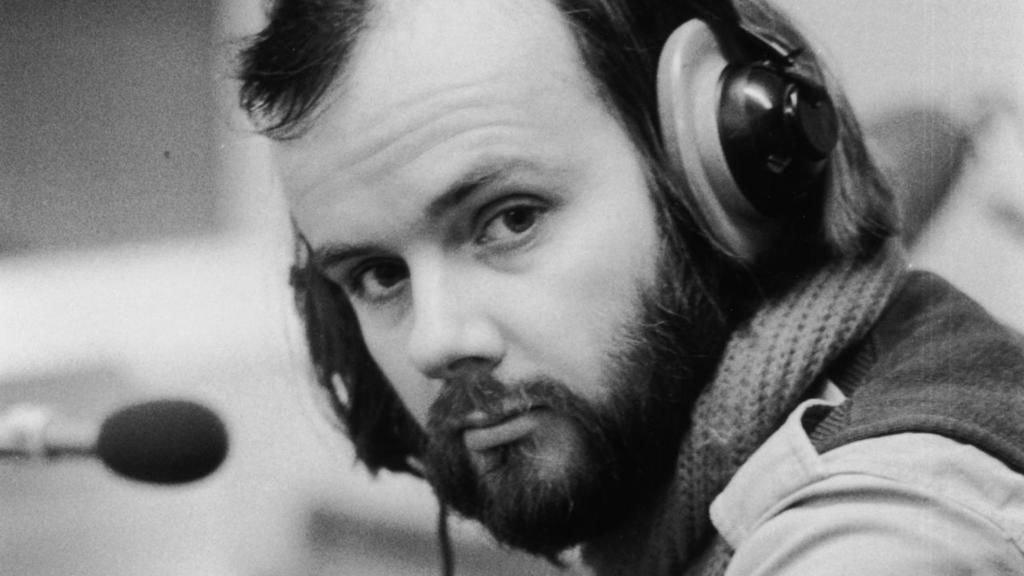


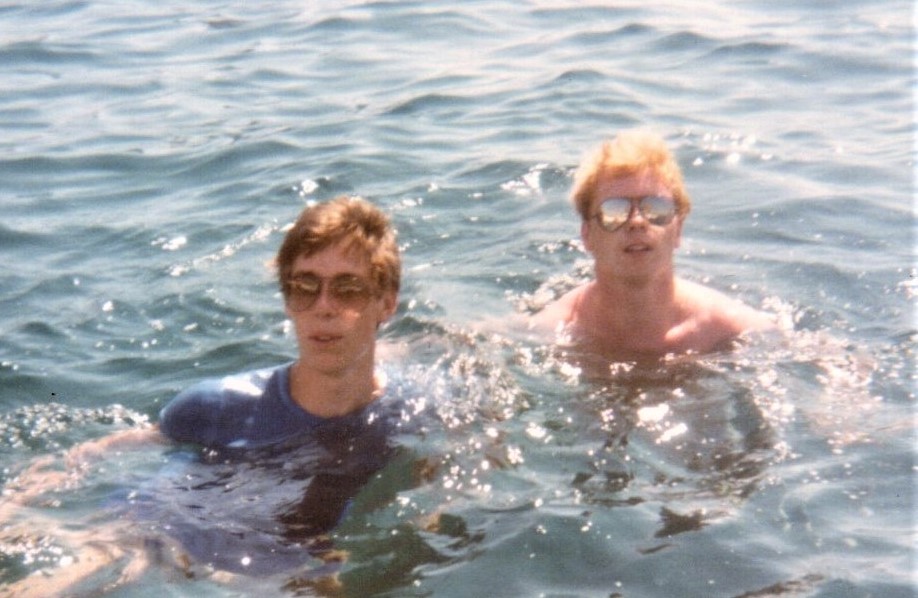


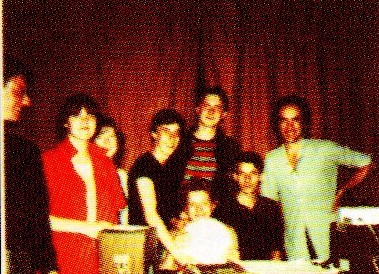


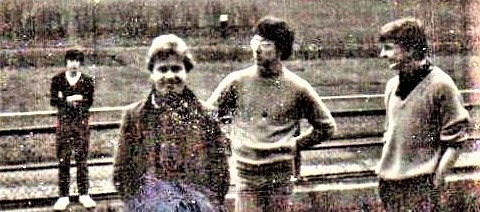


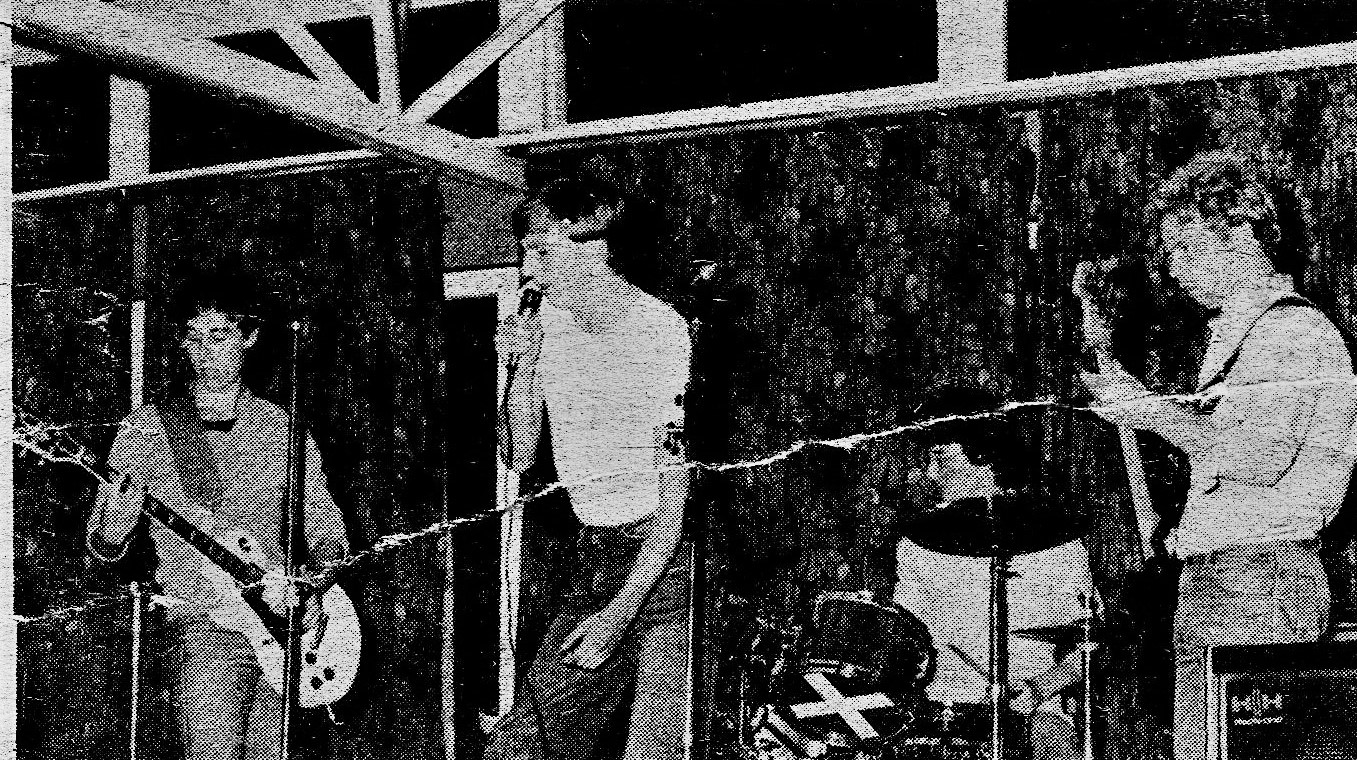


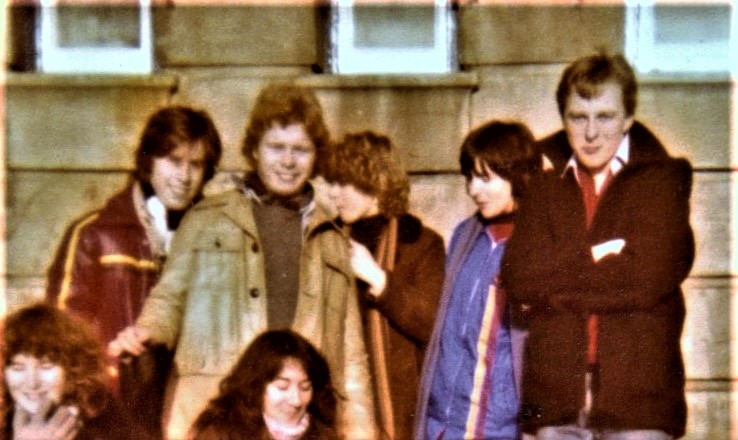


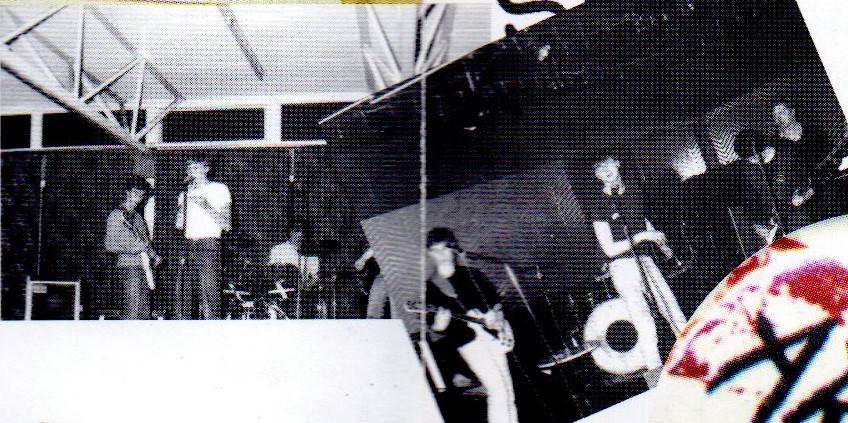


 , Me “I can only (in)competently play 2 tunes.”


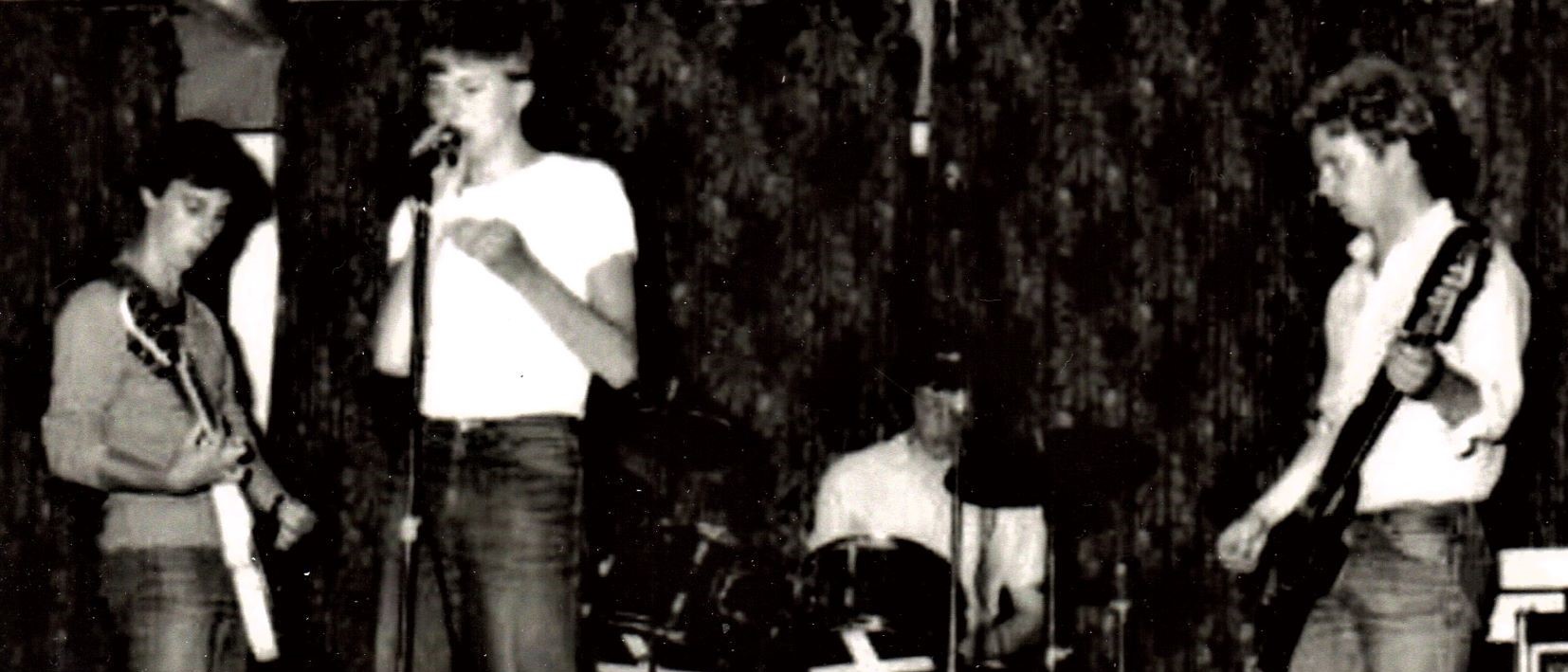


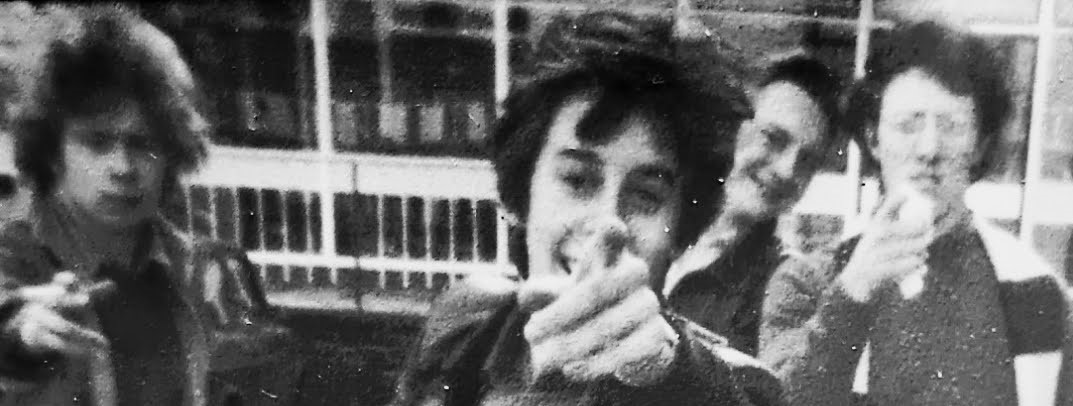





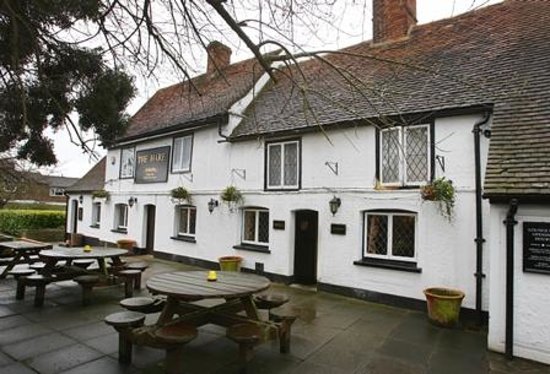


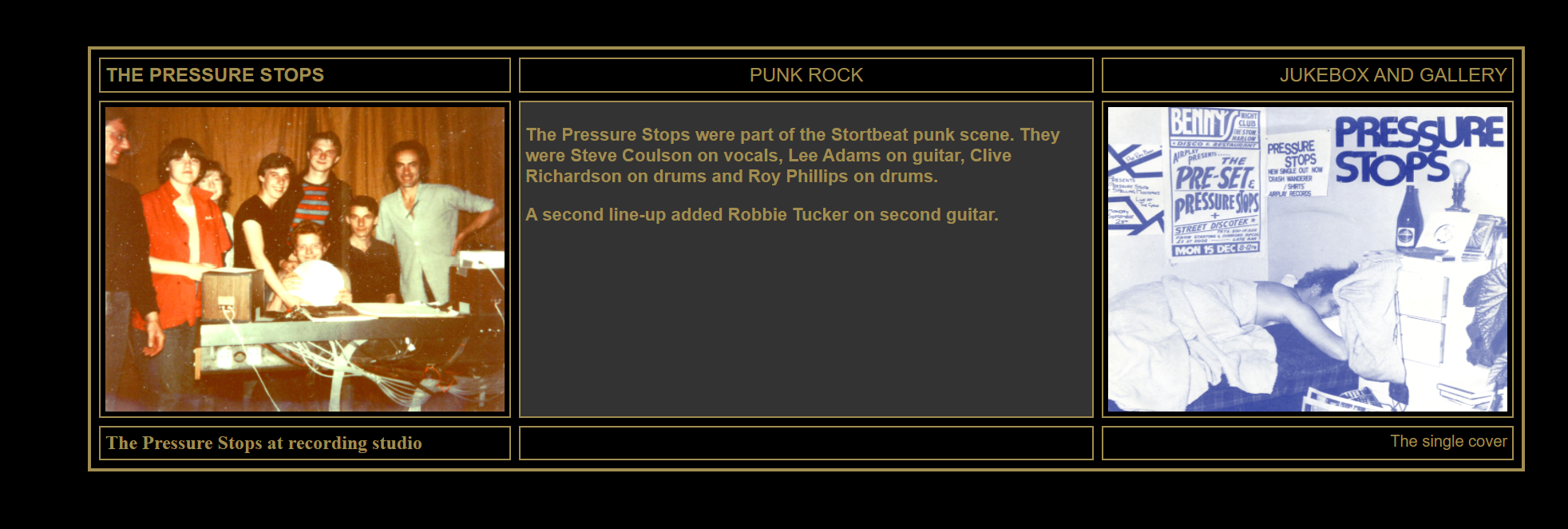


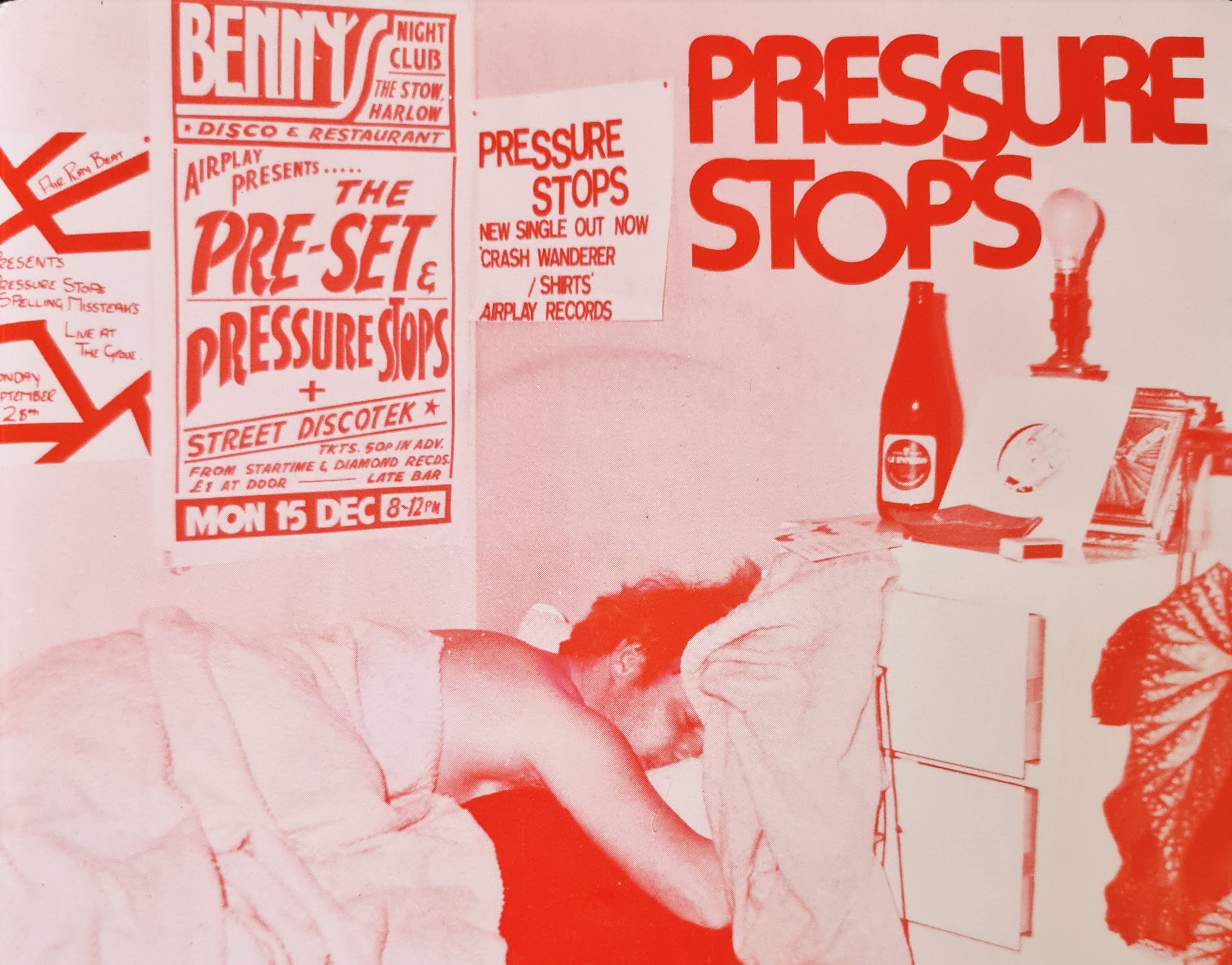





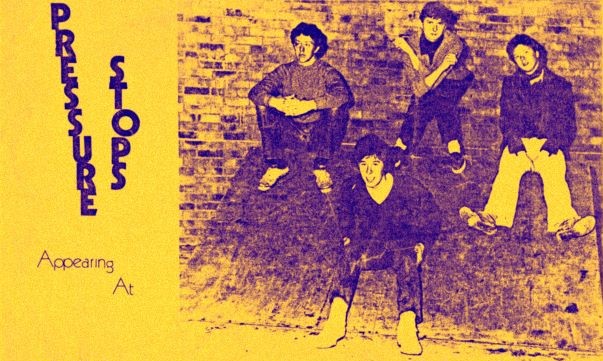













![RIDING HIGH - Eddie Kidd, Irene Handl [1981] DVD](https://i0.wp.com/ukrarities.com/images/ridinghigh1.jpg?ssl=1)











.jpg)